Snail Identification Guide
Identify a snail quickly by its coiled shell, moist body, and slow-gliding movement.
Read the full Snail encyclopedia entry →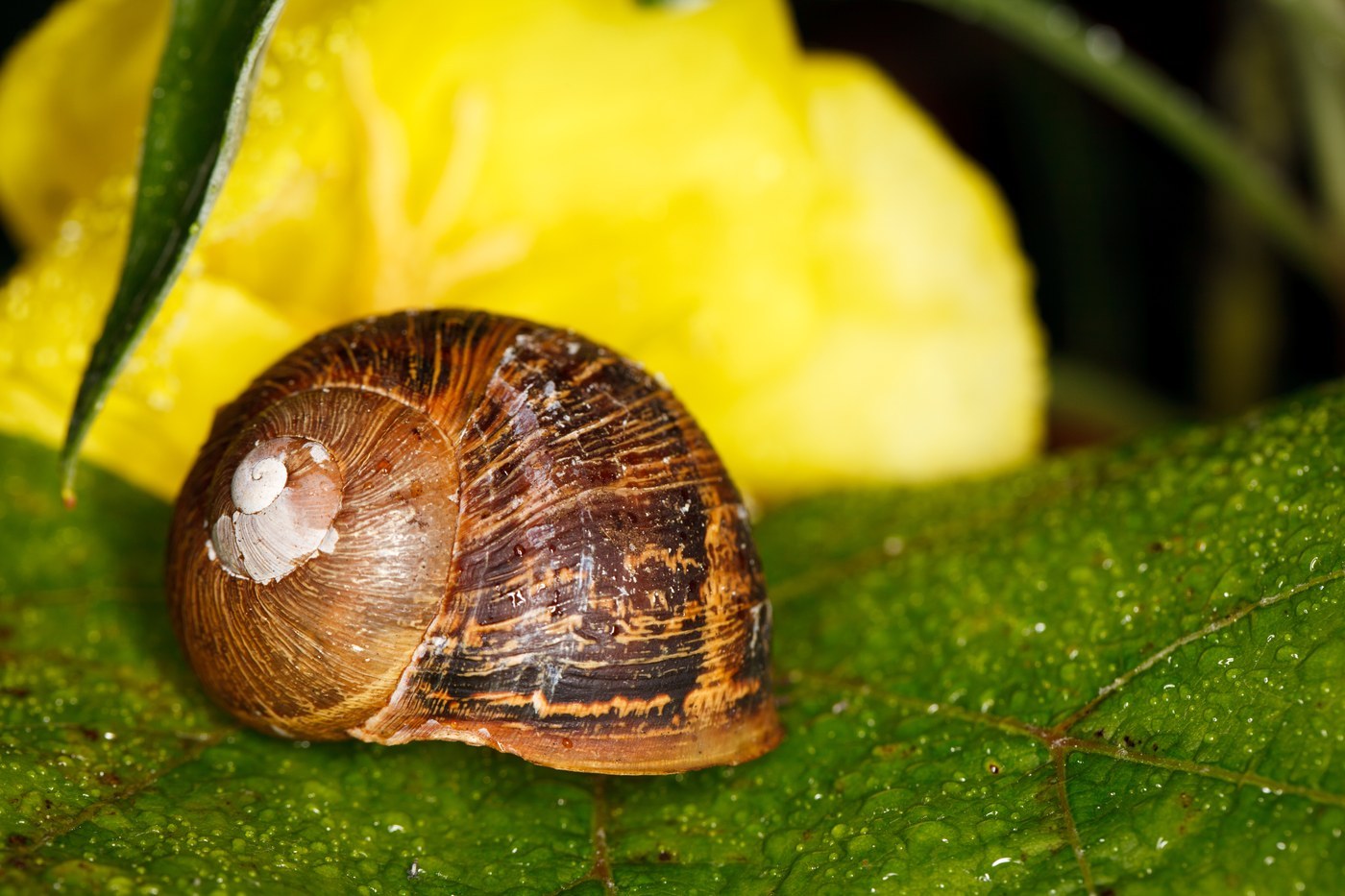
Key Visual Features
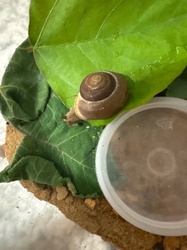
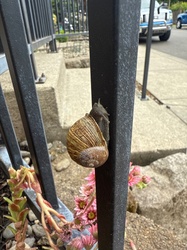
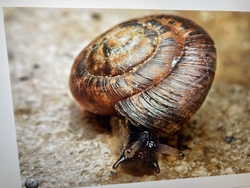
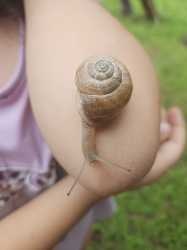
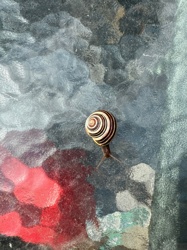
- Shell: The defining feature is a hard, coiled (spiral) shell on the snail's back, which can be rounded, conical, or flattened depending on species, and often shows growth rings or banding patterns.
- Body: A soft, moist, muscular foot extends from beneath the shell, allowing the snail to glide along surfaces.
- Color: Shells range from tan, brown, and gray to yellowish or striped patterns; the exposed body is typically gray, tan, or brownish.
- Head features: Two pairs of tentacles on the head, with eyes at the tips of the longer upper pair and the shorter lower pair used for touch and smell.
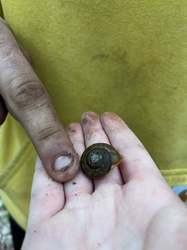
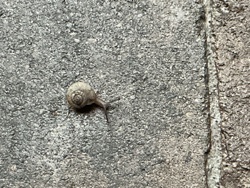
- Size: Common garden and land species typically measure under 2 inches across the shell, though sizes vary widely between species.
- Mucus trail: Leaves a glistening slime trail as it moves.
- Shell opening: The opening (aperture) where the body emerges is often a useful identification detail, varying in shape from round to oval depending on the species.
Where and When You'd See One
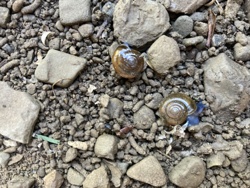
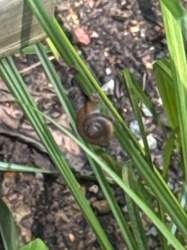
Snails are found in gardens, on plants, under rocks, logs, and mulch, and in other cool, moist, shaded environments. They are most active during humid weather, after rainfall, and at night or early morning, retreating into their shells and sealing the opening with a dried mucus layer during hot or dry conditions.
Similar-Looking Creatures
- Slugs: Share the same body plan and tentacles but lack an external shell entirely.
- Hermit crabs: Also carry a coiled shell but have jointed legs and claws, unlike the snail's single soft foot.
- Freshwater/aquatic snails: Similar shell shape but found in ponds or aquariums rather than on land, often with thinner, more translucent shells.
- Small clams or bivalves: Have two hinged shell halves rather than a single coiled shell.
Quick ID Checklist
- Coiled, hard shell carried on the back.
- Soft body with two pairs of head tentacles, eyes on the longer pair.
- Glistening mucus trail left behind while moving.
- Found in damp, shaded areas, most active after rain or at night.
- Can retract fully into its shell when disturbed.
Frequently asked questions
What is the easiest way to identify a snail versus a slug?
Look for the shell. Snails always carry a visible coiled shell on their back that they can retreat into, while slugs have no shell at all.
Why do snails seal themselves inside their shells?
During dry or unfavorable conditions, a snail can withdraw into its shell and seal the opening with a dried layer of mucus, helping it conserve moisture until conditions improve.
Do all snails have the same shell shape?
No, shell shape varies by species and can be rounded, flattened, or more conical, with different banding or color patterns, though the coiled spiral structure is consistent across land snails.
When are snails most likely to be seen outdoors?
Snails are most visible during cool, humid conditions such as after rain, in the early morning, or at night, since these periods help keep their bodies moist.
Snail identified by the community
Recent Snail finds identified with Bug Identifier.