
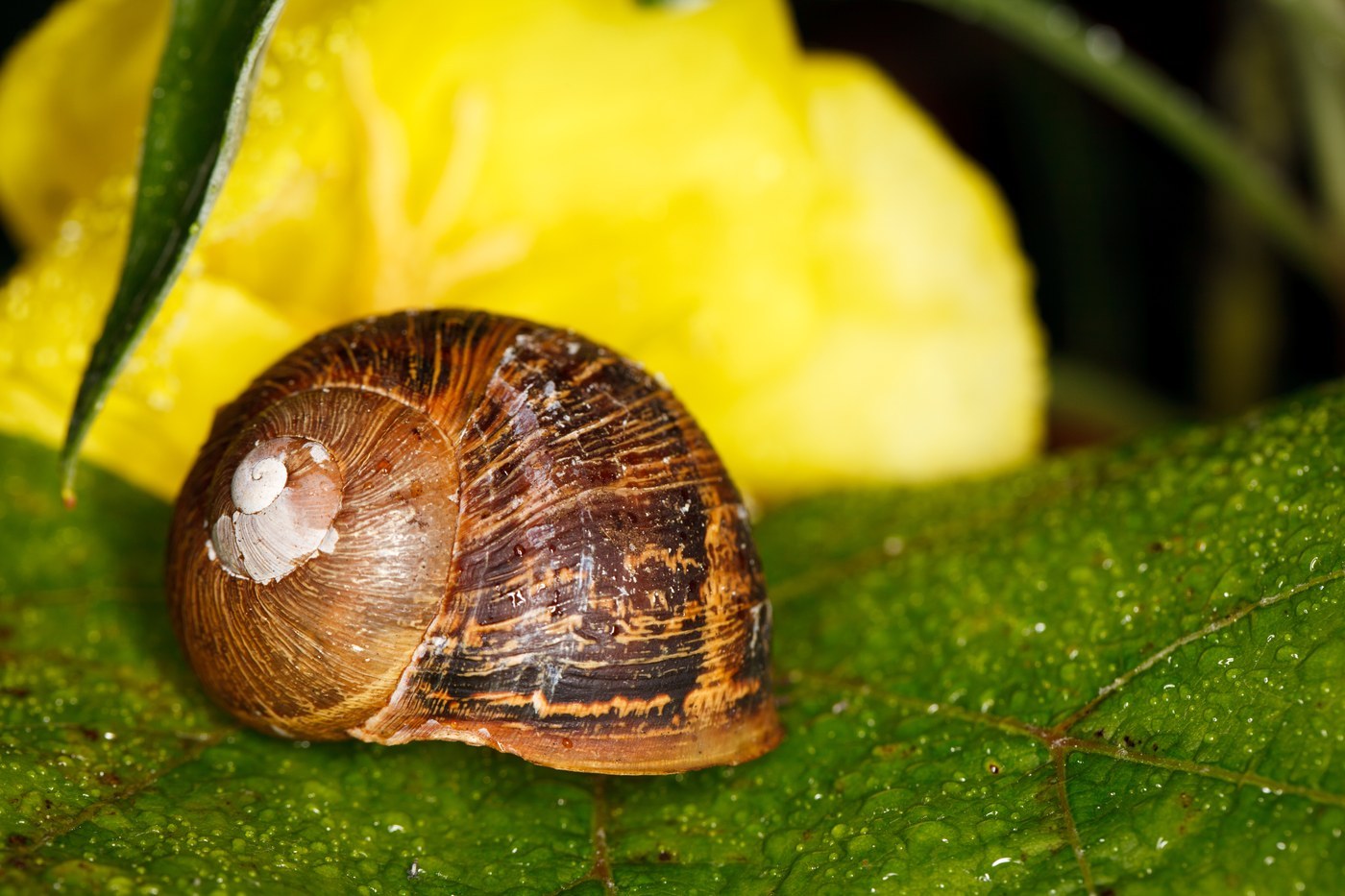
Snail
Cornu aspersum
A shelled land mollusk that carries a coiled, calcium-carbonate shell on its back and glides slowly across damp gardens and vegetation on a slime-lubricated foot.
- Size
- 2.5–5 cm shell diameter
- Habitat
- Gardens, hedgerows, damp woodland, walls
- Danger
- Harmless
Spotted a bug like this?
Identify any bug or insect from a photo, free.
Overview
The snail is a shelled land mollusk in the class Gastropoda, order Stylommatophora, closely related to slugs but distinguished by its coiled external shell into which it can withdraw completely. The brown garden snail, Cornu aspersum, is among the most widely recognized and studied land snail species worldwide.
Snails are ecologically significant as both decomposers and grazers, breaking down decaying plant matter and consuming living vegetation, algae, and fungi. Their calcium-carbonate shell, secreted by a specialized mantle organ, grows in a spiral pattern throughout the animal's life and offers protection from predators and desiccation.
As a familiar backyard animal found on nearly every continent, the snail is a common subject of general natural history and identification interest, often confused only with its shell-less relative, the slug.
How to Identify
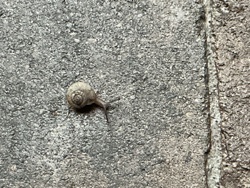
- Soft body topped by a hard, coiled shell, typically brown or tan with darker spiral banding
- Two pairs of retractable tentacles: longer upper pair with eyes at the tips, shorter lower pair for touch and smell
- Muscular foot secretes mucus for locomotion, leaving a shiny trail
- Shell shape and banding pattern vary by species and can be used for identification
- Distinguished from slugs by the presence of a visible external shell into which the body can retract
Habitat & Range
Snails are found in gardens, hedgerows, woodland edges, agricultural land, and along walls and fences, favoring moist, sheltered spots with access to calcium-rich soil for shell growth. Many familiar species originated in Europe and the Mediterranean but have been introduced widely across temperate and subtropical regions.
They are most active during humid nights and after rainfall, and they seek shelter under debris, in crevices, or by sealing the shell opening with a dried mucus membrane during dry or cold periods.
Behavior & Diet
Snails glide slowly on a muscular foot lubricated by mucus and feed using a radula, a ribbon-like row of tiny teeth, to scrape algae, fungi, and plant material. They are largely nocturnal and crepuscular, avoiding the desiccating effects of daytime sun and heat.
As primary consumers and decomposers, snails recycle plant material into soil nutrients and serve as prey for birds, small mammals, and ground-dwelling predators. When threatened, a snail withdraws fully into its shell and may seal the opening with mucus.
Life Cycle
Most land snails are hermaphroditic, and after courtship and mating, adults lay clusters of small round eggs in a shallow pit dug into moist soil. Eggs hatch into miniature snails with a soft, translucent shell that hardens and grows in spiral increments as the animal matures.
Development is direct, with no larval or pupal stage, and growth continues gradually through adulthood. In temperate climates, snails often overwinter by sealing themselves into their shells, becoming active again with warmer, wetter conditions.
Frequently asked questions
How is a snail different from a slug?
Snails carry a visible coiled shell they can retract into, while slugs lack an external shell entirely, though both belong to the same broader group of land mollusks.
What is the snail's shell made of?
The shell is composed primarily of calcium carbonate, secreted in layers by the mantle and grown in a spiral pattern throughout the snail's life.
Are all garden snails the same species?
No, many species of land snail exist worldwide with differing shell shapes, sizes, and banding patterns; the common brown garden snail is only one of many.
When is a snail most likely to be seen?
Snails are most visible at night or after rain, when humidity is high and the risk of drying out is lower.
Snail guides
In-depth guides for identifying, understanding, and living alongside Snail.
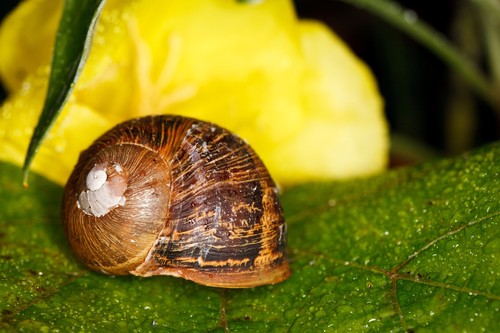
Snail identified by the community
Real finds identified with Bug Identifier.
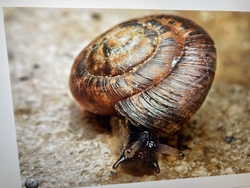
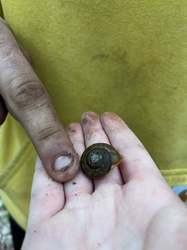
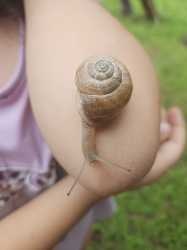
Other bugs you may enjoy
American Cockroach
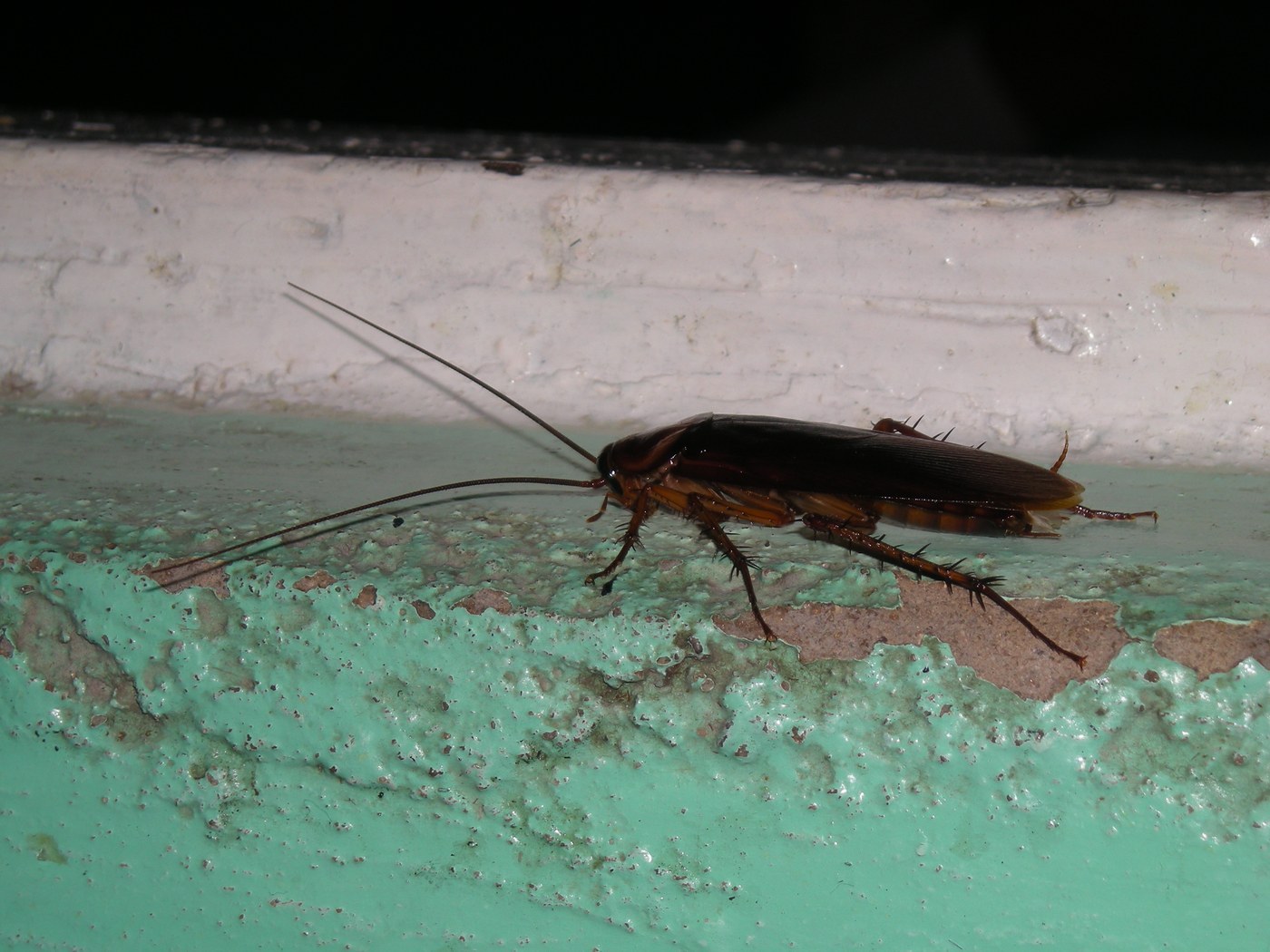
Warm, humid environments such as basements, sewers, drains, and tropical outdoor settings
Thrips
Flowers, foliage, gardens, greenhouses, crop fields
American Rubyspot
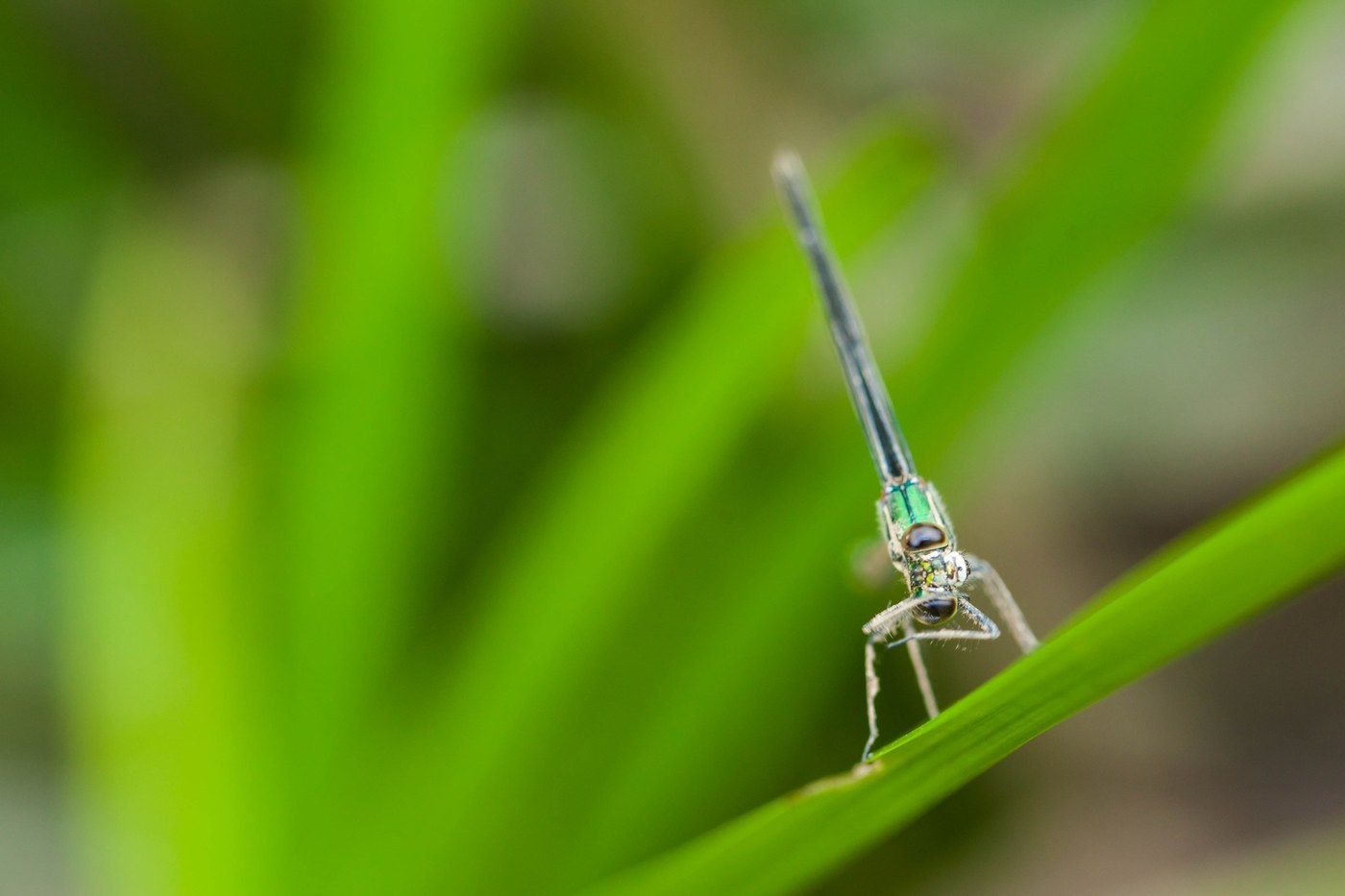
Sunny rivers and streams with moderate current
Springtail
Moist soil, leaf litter, decaying organic matter, and damp indoor areas
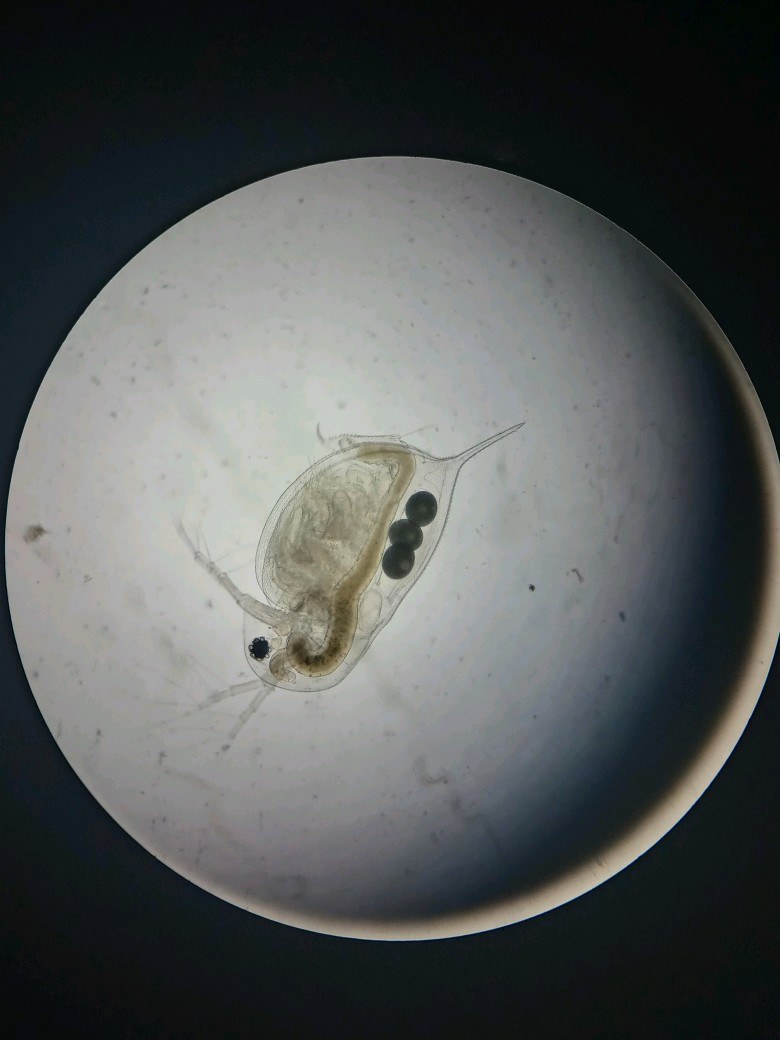
Water Flea
Ponds, lakes, and slow streams as free-floating plankton
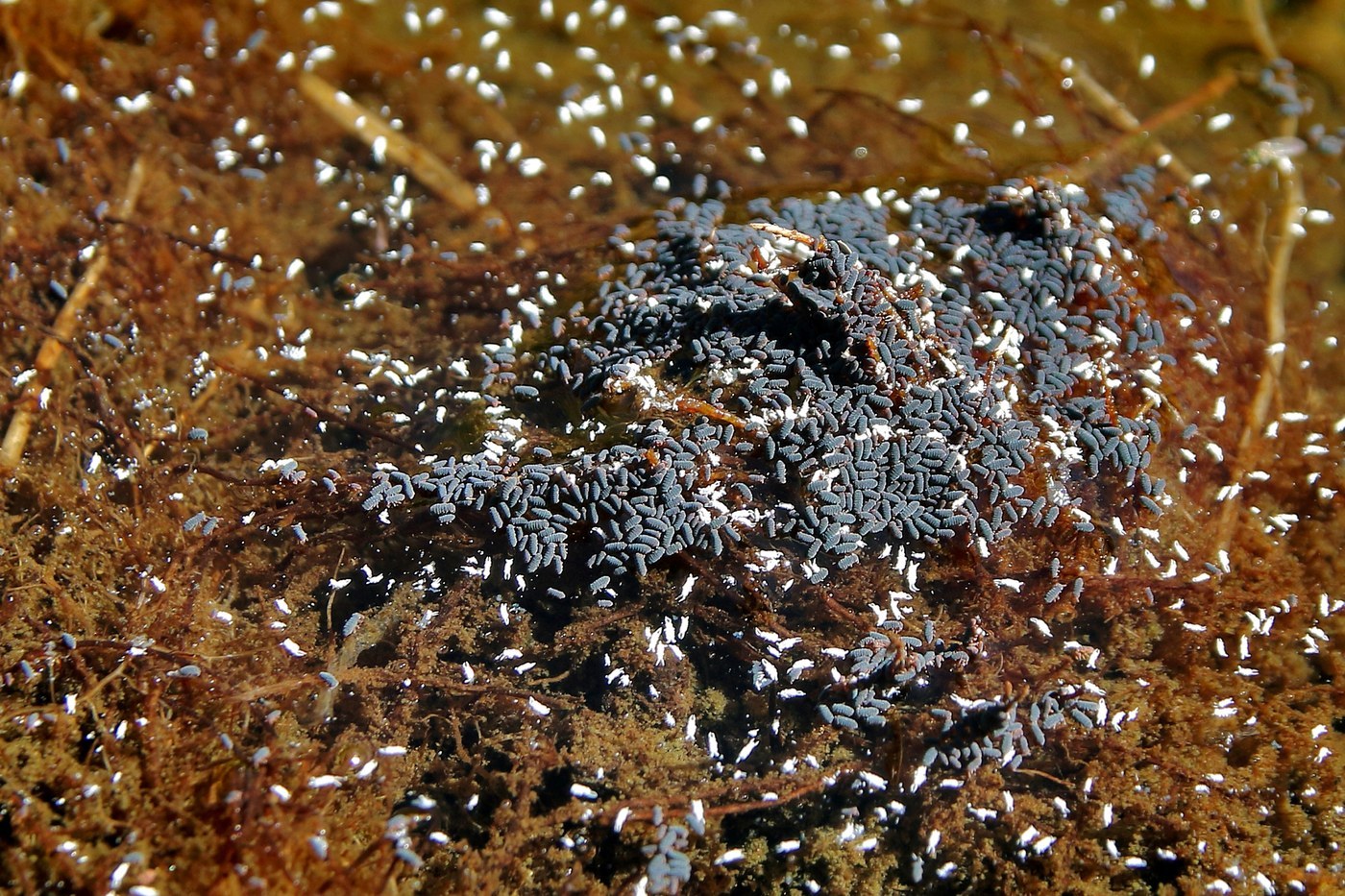
Water Springtail
Surface film of ponds, puddles, and slow ditches
Slug
Gardens, damp soil, leaf litter, greenhouses
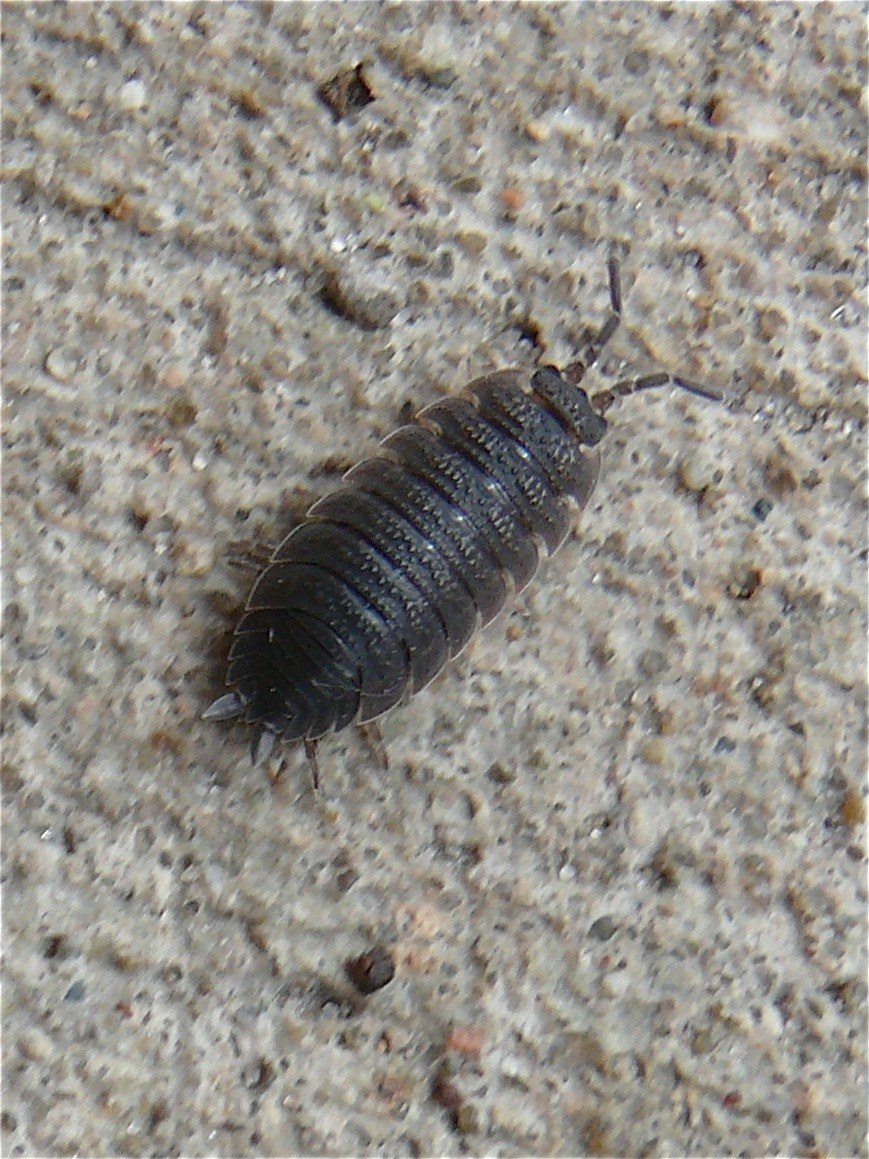
Sowbug
Leaf litter, under rocks/logs, damp garden soil, basements
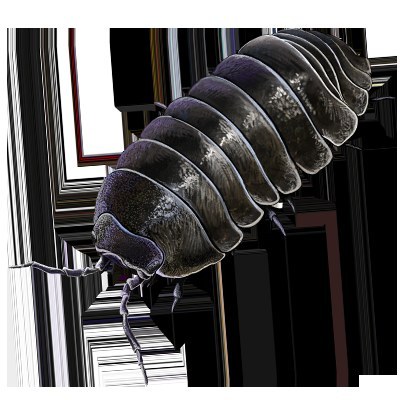
Pill Bug
Damp soil, leaf litter, under rocks and logs, garden beds
Termite
Soil, decaying wood, tree stumps, and wooden structures
Termite Swarmer
Emerges from underground or wood-nesting colonies, often near structures and moist soil
Silverfish
Damp basements, bathrooms, closets, and dark indoor crevices