Tarantula Hawk Wasp Identification Guide
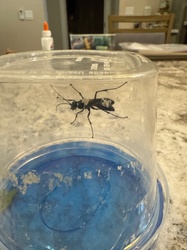
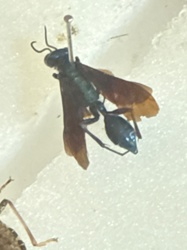
Identify one of the largest wasps in the world by its metallic blue-black body and bright orange wings.
Read the full Tarantula Hawk Wasp encyclopedia entry →Key Visual Features
- Large wasp, often 1.5-2 inches (4-5 cm) long, among the biggest wasps found in its range.
- Body is typically a deep, glossy metallic blue-black, giving a striking iridescent sheen in sunlight.
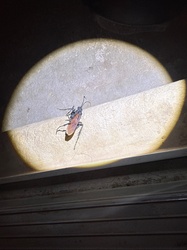
- Wings are a bright, solid burnt-orange or rust color, strongly contrasting with the dark body and making the wasp easy to spot in flight.
- Legs are long and dangling, often held loosely beneath the body during flight, with the hind legs noticeably longer than the front pair.
- Antennae are long, curled, and somewhat whip-like, more pronounced than in many other wasps.
- The waist between the thorax and abdomen is narrow and well-defined, typical of wasps in this family.
Where and When You'd See It
- Found in arid and semi-arid regions, including deserts, scrublands, and dry grasslands.
- Most active during the day in warm months, often seen visiting flowers for nectar or moving quickly across open, sandy or dry ground.
- Frequently observed near desert plants with abundant blooms, where adults feed on nectar.
- Flight is fast, low, and somewhat erratic, often close to the ground when the wasp is searching the terrain rather than visiting flowers.
Similar-Looking Species
- Other large wasps can share a dark body, but few combine the same glossy blue-black coloring with solid bright orange wings, which is fairly distinctive among common wasps.
- Carpenter bees are sometimes confused due to their dark, robust bodies, but they have a fuzzy thorax and lack the bright orange wing coloring and long dangling legs of the tarantula hawk.
- Some large ichneumon or spider wasps can appear similar in shape, but the specific combination of size, metallic blue-black color, and vivid orange wings narrows identification to this group.
Quick ID Checklist
- Large wasp body, 1.5-2 inches long.
- Glossy, iridescent blue-black coloring.
- Bright solid orange wings contrasting with the dark body.
- Long, dangling legs, especially the hind pair.
- Found in warm, arid, or semi-arid habitats, often near flowering desert plants.
Behavior Notes
- Flight is fast and somewhat erratic when moving between flowers or crossing open ground, but the wasp often lands and walks with a distinctive jerky, twitching motion.
- Individuals are usually seen alone rather than in groups, unlike some social wasps that form visible colonies.
- Activity levels are highest during the warmest parts of the day, with wasps becoming less visible during cooler mornings or evenings.
Frequently asked questions
What makes the tarantula hawk wasp's coloring so distinctive?
The combination of a glossy, metallic blue-black body with solid bright orange wings is unusual among wasps and makes this species relatively easy to distinguish once you know the color pattern to look for.
How do I tell a tarantula hawk from a carpenter bee?
Carpenter bees have a fuzzy thorax and dark wings, while tarantula hawks have a smooth, glossy body, long dangling legs, and vivid solid orange wings that carpenter bees lack.
What kind of habitat should I look in?
Arid and semi-arid environments such as deserts, scrublands, and dry grasslands are the typical habitat, especially areas with flowering plants that provide nectar.
When are tarantula hawk wasps most commonly seen?
They are most active during the day in warm months, often observed visiting flowers or moving quickly across open ground in their desert or scrubland range.
Tarantula Hawk Wasp identified by the community
Recent Tarantula Hawk Wasp finds identified with Bug Identifier.