Termite Swarmer Identification Guide
Learn to distinguish winged termite swarmers from flying ants using waist shape, antennae, and wing proportions.
Read the full Termite Swarmer encyclopedia entry →Key Visual Features
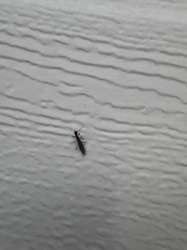
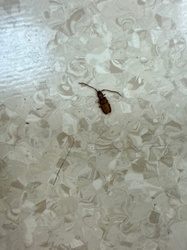
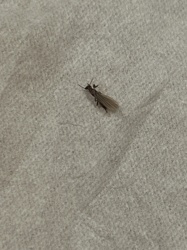
Termite swarmers, also called alates, are the winged reproductive caste released from a mature colony, and their features differ in several key ways from ants.
- Size: Body length of roughly 6-10 mm depending on species, with wings extending well beyond the body, sometimes doubling the overall visible length.
- Body shape: Straight-sided and roughly uniform in width from head to abdomen, without a narrow, pinched waist — the thorax and abdomen appear broadly connected rather than constricted.
- Color: Ranges from pale yellowish-brown to dark brown or blackish depending on species, with a soft, somewhat non-glossy exoskeleton compared to the shinier look of many ants.
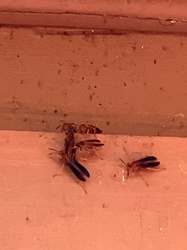
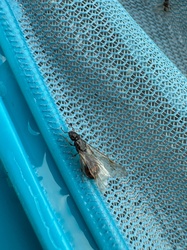
- Wings: Two pairs of long, translucent wings that are equal in length and shape, extending well past the tip of the abdomen; wings are often shed shortly after a swarming flight, leaving small, discarded wing piles nearby.
- Antennae: Straight and bead-like (moniliform), made up of small rounded segments, rather than sharply bent.
- Eyes: Small, simple compound eyes present in the winged swarmer stage, distinguishing them from the eyeless worker caste.
Where and When You'd See It
Termite swarmers typically emerge in large numbers during a swarming event, often triggered by warm, humid conditions following rain, and are frequently seen around light sources such as windows or outdoor lighting in the evening. Swarming season and time of day vary by species and region, but activity is generally seasonal and concentrated rather than a year-round, constant presence. After swarming, discarded wings are often found scattered on windowsills, floors, or spider webs near entry points, even after the swarmers themselves have moved on.
Similar-Looking Bugs
- Flying ants: The most common look-alike; ants have a distinctly pinched, narrow waist, elbowed antennae, and forewings that are noticeably longer than the hindwings, all differing from the straight-waisted, equal-winged termite swarmer.
- House ant workers: Wingless and much smaller, lacking the reproductive swarmer's wings entirely.
- Small moths: May be mistaken for swarmers at a glance near lights, but have scaled, often patterned wings and coiled or feathery mouthparts rather than a termite's straight body and antennae.
Quick ID Checklist
- Straight-sided body with no pinched waist between thorax and abdomen
- Two pairs of equal-length, equal-shaped translucent wings
- Straight, bead-like antennae (not elbowed)
- Often seen in a concentrated swarm near lights after warm, humid weather
- Discarded, evenly paired wings left behind on surfaces after swarming
Frequently asked questions
What is the fastest way to tell a termite swarmer from a flying ant?
Check the waist and wings: termite swarmers have a straight, uniform body without a pinched waist and two pairs of equal-length wings, while flying ants have a narrow, constricted waist and forewings clearly longer than their hindwings.
Why do I find piles of wings without any insects nearby?
Termite swarmers typically shed their wings shortly after completing a swarming flight, so discarded wing piles near windows or entry points are a common sign of a swarm having occurred, even after the insects themselves have dispersed.
What triggers a termite swarming event?
Swarms are generally triggered by warm, humid conditions, often following rainfall, when winged reproductives leave the colony together in search of new sites.
Do termite swarmer antennae look different from ant antennae?
Yes, termite swarmers have straight, bead-like antennae made of small rounded segments, while ants have antennae that are distinctly bent or elbowed partway along their length.
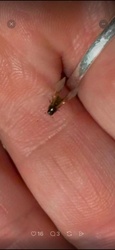
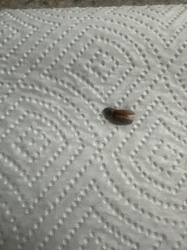
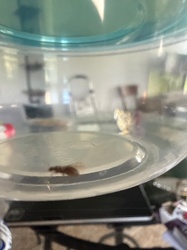
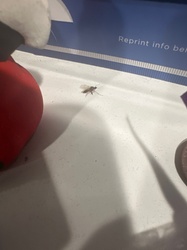
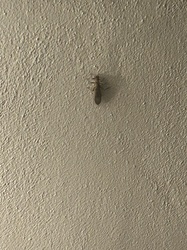
Termite Swarmer identified by the community
Recent Termite Swarmer finds identified with Bug Identifier.