Virginia Tiger Moth Identification Guide
An all-white, densely furry moth with bright orange forelegs, best known for its fuzzy yellow woolly bear caterpillar.
Read the full Virginia Tiger Moth encyclopedia entry →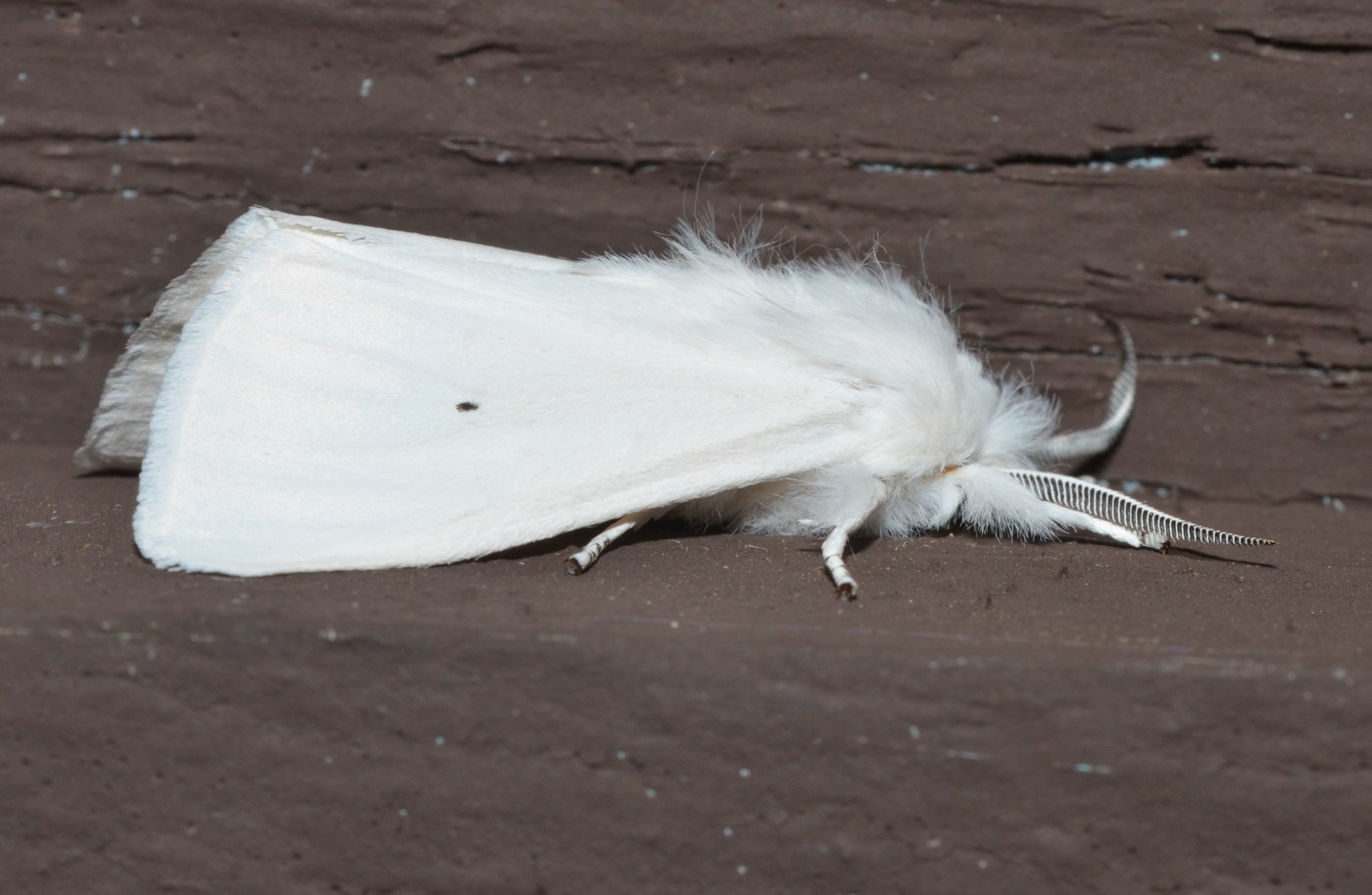
Key Visual Features
The Virginia Tiger Moth is a medium to large tiger moth with a wingspan of about 35-50mm and a strikingly clean, snow-white appearance.
- Wings: Pure white overall, occasionally showing a small scattering of tiny black dots on the forewing, though many individuals are entirely unmarked.
- Forelegs: Distinctly bright orange-yellow, a key field mark that stands out against the white body.
- Abdomen: Yellow to orange, with a row of small black dots running along the top.
- Body: Densely furry and white, giving a soft, plush appearance.
- Antennae: Simple and thread-like in females, slightly feathery in males.
Where and When You'll See It
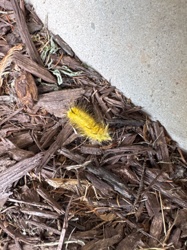
This moth is common in gardens, fields, and woodland edges. Adults are strictly nocturnal, resting by day on foliage, walls, or tree bark where their white coloring can make them fairly conspicuous against darker backgrounds. They fly from late spring through summer and are frequently attracted to porch and outdoor lights at night. The caterpillar of this species, often called the yellow woolly bear, is a familiar dense, fuzzy yellow-to-tan larva seen wandering in search of food or a pupation site.
Similar-Looking Species
- Salt Marsh Moth (females) - also largely white, but typically shows more black spotting on the wings and lacks the bright orange forelegs of the Virginia Tiger Moth.
- Fall Webworm Moth - smaller and more delicate, with plain or lightly speckled white wings, but legs are dark rather than bright orange.
- Other white Spilosoma species - very similar in overall look; the combination of orange forelegs and a mostly unspotted white wing is the most reliable way to confirm Virginia Tiger Moth.
Life Cycle & Behavior
The yellow woolly bear caterpillar feeds on a wide range of garden and wild plants through summer, growing into a densely bristled larva before spinning a loose cocoon incorporating its own body hairs. In much of its range there are two generations per year, with the species overwintering as a pupa. Adults are short-lived, non-feeding fliers whose main activity window is after dark.
Quick ID Checklist
- Medium-large, all-white, densely furry moth
- Few or no black spots on the wings
- Bright orange-yellow forelegs - a key distinguishing feature
- Yellow-orange abdomen with a row of black dots
- Nocturnal, common in gardens and fields from late spring through summer
Frequently asked questions
What is the single best field mark for identifying a Virginia Tiger Moth?
Its bright orange-yellow forelegs are the most reliable identifying feature, standing out clearly against the otherwise white body and wings.
How can I distinguish it from a female Salt Marsh Moth?
The Virginia Tiger Moth typically has cleaner, less spotted white wings and bright orange forelegs, while the Salt Marsh Moth often shows more black spotting and lacks the orange leg coloring.
Is the yellow woolly bear caterpillar related to this moth?
Yes, the fuzzy yellow-to-tan yellow woolly bear caterpillar is the larval stage of the Virginia Tiger Moth.
When is this moth most active?
It is nocturnal and most commonly seen from late spring through summer, often drawn to outdoor lighting after dark.
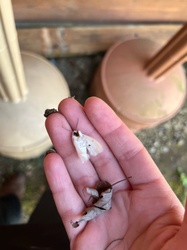
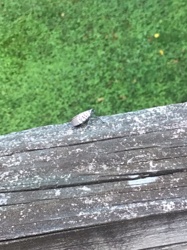
Virginia Tiger Moth identified by the community
Recent Virginia Tiger Moth finds identified with Bug Identifier.