
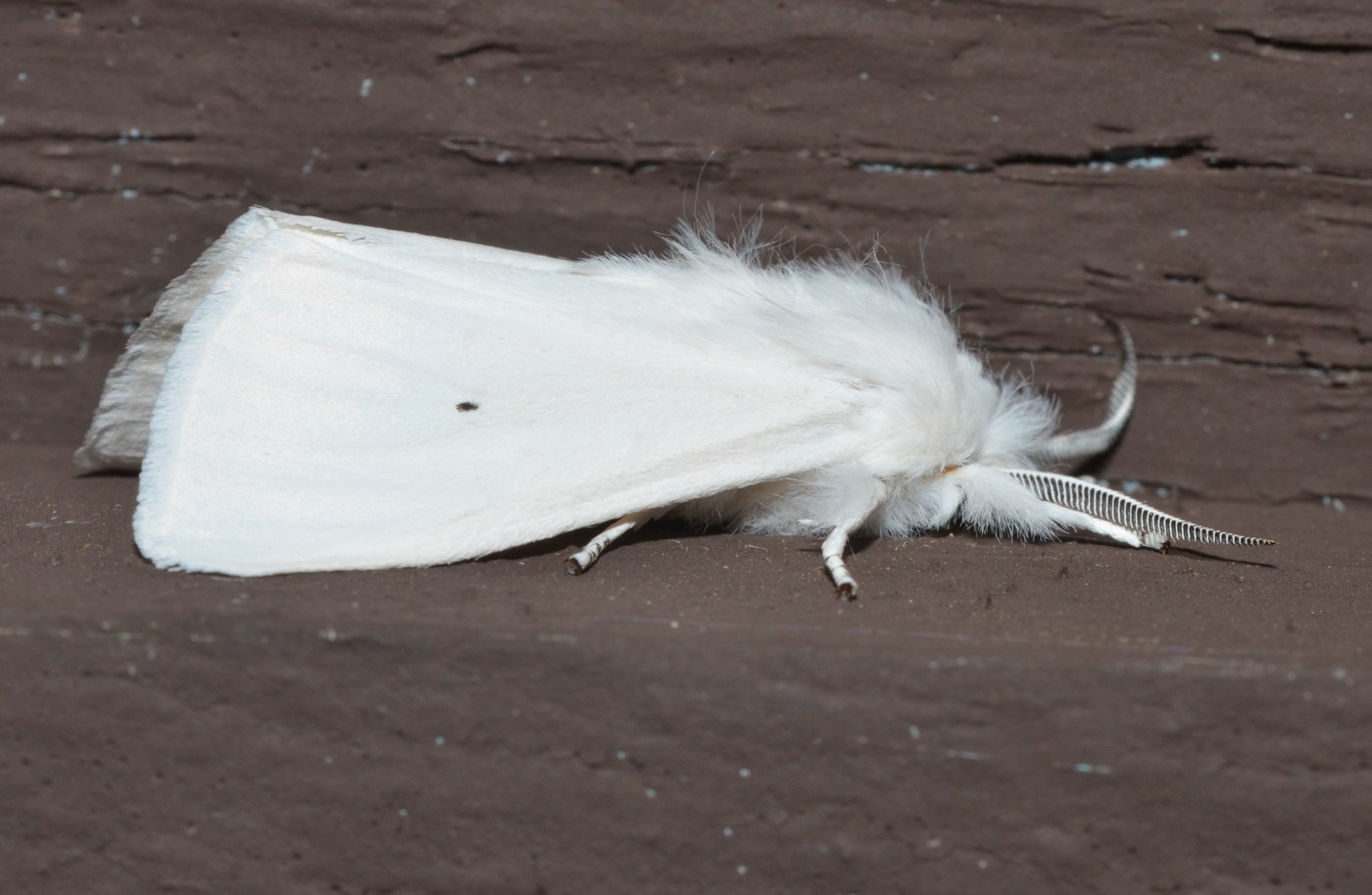
Virginia Tiger Moth
Spilosoma virginica
An almost pure-white, fluffy tiger moth with a few small black dots on the wings and body, whose caterpillar is the familiar pale yellow "yellow woolly bear."
- Size
- 1.3–2 in wingspan
- Habitat
- Gardens, woodlands, fields, roadsides
- Danger
- Harmless
Spotted a bug like this?
Identify any bug or insect from a photo, free.
Overview
The Virginia tiger moth is a common North American member of the tiger moth subfamily (Arctiinae), part of the larger Erebidae family. Adults are notable for their clean, almost entirely white appearance, broken only by a scattering of small black spots, giving them a simple but elegant look compared to many more boldly patterned relatives.
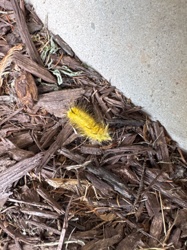
Its caterpillar, widely known as the yellow woolly bear, is one of the most frequently seen fuzzy caterpillars in gardens and fields across the continent, ranging in color from pale cream to golden yellow and covered in dense, soft-looking hairs. Because of its abundance and generalist feeding habits, it is a familiar sight to gardeners throughout the growing season.
The species plays an ordinary but important ecological role as both a plant-feeding larva and, as an adult, a nocturnal flier and food source within its habitat, contributing to the food web that supports birds and other predators.
How to Identify
- Adult wings are predominantly satiny white with a small number of scattered black dots, most often on the forewings and thorax.
- The abdomen is white or pale yellow, sometimes with a faint row of black spots along the top.
- Body is stout and moth-like with a dense covering of fine hair-like scales.
- Larvae (yellow woolly bears) are covered in long, soft, pale golden to yellow-tan hairs of fairly uniform color, distinguishing them from the banded black-and-rust pattern of the true woolly bear.
- Lookalikes include other white Spilosoma and Hyphantria species; the sparse, small black dotting pattern helps separate this species from close relatives.
Habitat & Range
Common across most of the United States and southern Canada in gardens, meadows, woodland edges, and along roadsides. Adults fly at night from late spring through summer and are frequently drawn to porch lights, while caterpillars are most visible from mid to late summer as they feed and later wander in search of pupation sites.
Behavior & Diet
Adults are nocturnal, resting by day on vegetation or structures and becoming active after dusk, when they are attracted to artificial lights. The caterpillars are generalist herbivores that feed on a broad range of low plants, garden vegetables, and weeds, occasionally becoming numerous enough to be noticed defoliating small patches of foliage. Both life stages provide food for birds, small mammals, and predatory or parasitic insects within their ecosystem.
Life Cycle
Eggs are laid in clusters on host plant leaves and hatch into small hairy larvae that molt several times while growing. Mature caterpillars spin a loose cocoon woven from silk and their own body hairs, typically in leaf litter or soil, where they pupate. The species overwinters as a pupa in colder regions, with adults emerging in late spring; two generations commonly occur per year across much of its range.
Frequently asked questions
Is this the same as the banded woolly bear?
No, its caterpillar (the yellow woolly bear) has uniformly pale golden hairs, unlike the black-and-rust banded pattern of the true woolly bear caterpillar.
Why is it called a tiger moth if it's mostly white?
It belongs to the tiger moth subfamily based on shared traits with its more boldly patterned relatives, even though this particular species has a simpler, mostly white pattern.
What do the caterpillars eat?
They are generalist feeders on many kinds of low-growing plants, garden vegetables, and weeds rather than a single specific host.
When are the caterpillars most commonly seen?
Mid to late summer, when they are actively feeding and later wandering to find a sheltered spot to spin their cocoon.
Virginia Tiger Moth guides
In-depth guides for identifying, understanding, and living alongside Virginia Tiger Moth.
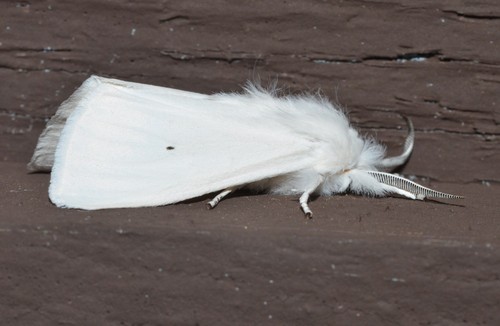
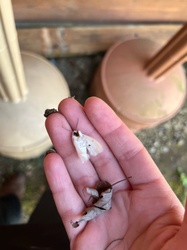
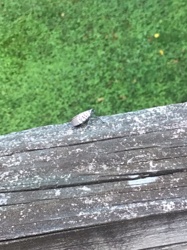
Virginia Tiger Moth identified by the community
Real finds identified with Bug Identifier.
Other bugs you may enjoy
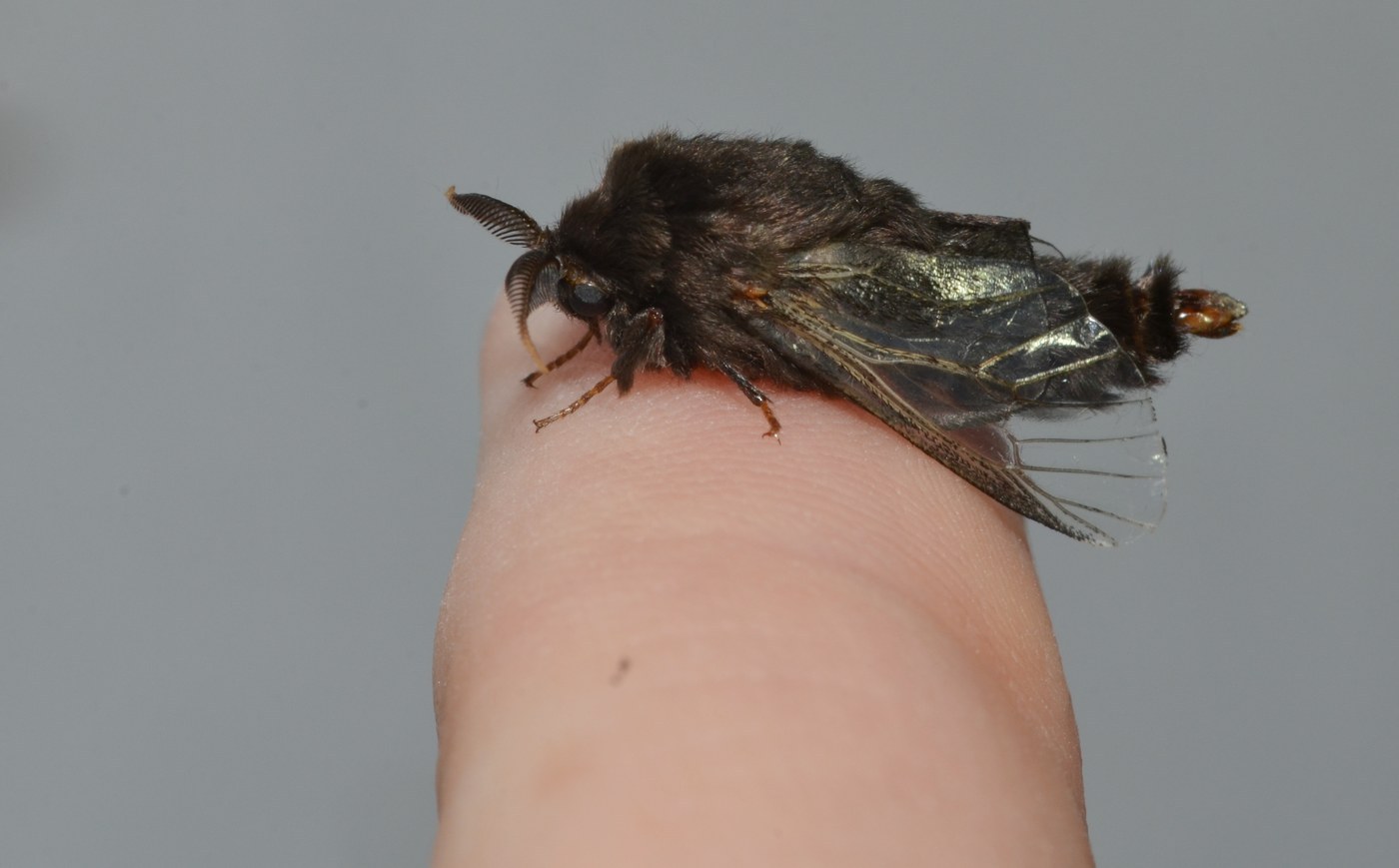
Bagworm Moth
Coniferous and deciduous trees, shrubs, hedges
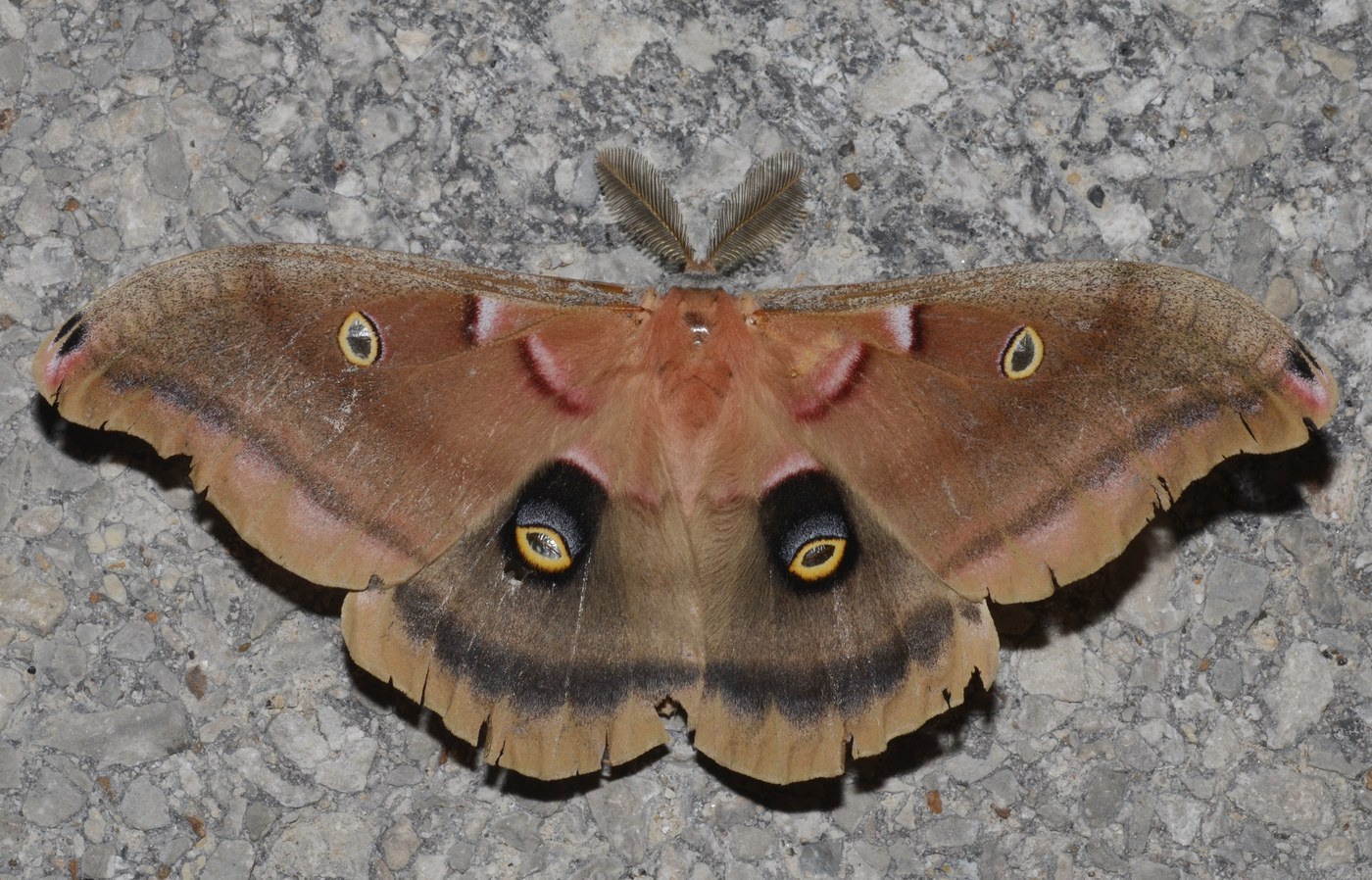
Antheraea Silkmoth
Deciduous forests, woodland edges, orchards
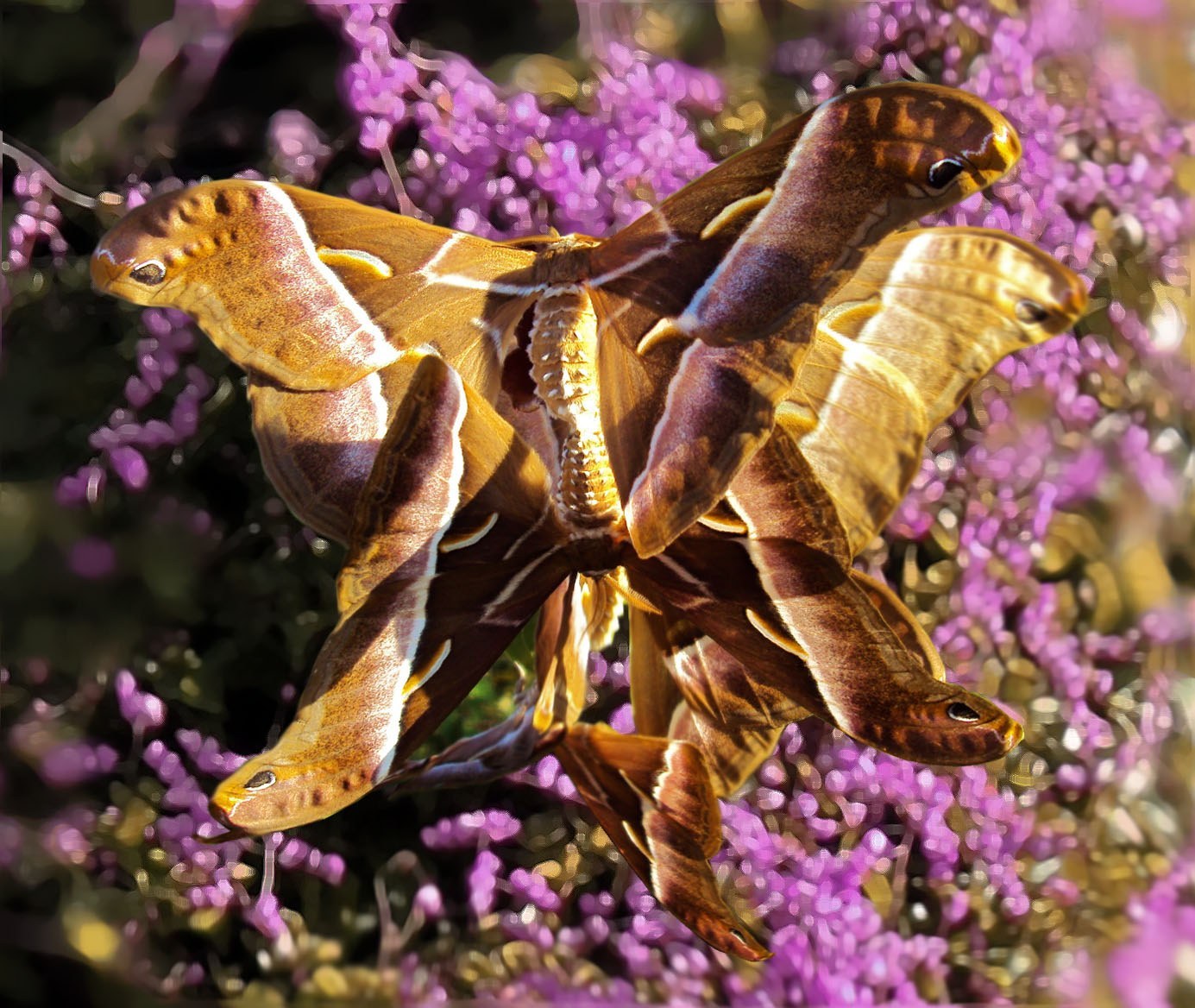
Ailanthus Silkmoth (Cynthia Moth)
Urban parks, wastelands, and woodland edges with tree-of-heaven; native to Asia, introduced in North America and Europe
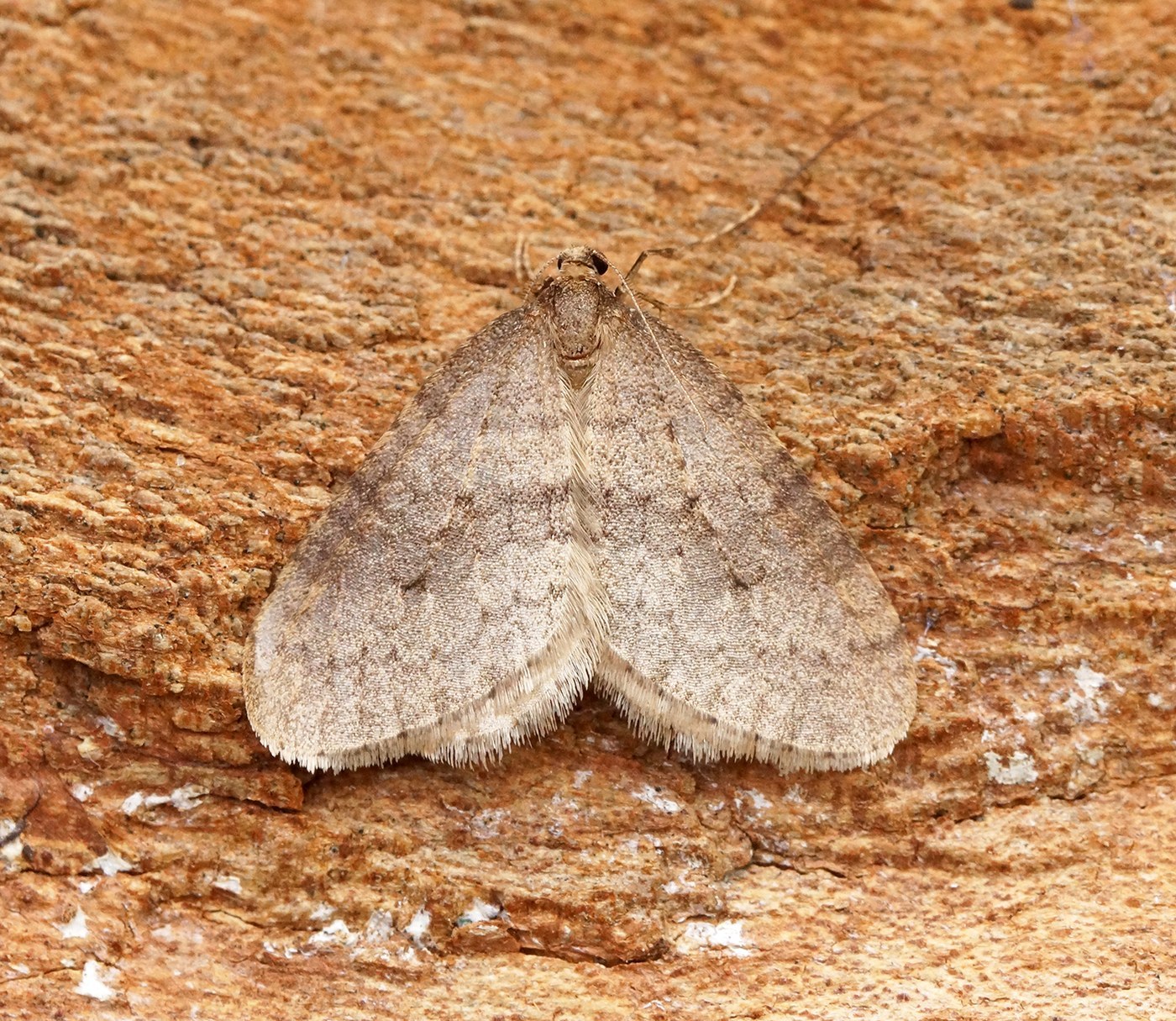
Winter Moth
Deciduous woodland, orchards, gardens, hedgerows
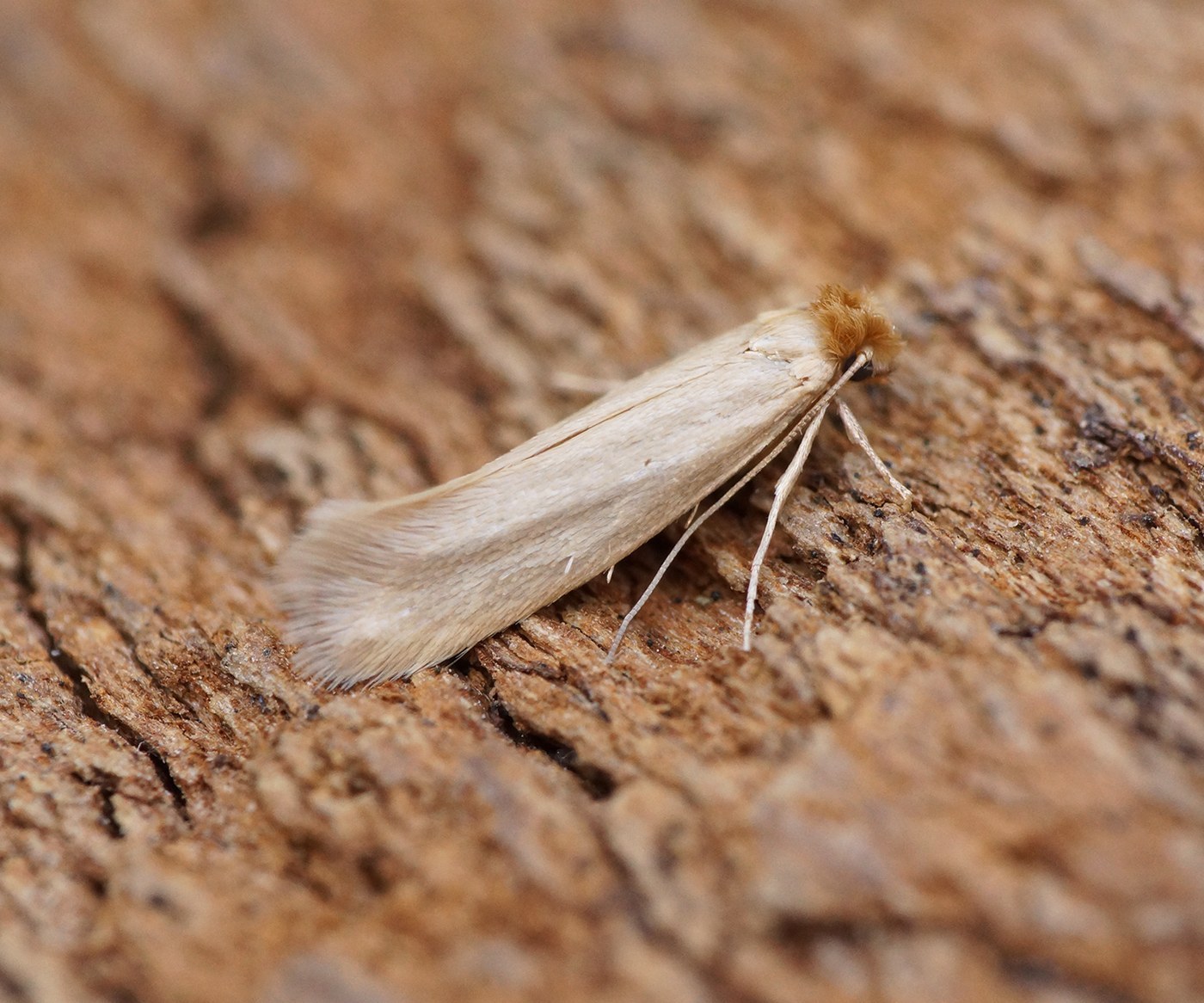
Webbing Clothes Moth
Dark closets, storage areas, and animal nests worldwide
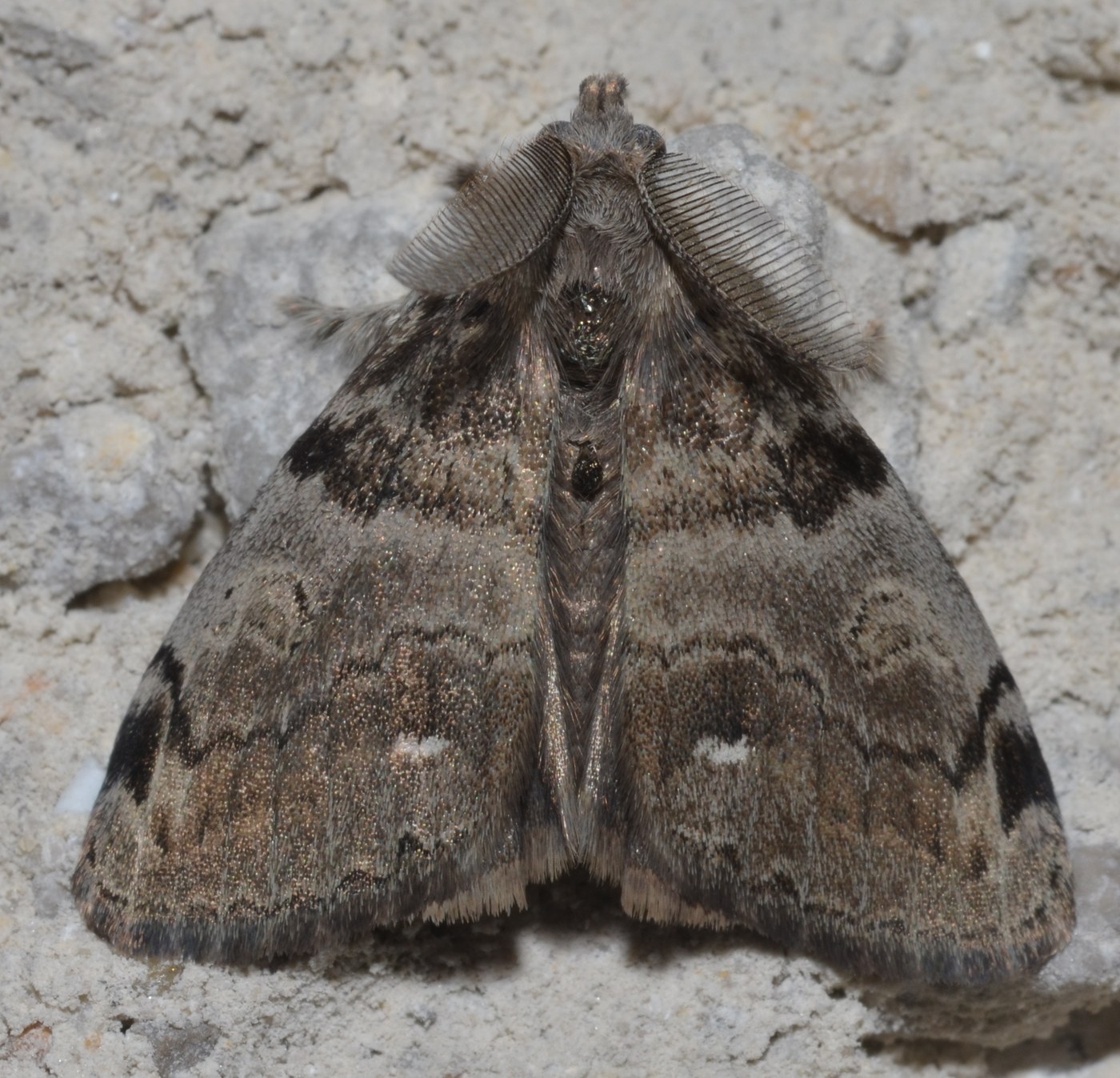
Tussock Moth
Deciduous forests, parks, gardens
Wax Moth
Beehives, apiaries, stored beeswax and comb
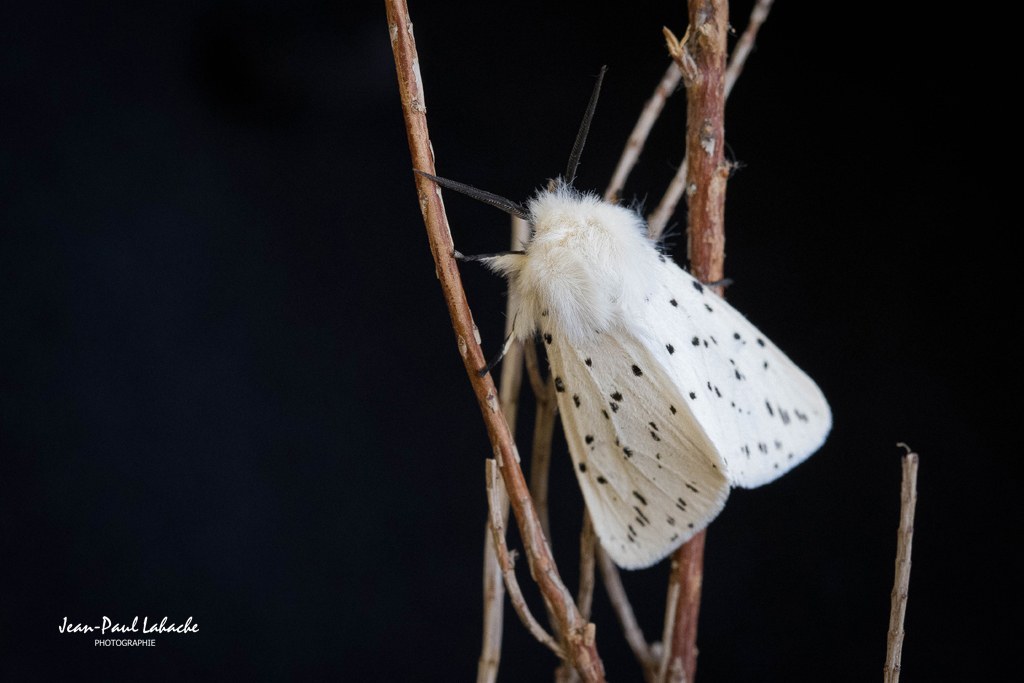
White Ermine Moth
Gardens, meadows, hedgerows
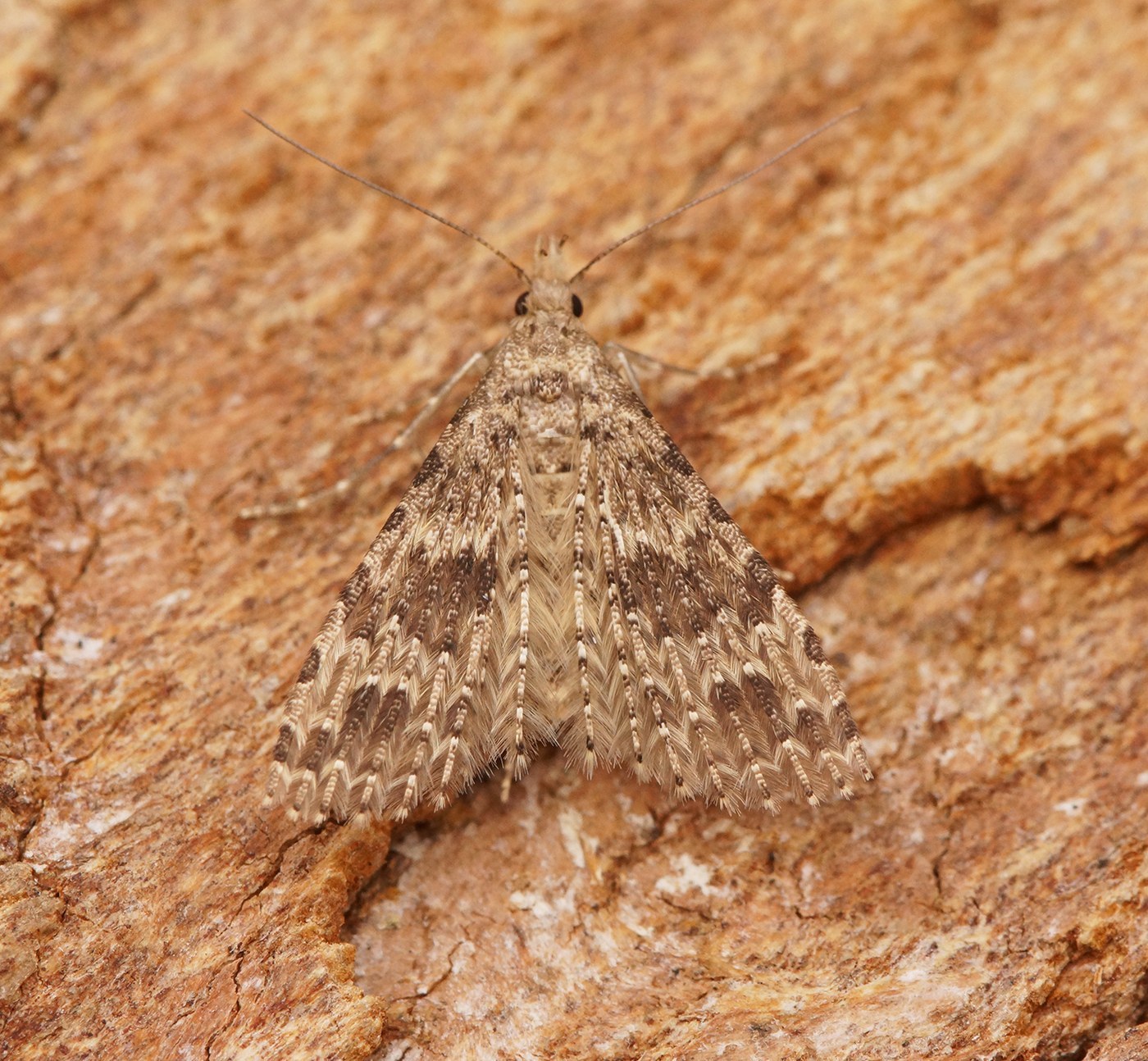
Twenty-plume Moth
Gardens, hedgerows, near honeysuckle
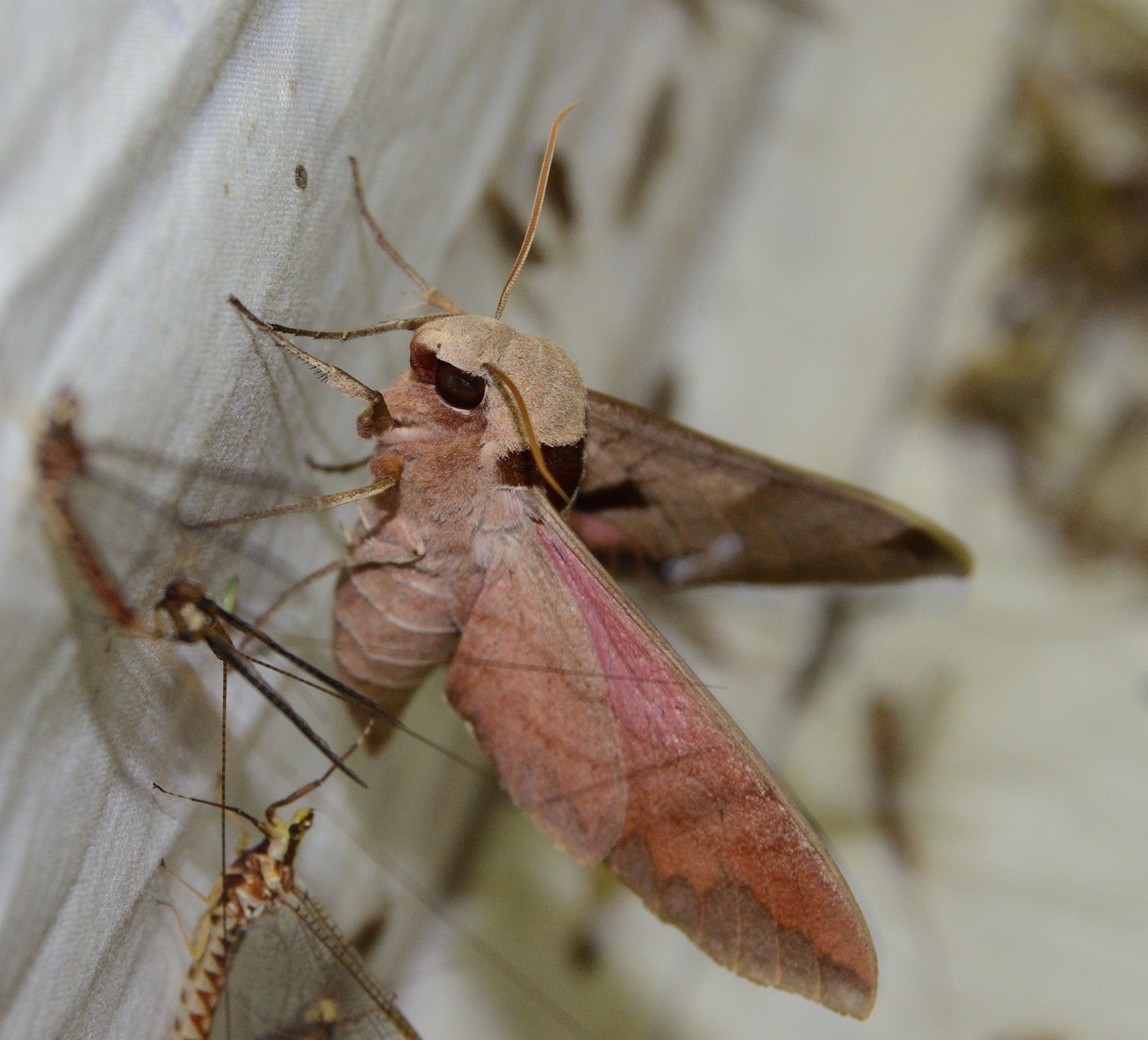
Achemon Sphinx Moth
Vineyards, woodland edges, gardens with wild grape
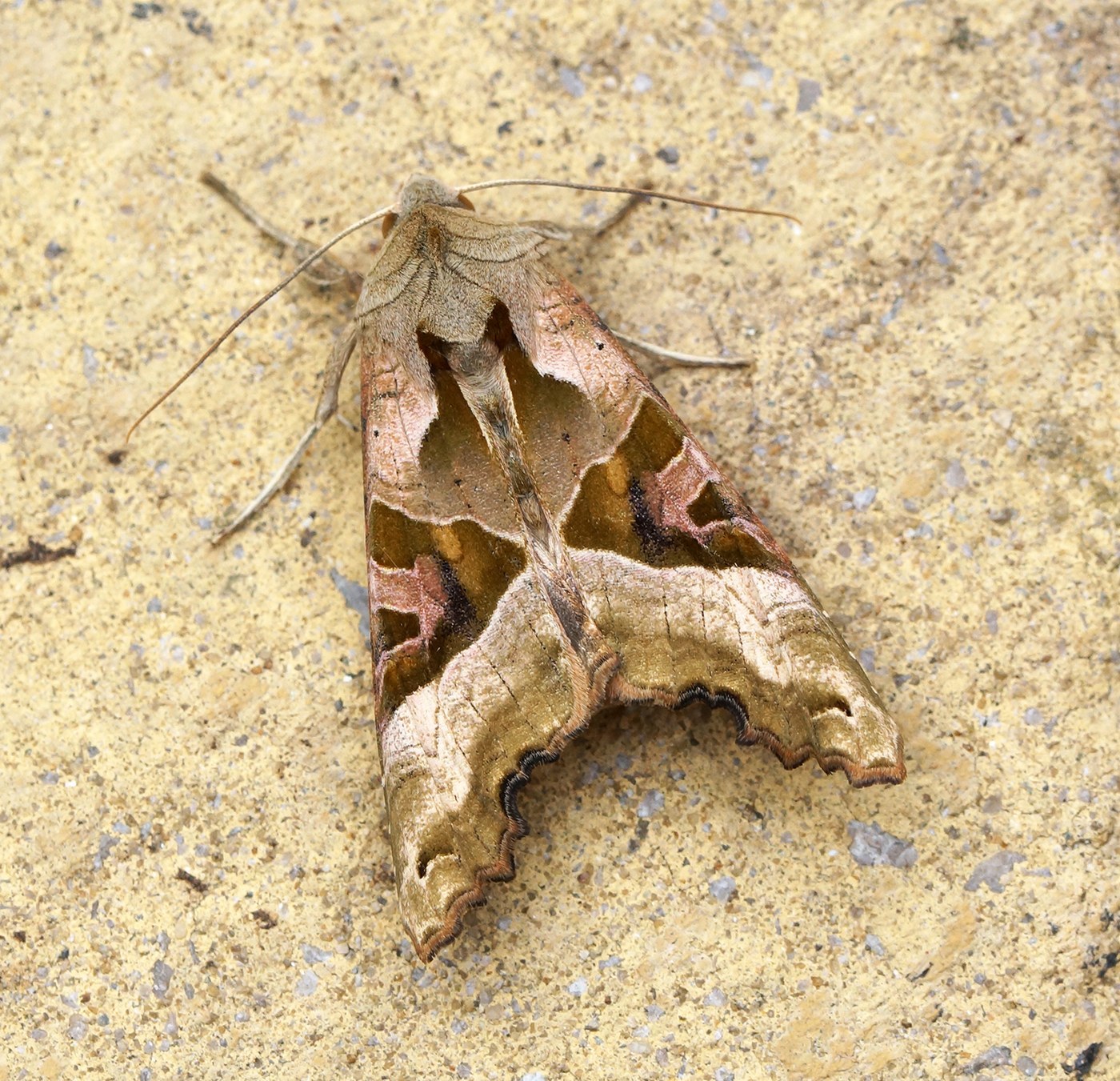
Angle Shades Moth
Gardens, hedgerows, woodland edges, urban parks
Atlas Moth
Tropical and subtropical lowland forests of Southeast Asia