Walking Stick Insect Identification Guide
Discover how to spot this master of camouflage that looks exactly like a twig.
Read the full Walking Stick Insect encyclopedia entry →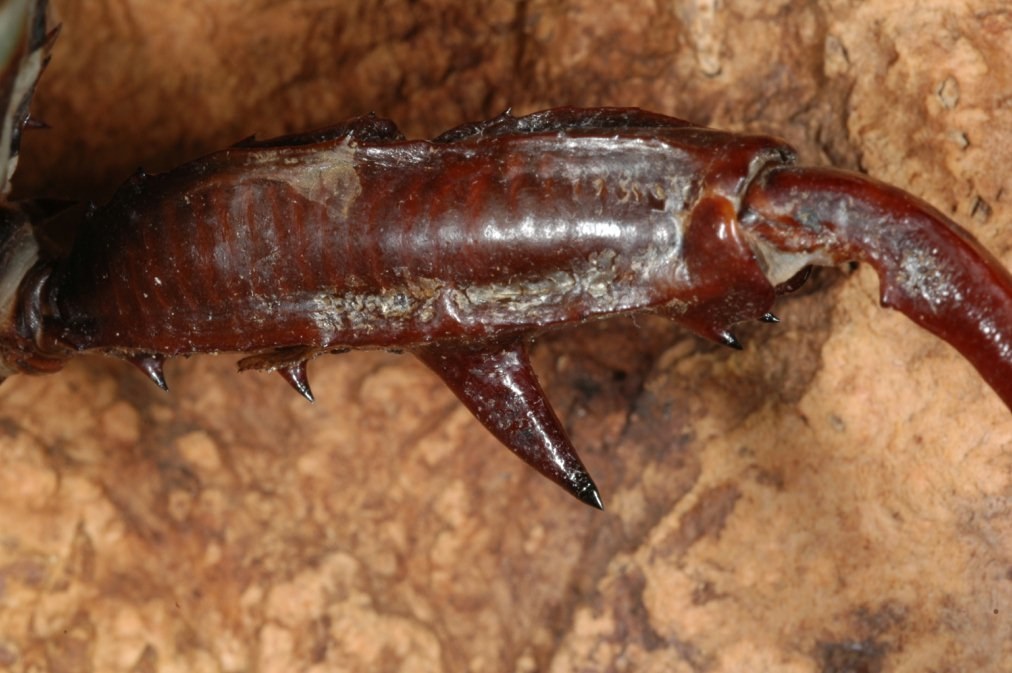
Key Visual Features
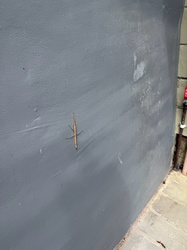
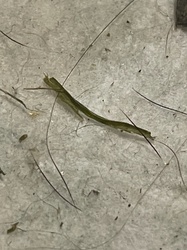
- Body is extremely elongated and slender, closely resembling a twig or small branch.
- Length varies widely by species, from about 2 inches to over a foot in the largest tropical forms.
- Coloring is typically brown, tan, gray, or green, matching bark or foliage.
- Legs are long, thin, and held close to the body or stretched forward and backward to enhance the twig-like silhouette.
- Many species lack wings entirely; some have short wing pads, and a few tropical species have fully functional wings that are hidden when at rest.
- Antennae range from short and stubby to long and thread-like depending on species.
- The body surface can be smooth or textured with small bumps and ridges that mimic bark.
Where and When You'd See It
- Found in wooded areas, shrubs, and gardens, often resting motionless on twigs, branches, or leaves during the day.
- Most active at night when they move and feed, which is why they are far easier to notice after dark with a flashlight than during daylight.
- During the day they remain still, relying on camouflage and often swaying gently to mimic a twig moving in the breeze.
- Found across a wide range of climates, with the greatest size and diversity in tropical and subtropical regions.
Similar-Looking Species
- Praying mantises can share an elongated look but have a distinctly triangular head, large forward-facing eyes, and grasping front legs, which walking sticks lack.
- Certain grasshoppers or katydids may appear stick-like but have thicker hind legs built for jumping, while walking sticks have uniformly thin legs built for slow walking.
- Actual twigs or plant stems are the most common "false positive" — a true walking stick will have visible leg joints, antennae, and eyes on close inspection, and may slowly sway or shift position.
Quick ID Checklist
- Long, thin, twig-like body with matching bark or leaf coloration.
- Long, slender legs held close to or extended from the body.
- Mostly wingless or with wings hidden at rest.
- Motionless during the day, active and moving at night.
- No grasping front legs or triangular mantis-like head.
Frequently asked questions
How do I tell a walking stick from an actual twig?
Look closely for jointed legs, small antennae, and eyes; a real twig has none of these, and a walking stick may slowly sway or shift its legs if you watch for a moment.
Why are walking sticks so hard to spot during the day?
They remain motionless on branches or foliage during daylight hours and rely on their twig-like coloring and shape for camouflage, becoming active mainly after dark.
How can I distinguish a walking stick from a praying mantis?
A mantis has a triangular head with large eyes and thickened, grasping front legs, while a walking stick has a simple elongated head and uniformly thin legs on all six sides.
Do all walking sticks look the same?
No, species vary greatly in length, color, and texture, from smooth green forms that mimic leaves or stems to rough brown forms that mimic bark, though all share the basic elongated body plan.
Walking Stick Insect identified by the community
Recent Walking Stick Insect finds identified with Bug Identifier.