White-lined Sphinx Moth Identification Guide
Recognize the hummingbird-like white-lined sphinx moth by its tan diagonal wing stripe and pink hindwings.
Read the full White-lined Sphinx Moth encyclopedia entry →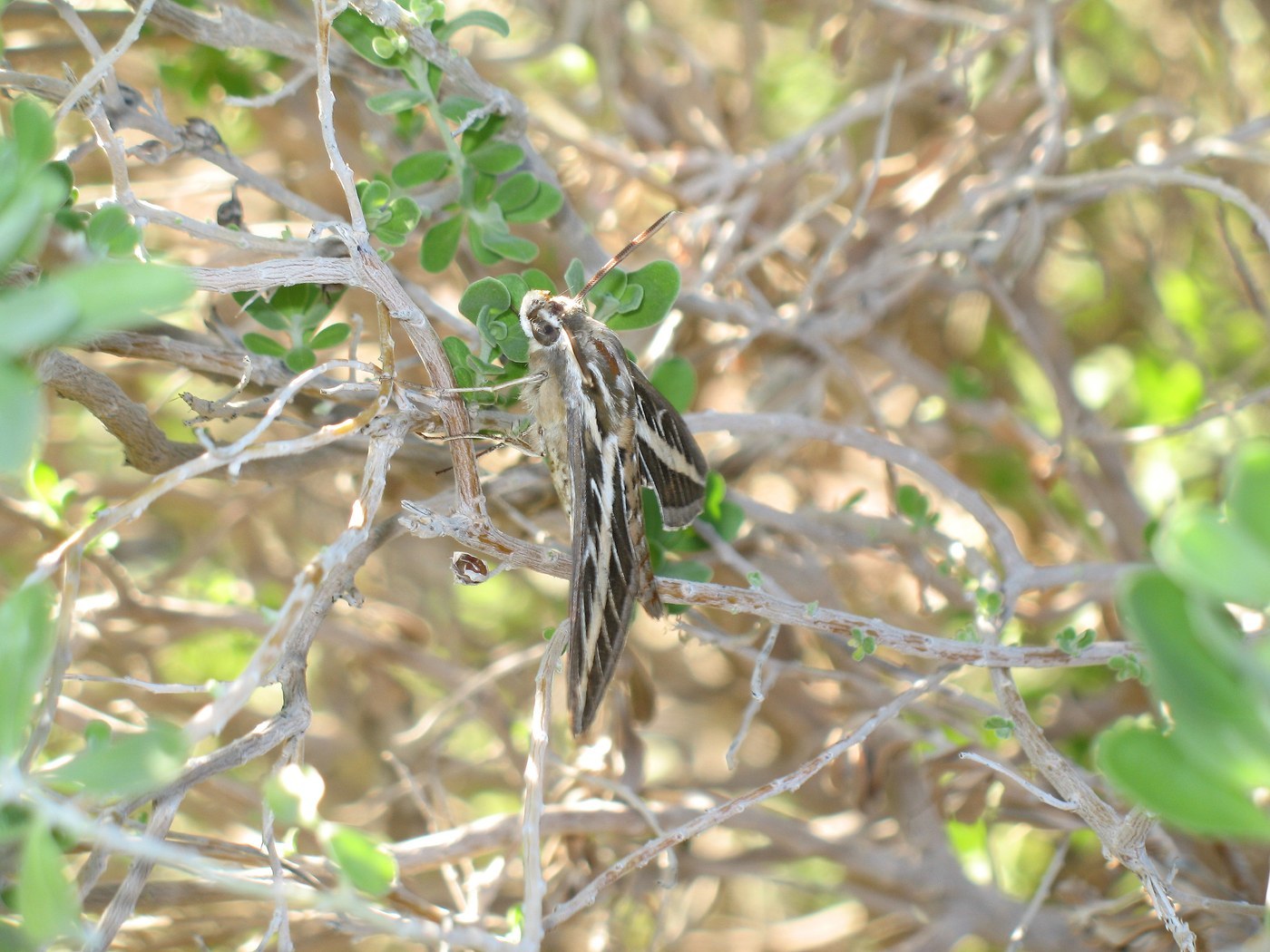
Key Visual Features
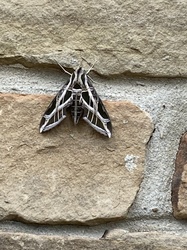
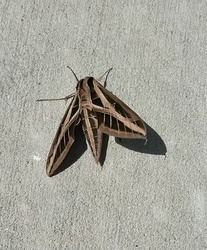
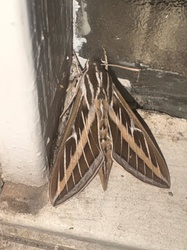
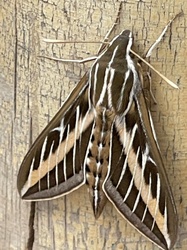
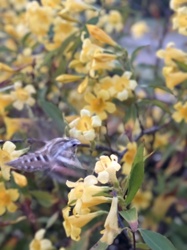
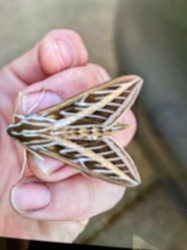
The white-lined sphinx moth (Hyles lineata) has a streamlined, torpedo-shaped body typical of sphinx moths, with a wingspan of roughly 2.5 to 3.5 inches. The forewings are olive-brown crossed by a bold, pale tan diagonal band running from the base to the outer wing tip, with additional fine white lines tracing the veins—this striking diagonal stripe is one of the best field marks for the species. The hindwings are rosy pink with dark brown-black borders, visible mainly during flight. The thick, tapered abdomen is patterned with alternating white lines. A long, coiled proboscis allows it to feed from flowers while hovering in place, wings beating so fast they blur, closely resembling a hummingbird in both size and behavior.
Where and When You'll See It
This species is widespread across North America, found in gardens, deserts, open fields, and disturbed areas, and it is highly mobile, sometimes appearing in large migratory numbers in certain years and regions. While primarily crepuscular and nocturnal, it is unusual among sphinx moths in also being commonly seen feeding at flowers during bright daylight, especially at dusk and dawn. It's active from spring through fall in most of its range, with peak sightings in summer.
Similar-Looking Bugs
- Hummingbird clearwing moths (Hemaris species): Also hover at flowers like a hummingbird, but are noticeably smaller, have clear (not solid-colored) patches on their wings, lack the tan diagonal forewing stripe, and fly exclusively by day.
- Other sphinx moths (Sphingidae): Share the same general torpedo-shaped body and strong hovering flight, but lack the specific combination of a bold tan diagonal forewing stripe and rosy-pink hindwings.
- Actual hummingbirds: Occasionally mistaken for this moth at a glance due to similar hovering behavior and size, but obviously differ in having feathers, a beak, and no antennae.
Quick ID Checklist
- Olive-brown forewings with a bold pale tan diagonal stripe
- Rosy pink hindwings bordered in dark brown-black
- Thick, tapered abdomen with white line markings
- Hovers at flowers using a long coiled proboscis, hummingbird-like
- Active at dusk, dawn, and sometimes daytime, spring through fall
Frequently asked questions
How can I tell a white-lined sphinx moth from a hummingbird?
Look for antennae and a coiled proboscis instead of a beak, along with the bold tan diagonal stripe on the forewings, which no hummingbird has.
Is this moth active during the day or only at night?
It is mainly active at dusk and dawn but is unusual among sphinx moths in also being regularly seen feeding at flowers during full daylight.
What is the easiest wing feature to spot for identification?
The pale tan diagonal band crossing each olive-brown forewing from base to tip is the most distinctive and easiest feature to notice.
How is it different from hummingbird clearwing moths?
White-lined sphinx moths are larger, have solid-colored wings with the tan diagonal stripe, and lack the clear window-like wing patches seen in hummingbird clearwing moths.
White-lined Sphinx Moth identified by the community
Recent White-lined Sphinx Moth finds identified with Bug Identifier.