Yellow Dung Fly Identification Guide
Recognize the yellow dung fly by its golden-orange, fuzzy body, long legs, and habit of clustering on fresh cow pats in pastures.
Read the full Yellow Dung Fly encyclopedia entry →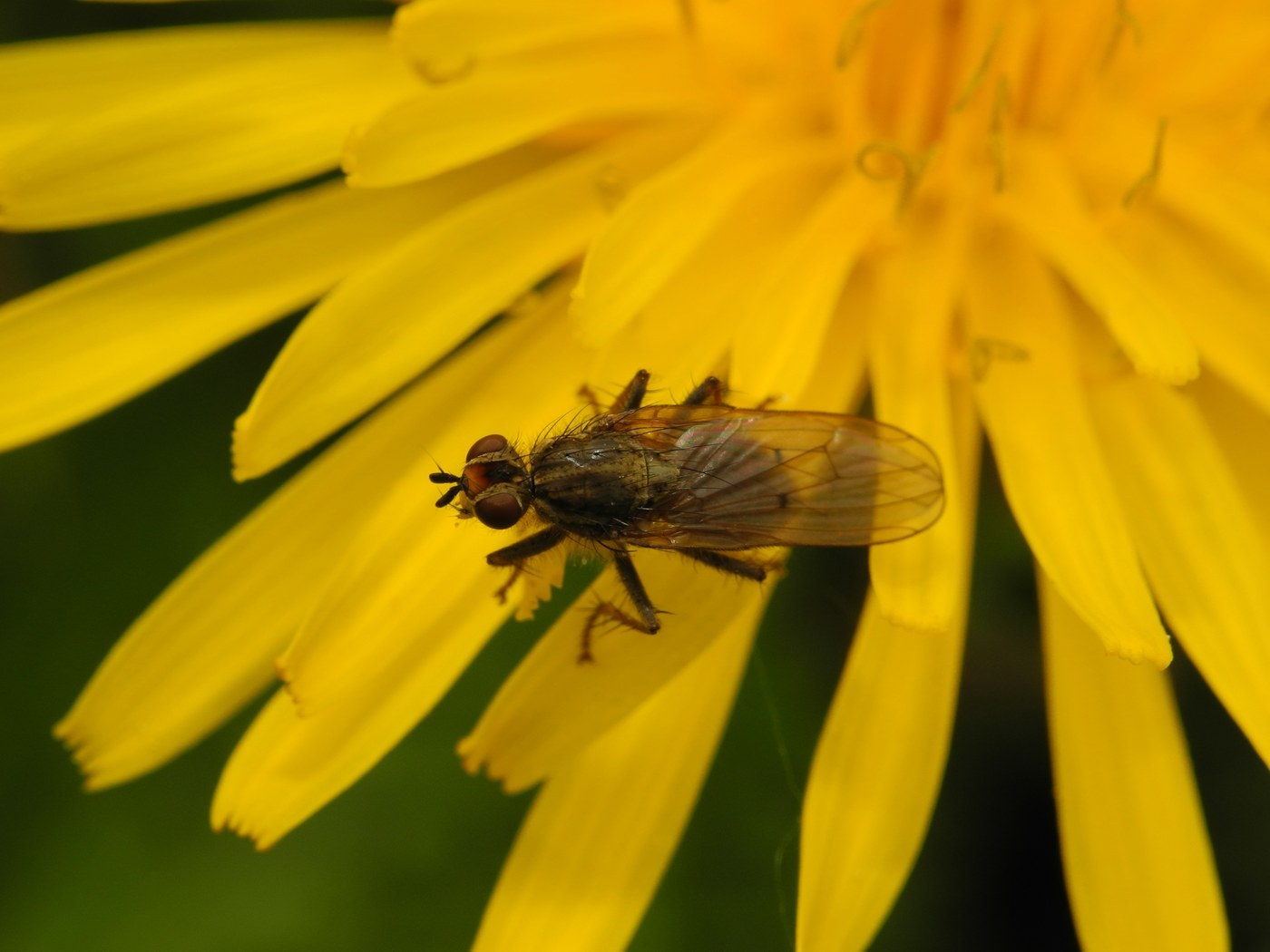
Key Visual Features
The yellow dung fly is one of the most recognizable and widely studied dung flies, especially notable for the striking color of the males.
- Size: Around 6-10 mm, with males typically appearing slightly larger and bulkier than females.
- Color: Males are a bright golden-yellow to orange with a dense covering of fine hairs giving a fuzzy, fur-like appearance; females are duller olive-green to gray-brown and less hairy.
- Body shape: Sturdy, somewhat elongated body with a rounded, slightly humped thorax.
- Wings: Clear to faintly yellow-tinted, held angled outward or slightly spread at rest, often longer than the abdomen.
- Legs: Long, orange-yellow in males, and covered in fine bristles used for gripping the dung surface and other flies.
- Antennae: Short and inconspicuous, typical of most flies, with a small bristle at the tip.
Where and When You'll See Them
Yellow dung flies are a common sight on fresh cow pats and other livestock dung in pastures, meadows, and farmland, particularly in cooler, temperate regions. Because they tolerate cooler temperatures better than many flies, they can be active from early spring through late fall, even on overcast or chilly days. Look for clusters of the vivid yellow males on top of fresh dung, often mating or contesting with rivals, while duller females arrive briefly to lay eggs.
Similar-Looking Bugs
- Other dung flies: Many relatives share the pasture-dung habitat, but few match the male yellow dung fly's vivid golden-orange, densely hairy body — most others are gray, brown, or less intensely colored.
- Hover flies: Some yellow-and-black hover flies can superficially suggest a similar color scheme from a distance, but they have large eyes covering most of the head and a smoother, less fuzzy body, and are usually found on flowers rather than dung.
- Bees: The fuzzy yellow appearance of male yellow dung flies can trigger a passing resemblance to small bees, but the single pair of wings, short antennae, and true fly body shape set them apart on closer look.
Quick ID Checklist
- Males: bright golden-yellow, densely fuzzy body
- Females: duller olive-gray, less hairy
- Long, bristly orange-yellow legs
- Found in clusters directly on fresh cow pats in pasture
- Active even in cooler weather, spring through fall
Frequently asked questions
Why do male and female yellow dung flies look so different?
This is a case of sexual dimorphism: males are bright golden-yellow and densely furry, likely related to mate competition, while females are duller olive-gray and less hairy, blending more with the dung surface.
Where is the best place to look for yellow dung flies?
Fresh cow pats or similar livestock dung in pastures and farmland are the most reliable spot, where males often gather in visible numbers waiting for females.
Can yellow dung flies be seen in cold weather?
Yes, compared to many flies they are relatively cold-tolerant and can remain active into late fall and even on cool, overcast days when other flies are inactive.
How is the yellow dung fly different from other dung-associated flies?
Its males' vivid golden-orange, densely hairy body is the standout feature — most other dung-visiting flies are grayer, browner, or far less fuzzy in appearance.
Yellow Dung Fly identified by the community
Recent Yellow Dung Fly finds identified with Bug Identifier.