
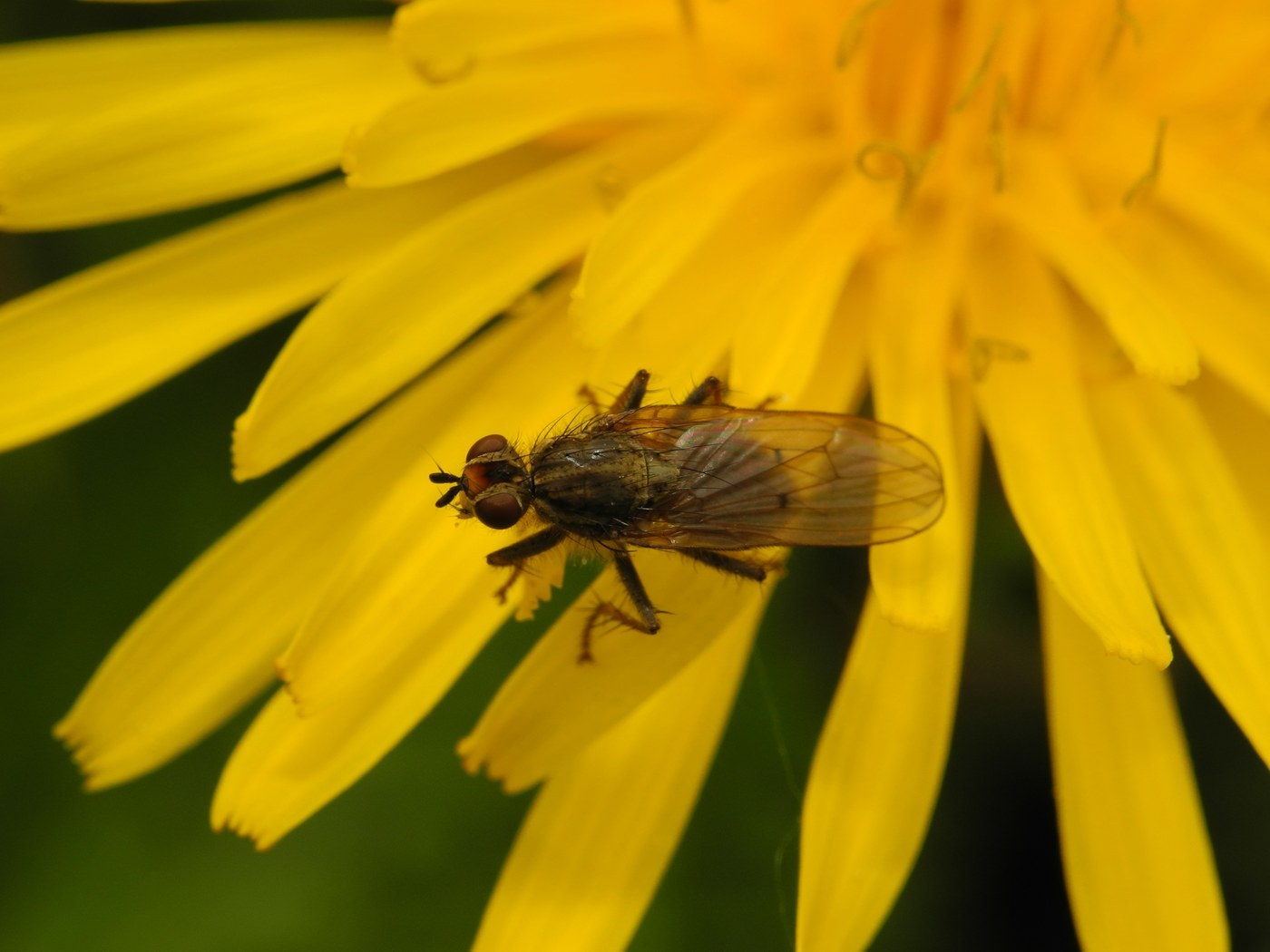
Yellow Dung Fly
Scathophaga stercoraria
A golden, densely furred fly whose bright males cluster on fresh cow pats in pastures, competing for mates while ambushing smaller insects drawn to the same spot.
- Size
- 6-11 mm (about 0.2-0.4 in) long
- Habitat
- Pastures and fields with fresh cattle dung
- Danger
- Harmless
Spotted a bug like this?
Identify any bug or insect from a photo, free.
Overview
The yellow dung fly is one of the most familiar and thoroughly studied dung flies, common in pastures and grasslands throughout much of Europe, North America, and other temperate regions where cattle graze. Males are especially eye-catching, covered in dense golden-yellow hairs that give the species its common name, while females are noticeably duller, with a greener or grayish-brown tone and shorter body hair.
This species has become a well-known model organism in the study of animal mating behavior, since fresh cow pats reliably draw large numbers of both sexes, allowing researchers to observe mate competition, courtship, and reproductive strategies in a natural setting. Males often gather in numbers on a single fresh dung pat, waiting to intercept arriving females.
Beyond their role in scientific research, yellow dung flies are ecologically useful in pastures, since their larvae help break down cattle dung and their adults prey on other insects visiting the same dung, contributing to natural pest regulation in grazing land.
How to Identify
- Males are densely covered in golden-yellow hairs, giving a fuzzy, bright appearance
- Females are duller, with greenish-gray to brown coloring and less dense body hair
- Robust build with long, bristly legs used for gripping dung and prey
- Large, often reddish compound eyes
- Typically found directly on or hovering closely around fresh cattle dung in pastures
Habitat & Range
Yellow dung flies are widespread throughout temperate regions of Europe, North America, and parts of Asia, closely tied to cattle grazing land. They are found in pastures, meadows, and fields wherever fresh cow dung is regularly available.
Adults are most active from spring through autumn, with the greatest numbers appearing on the freshest dung pats within hours of deposition.
Behavior & Diet
Adult yellow dung flies are predatory, capturing smaller flies and insects that visit fresh dung, and they also occasionally feed on nectar from nearby flowers. Fresh dung pats serve as the primary meeting and mating site for the species, with males frequently competing directly for access to arriving females.
Larvae develop within the dung, feeding on the organic material and associated microorganisms, which helps recycle nutrients back into pasture soil. As both predators and decomposers at different life stages, yellow dung flies play a dual ecological role in grassland ecosystems.
Life Cycle
Females lay their eggs directly into fresh cattle dung soon after mating, since the pat needs to remain moist for the larvae to develop. Eggs hatch within about a day, and larvae feed within the dung for one to two weeks, passing through three larval instars.
Mature larvae leave the dung to pupate in the adjacent soil, with adults emerging roughly one to a few weeks later depending on temperature. The species produces several generations during the warm season, and in temperate climates it typically overwinters as larvae or pupae in soil beneath older dung.
Frequently asked questions
Why are male yellow dung flies bright golden-yellow?
Dense yellow hair covers the male's body, a trait that distinguishes them from the duller, greenish-brown females and gives the species its common name.
Are yellow dung flies pests to cattle?
No, they do not feed on or bother livestock; they use fresh dung as a site for mating, egg-laying, and hunting other insects.
Why is the yellow dung fly commonly studied by scientists?
Because large numbers gather predictably on fresh cow pats, making it easy to observe natural mating competition and reproductive behavior in the field.
What do yellow dung fly larvae feed on?
They develop and feed within fresh cattle dung, consuming the organic matter and helping break it down.
Yellow Dung Fly guides
In-depth guides for identifying, understanding, and living alongside Yellow Dung Fly.
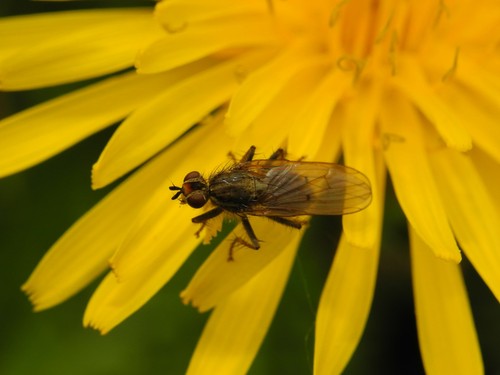
Yellow Dung Fly identified by the community
Real finds identified with Bug Identifier.

Other bugs you may enjoy
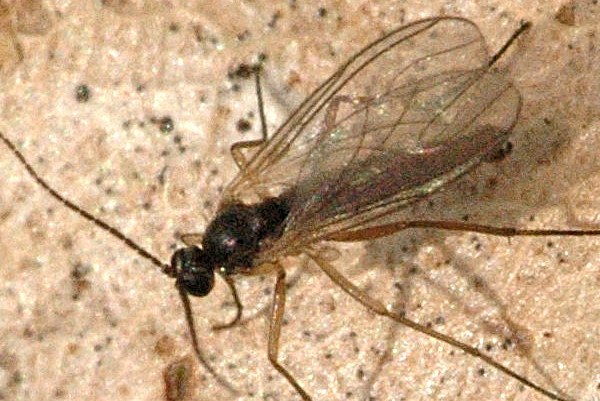
Aphid Midge
Gardens, greenhouses, and crops with aphids
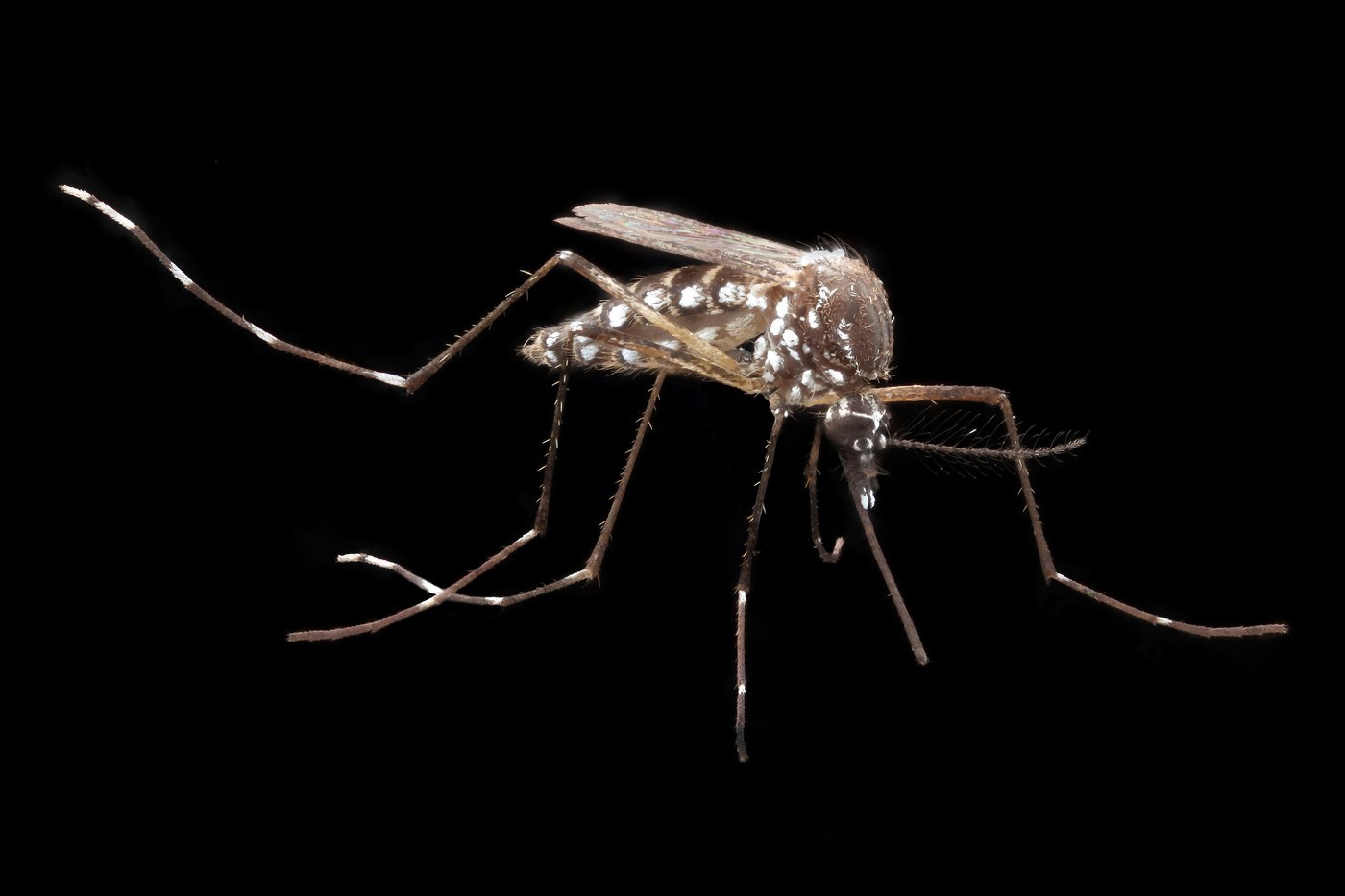
Yellow Fever Mosquito
Urban and peri-urban areas near small artificial water containers in tropical and subtropical regions worldwide
Root Maggot
Garden and field soil around the roots of cole crops and other vegetables
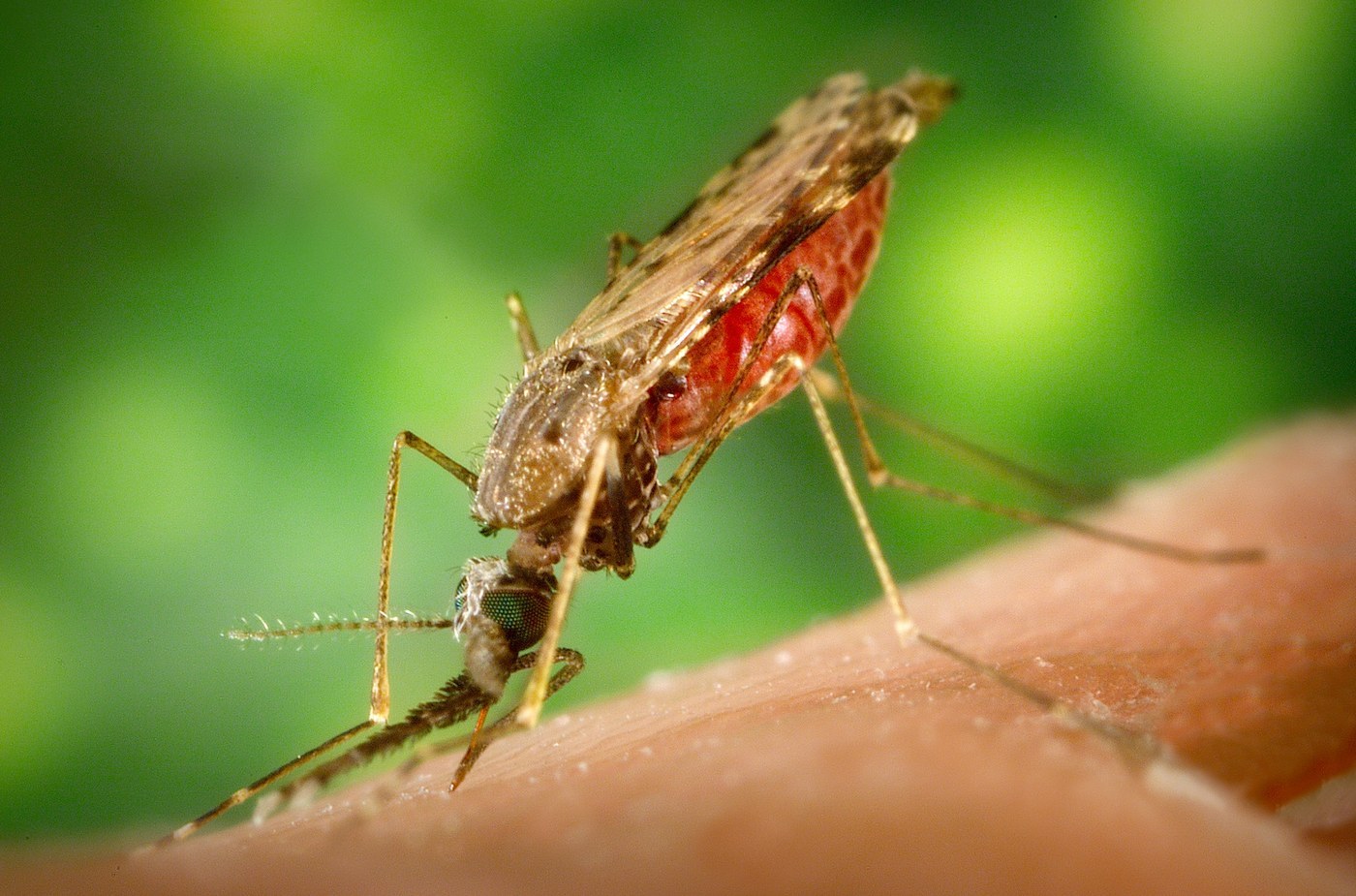
Anopheles Mosquito
Clean, still or slow-moving freshwater habitats such as marshes, ponds, and rice paddies
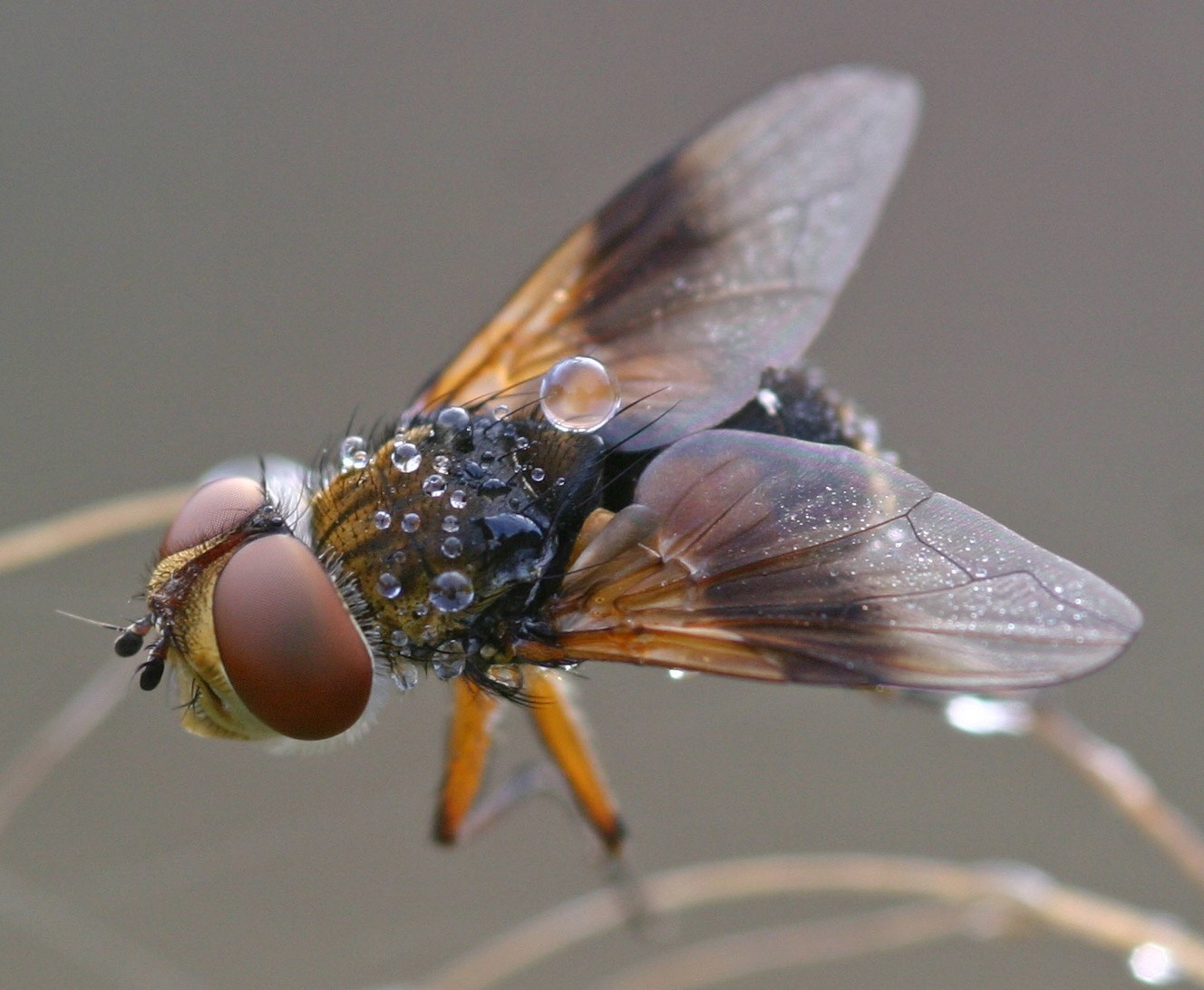
Tachinid Fly
Gardens, meadows, and woodlands wherever host caterpillars and other insects occur
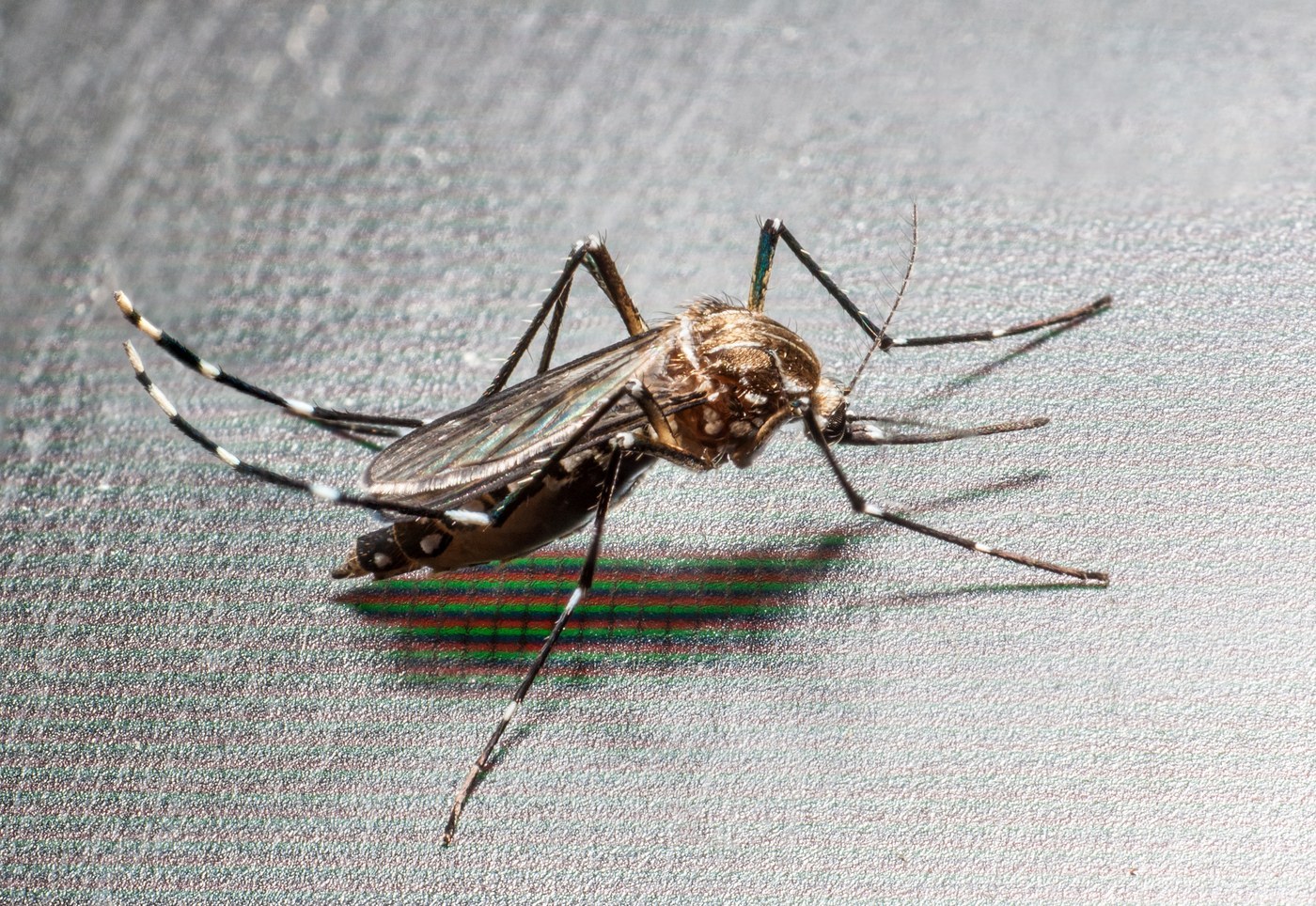
Asian Tiger Mosquito
Shaded urban and suburban areas near small water-holding containers, tires, and tree holes; native to Southeast Asia, now widespread
Tsetse Fly
Wooded savanna, riverine thickets, and forest edges across sub-Saharan Africa
Vinegar Fly
Around overripe fruit, compost, and fermenting materials worldwide
Screwworm Fly
Warm, humid lowlands of the Americas, especially near livestock and wildlife wounds
Soldier Fly
Wetland margins, decaying organic matter, and vegetation near water
Punkie
near marshes, mudflats, ponds, and other standing water
Warble Fly
Pastures and rangeland wherever cattle and other large grazing mammals occur