Bird Mite Identification Guide
Learn how bird mites resemble chicken mites in size and shape but are typically tied to wild bird nests.
Read the full Bird Mite encyclopedia entry →Key Visual Features
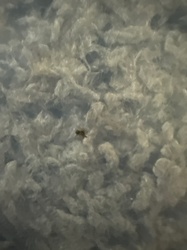
Bird mites (several species in the genus Ornithonyssus and relatives) are small, free-living mites closely associated with bird nesting sites.
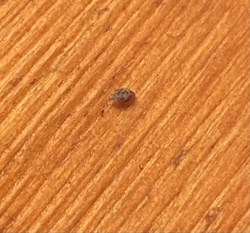
- Size: Roughly 0.6–1 mm long, similar to other free-living nest mites.
- Color: Pale tan to grayish when unfed, becoming darker reddish-brown after feeding, though the color shift is generally less pronounced than in some related species.
- Body shape: Oval, flattened, and soft-bodied.
- Legs: Eight thin legs extending from a compact body.
- Wings/antennae: None; no wings or true antennae.
- Markings: Fine hairs (setae) cover the body and are visible under magnification; overall appearance is fairly uniform with few bold markings.
Where and When You'd See Them
Bird mites are found in and around active or recently abandoned bird nests — in eaves, vents, gutters, and structural cavities near nesting sites. They are most numerous while a nest is active, typically in spring and summer, and populations decline once a nest is vacated as the mites disperse looking for another host nest nearby. They tend to stay close to the nest site rather than ranging widely, and are rarely encountered far from the structure or tree that holds the originating nest.
Similar-Looking Bugs
- Chicken mites are nearly identical in size and shape and are best distinguished by association with poultry housing rather than wild bird nests, along with a more dramatic color shift after feeding.
- Soil mites vary more in color and texture and are found in soil and leaf litter, unlike the nest-associated bird mite.
- Clover mites keep a consistent reddish color and are associated with vegetation and building exteriors, not nests.
- Follicle mites are microscopic and elongated rather than oval, making them easy to rule out by shape alone.
Quick ID Checklist
- Small, roughly 0.6–1 mm, oval, flattened, soft-bodied
- Pale tan to gray when unfed, darkening somewhat after feeding
- Eight thin legs, no wings or antennae
- Found in or near active or recently vacated bird nests, eaves, and vents
- Numbers peak during nesting season and decline once a nest is abandoned
Frequently asked questions
How can I tell a bird mite from a chicken mite?
The two look very similar, but bird mites are associated with wild bird nests in eaves, vents, and gutters, while chicken mites are tied to poultry housing, and the color shift after feeding tends to be more dramatic in chicken mites.
When are bird mites most numerous?
They peak in numbers while a nest is actively occupied, generally during spring and summer nesting season.
What happens to bird mites after a nest is abandoned?
Populations decline as the mites disperse from the vacated nest in search of another nearby nest site.
What color are bird mites?
They are pale tan to grayish when unfed and become somewhat darker after feeding, though less dramatically than some related nest mites.
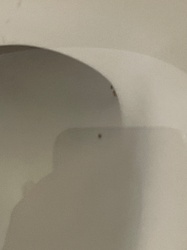
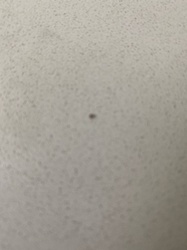
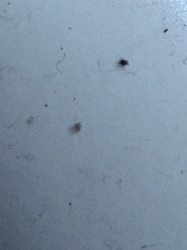
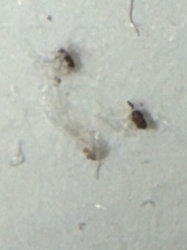
Bird Mite identified by the community
Recent Bird Mite finds identified with Bug Identifier.