Black Soldier Fly Identification Guide
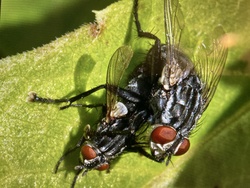
Identify black soldier flies by their sleek black wasp-like body, smoky wings, and pale translucent segments near the base of the abdomen.
Read the full Black Soldier Fly encyclopedia entry →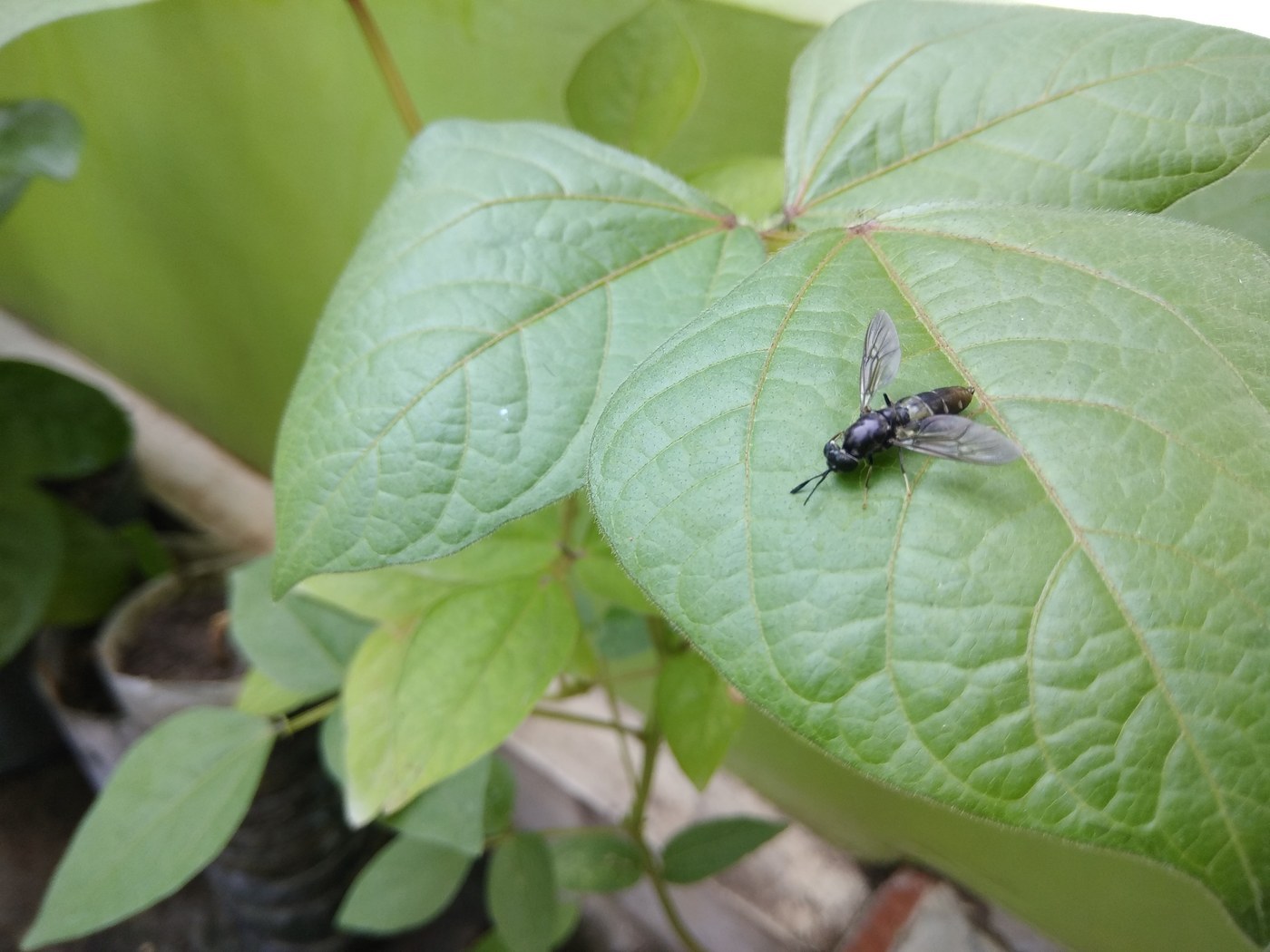
Key Visual Features
The black soldier fly is one of the best-known members of the soldier fly family, easily recognized once you know its distinct features.
- Size: Adults measure roughly 15-20 mm, making them one of the larger soldier flies.
- Color: Overall dark, glossy black to blue-black body, sometimes with a faint metallic sheen.
- Body shape: Elongated, somewhat flattened, and wasp-like in outline, narrowing toward the head.
- Wings: Smoky gray to dark, held flat and overlapping over the back at rest, distinctly darker than the clear wings of many other flies.
- Legs: Dark near the body but often with pale, whitish-yellow tips on the last leg segments (tarsi), a helpful field mark.
- Antennae: Long and straight, notably longer than in many other flies, extending forward from the head.
- Distinctive markings: Two translucent, pale "windows" near the base of the abdomen on the second segment are a signature identifying feature.
Where and When You'll See Them
Adults are typically found resting on foliage, fences, or sunny surfaces near compost bins, manure, decaying fruit, or other decomposing organic matter, since that's where larvae develop. They're most active in warm weather from late spring through fall and tend to be seen during the day, often basking or resting quietly rather than flying erratically.
Similar-Looking Bugs
- Wasps: Black soldier flies are frequently mistaken for wasps due to their dark, sleek body, but they have only one pair of wings, no narrow waist, and straight (not elbowed) antennae.
- Other soldier flies: Many relatives share the general body plan, but the black soldier fly's larger size, uniformly dark coloring, pale leg tips, and translucent abdominal windows help distinguish it from paler or more colorful species.
- Carpenter bees: Bulkier and hairier with a rounder abdomen, and fly with an audible buzz, unlike the quieter, more deliberate movement of soldier flies.
Quick ID Checklist
- Glossy black, wasp-shaped body around 15-20 mm
- Dark, smoky wings folded flat over the back
- Pale whitish tips on the last leg segments
- Two translucent pale spots near the base of the abdomen
- Found near compost, manure, or decaying organic matter in warm months
Frequently asked questions
What is the easiest feature to spot a black soldier fly by?
Look for the pair of pale, translucent 'windows' near the base of the abdomen combined with whitish tips on the legs — this combination is fairly distinctive among dark soldier flies.
Do black soldier flies look different from typical house flies?
Yes, they are larger, sleeker, and more wasp-like in shape than the bulkier, gray house fly, and their wings are held flat and overlapping rather than spread.
Why are black soldier flies often seen near compost?
Their larvae feed and develop in decomposing organic material, so adults are commonly found resting on nearby vegetation or structures close to compost piles or manure.
Can black soldier flies be confused with wasps?
Very easily at first glance because of their dark color and shape, but checking for a single pair of wings, no pinched waist, and long straight antennae quickly rules out a wasp.
Black Soldier Fly identified by the community
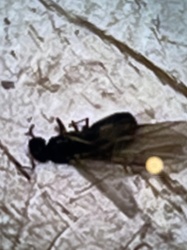
Recent Black Soldier Fly finds identified with Bug Identifier.