Braconid Wasp Identification Guide
Learn to spot these tiny parasitic wasps, most often noticed by the telltale white cocoons they leave on garden caterpillars.
Read the full Braconid Wasp encyclopedia entry →Key Visual Features
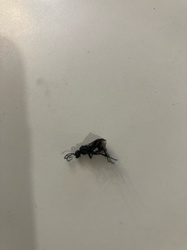
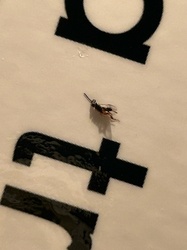
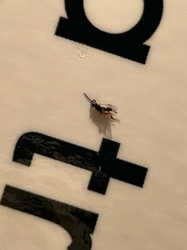
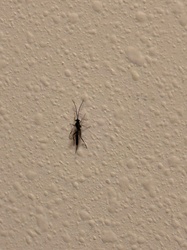
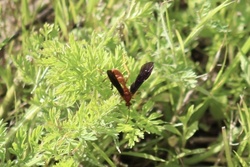
Braconid wasps are a huge and varied family, but most species share a small size and a slender, understated build.
- Size: Very small, typically 2–15 mm, with many common garden species under 10 mm.
- Color: Usually dark brown, black, or reddish, sometimes with pale leg or antennal markings; coloring is generally muted rather than boldly patterned.
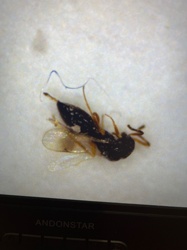
- Body shape: Slender with a narrow waist and a smoothly curved or slightly flattened abdomen; body proportions vary widely between the many species in this family.
- Wings: Clear, membranous, and relatively simple in venation compared to some other wasp families.
- Legs: Thin and proportionate to the small body.
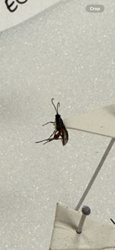
- Antennae: Long and thread-like, often as long as or longer than the body, used to probe hosts and surfaces.
- Ovipositor: In many species, a slender egg-laying tube projects from the rear of the abdomen, sometimes nearly as long as the body itself.
Where and When You'll See One
Adult braconid wasps are easy to overlook, but their presence is often revealed indirectly.
- Look on garden and crop plants where caterpillars feed, especially tomato hornworms, cabbage worms, and other soft-bodied larvae.
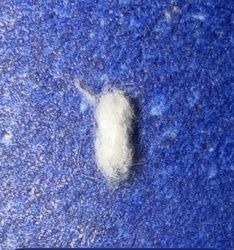
- The clearest sign is a caterpillar covered in small, white, rice-grain-shaped cocoons standing upright on its back — evidence that braconid larvae have completed development inside the host.
- Adults themselves are small and fly weakly, often seen resting on foliage or flowers, most active from spring through fall.
- Many species are drawn to flowering plants with small, shallow blooms, such as dill, fennel, and yarrow, where adults feed on nectar.
Similar-Looking Bugs
- Ichneumon wasps: Generally larger overall, with noticeably longer antennae and, in many species, a much longer ovipositor.
- Chalcid wasps: Usually smaller and more compact, often metallic-colored, without the elongated slender body typical of braconids.
- Aphid mummies vs. cocoon clusters: Aphid parasitoids (a braconid subgroup) leave swollen, tan, papery aphid "mummies" rather than external cocoon clusters, distinguishing them from caterpillar parasitoids.
- Small flying ants: Lack the narrow wasp waist and long thread-like antennae characteristic of braconids.
Quick ID Checklist
- Very small, slender, dark-bodied wasp with a narrow waist
- Long, thread-like antennae, sometimes longer than the body
- Often noticed via white, rice-shaped cocoons on a caterpillar's back rather than the adult itself
- Weak, low flight around host plants and small flowers
- May show a long, thin ovipositor extending from the abdomen tip
Frequently asked questions
Why do I see a caterpillar covered in tiny white cocoons?
Those cocoons are spun by braconid wasp larvae that developed inside the caterpillar and then emerged to pupate on its skin, a common and easily recognized sign of this wasp family.
How big is a typical braconid wasp?
Most species are quite small, generally in the 2–15 mm range, making the adults much easier to notice by their effects on host insects than by direct sighting.
What's the difference between braconid and ichneumon wasps?
Ichneumon wasps tend to be larger with proportionally longer antennae and often a longer ovipositor, while braconids are generally smaller and have simpler wing vein patterns.
Do braconid wasps build visible nests?
No, they don't build nests; females lay eggs directly on or in host insects, and the resulting cocoons on a host's body are the main visible clue to their presence.
Braconid Wasp identified by the community
Recent Braconid Wasp finds identified with Bug Identifier.