Carpenter Ant Identification Guide
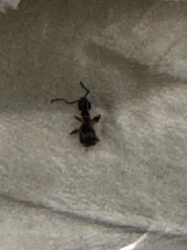
Spot carpenter ants by their large size, single waist node, and smooth evenly curved thorax.
Read the full Carpenter Ant encyclopedia entry →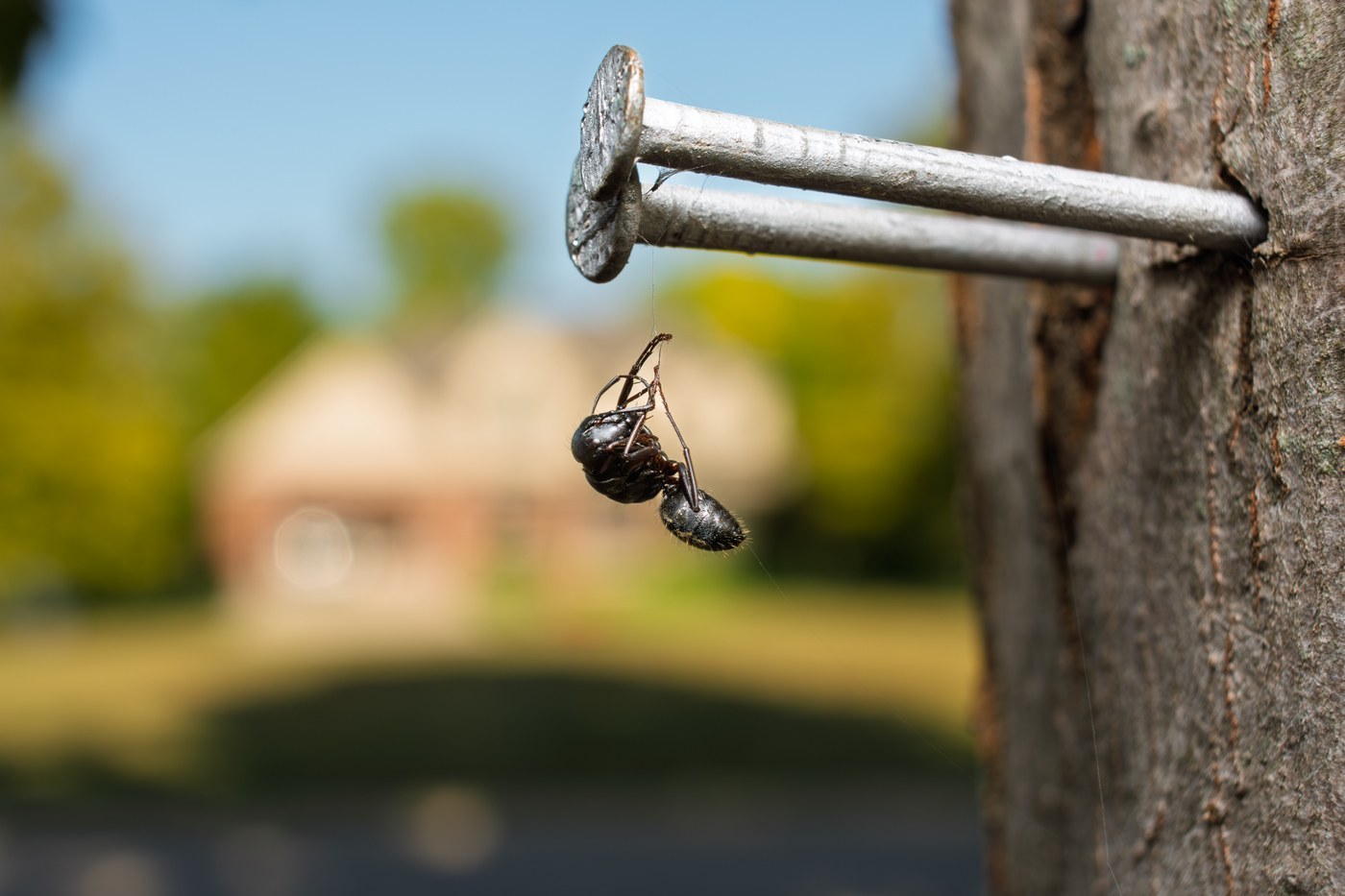
Key Visual Features
- Large ants, workers ranging from about 1/4 to 5/8 inch long, with major (bigger) and minor (smaller) workers present in the same colony
- Solid black or bicolored black-and-red/brown coloring depending on the species
- A single, heart-shaped waist node (petiole) rather than the two nodes seen on some other ants
- A smoothly and evenly rounded thorax profile with no spines or angles when viewed from the side
- Elbowed (bent) antennae and a ring of fine hairs at the tip of the abdomen
- Large mandibles used for excavating wood galleries, giving the head a somewhat blocky appearance in major workers
Where and When You'll See Them
- Nesting in moist or decaying wood: hollow trees, stumps, fallen logs, and water-damaged structural wood
- Common in forested areas and around homes with moisture issues near foundations, windowsills, or rooflines
- Primarily nocturnal foragers, most often spotted at dusk or after dark trailing along fences, tree branches, or foundation lines in search of food
- Colonies can persist for years in a single piece of wood, with satellite nests sometimes spreading to nearby structures
- Found across most of North America, with larger species more common in northern and heavily forested regions
Similar-Looking Bugs
- Fire ants are noticeably smaller and have a two-node waist instead of one, and build loose mounds in open turf rather than nesting in wood
- Termites have straight antennae, a broadly joined waist with no narrow constriction, and equal-length wings on winged forms, unlike the unequal wing pairs of a carpenter ant swarmer
- Other large mound-building ants typically show a spined or angular thorax profile in side view, unlike the smooth, unbroken curve of a carpenter ant's thorax
Quick ID Checklist
- Large size, often over 1/4 inch
- Single heart-shaped waist node
- Smooth, evenly curved thorax outline with no spines
- Bent (elbowed) antennae
- Often seen foraging at night along trails to wood or moisture-damaged areas
Frequently asked questions
What colors do carpenter ants come in?
Common color forms include solid black, reddish-black bicolored, and brown-black, depending on the species.
Do carpenter ants fly?
Winged reproductive carpenter ants, called swarmers, do fly during mating season; they have two pairs of wings, with the hind pair noticeably shorter than the front pair.
How do I tell a carpenter ant from a termite?
Check the waist, antennae, and wings: carpenter ants have a single narrow waist node, elbowed antennae, and uneven wing pairs, while termites have a broad waist, straight antennae, and equal-length wings.
Is the biggest ant I see likely a carpenter ant?
In many regions, carpenter ants are among the largest common ants, so unusually large workers with a smooth thorax and single waist node are a good sign.
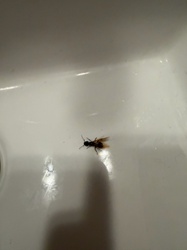
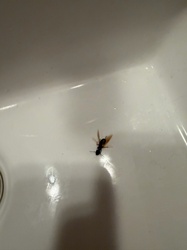
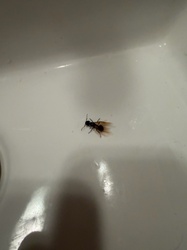
Carpenter Ant identified by the community
Recent Carpenter Ant finds identified with Bug Identifier.