Cluster Fly Identification Guide
Sluggish, golden-haired cluster flies gather in large groups on sunny walls and windows as cooler weather approaches.
Read the full Cluster Fly encyclopedia entry →Key Visual Features
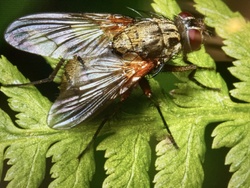
Cluster flies (genus Pollenia) are medium-sized flies often mistaken for house flies until examined closely.
- Size: About 8-10 mm long, slightly larger and bulkier than a common house fly.
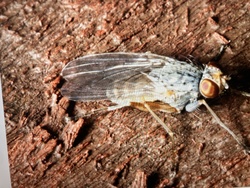
- Body color: Dull gray to dark gray body, non-metallic (unlike shiny blow flies).
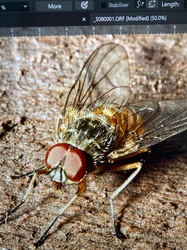
- Distinctive hairs: Covered in short, golden or yellowish hairs on the thorax, most visible up close or in good light.
- Wings: Clear wings that overlap and lie flat over the back at rest, giving a slightly overlapping "roof" appearance.
- Movement: Notably slow and sluggish fliers compared to house flies, often crawling more than flying indoors.
- Sound: Produces a louder, droning buzz when disturbed, compared to a house fly's quicker hum.
Where and When You'll See It
- Common in temperate regions, especially near grassy fields, lawns, and gardens where earthworm hosts live in the soil.
- Most noticeable in late summer through fall, when adults seek sheltered spots to spend the cold months.
- Often found clustering in large numbers on sun-warmed exterior walls, attics, and window sills of buildings.
- Reappears on warm, sunny days in late winter and early spring as temperatures rise.
Similar-Looking Bugs
- House fly: Faster, more agile flier with four dark stripes on the thorax and no golden hair covering.
- Blow fly: Shiny, metallic blue or green body, distinctly different from the dull gray, golden-haired cluster fly.
- Flesh fly: Shows a gray-and-black checkerboard abdomen pattern, which cluster flies lack.
Behavior Notes
Cluster flies get their name from their tendency to congregate in dense groups, sometimes hundreds together, in wall voids, attics, and other sheltered cavities once cooler weather sets in. Unlike house flies, which breed in decaying food or waste, cluster fly larvae are parasites of earthworms in soil, which is why lush lawns and gardens with healthy worm populations tend to produce larger cluster fly numbers nearby.
Quick ID Checklist
- Dull gray body with short golden or yellowish hairs on the thorax
- Slow, sluggish flight and crawling behavior
- Wings overlapping flat over the back at rest
- Larger and bulkier than a typical house fly
- Found clustering in groups on sunny walls, especially in fall
Frequently asked questions
How do I know if I'm seeing a cluster fly and not a house fly?
Look for short golden hairs on the thorax and slower, more sluggish flight; house flies fly faster and lack the golden hair covering.
Why do cluster flies gather in big groups?
In fall, adults seek sheltered locations to spend the colder months and often congregate together on sun-warmed walls and structures before finding a hiding spot.
Why do cluster flies seem to reappear indoors on warm winter days?
Warmth can rouse them from their sheltered resting spots, prompting brief bursts of sluggish activity near windows before they settle again.
Are cluster flies shiny like blow flies?
No, cluster flies have a dull, non-metallic gray body, while blow flies typically show a shiny metallic blue, green, or bronze sheen.
Cluster Fly identified by the community
Recent Cluster Fly finds identified with Bug Identifier.