Dobsonfly Identification Guide
A large, dramatic-looking winged insect known for its long, mottled wings and the oversized jaws of the male.
Read the full Dobsonfly encyclopedia entry →Key Visual Features
The Dobsonfly is one of the largest winged insects found in North America, with a wingspan that can reach 4 to 5.5 inches (10 to 14 cm) in some individuals, making it hard to mistake for most other insects once size is considered.
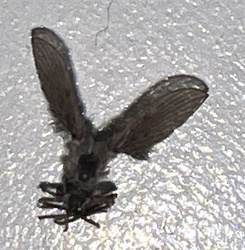
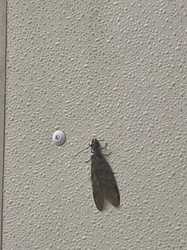
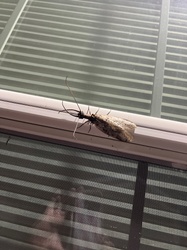
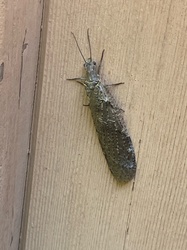
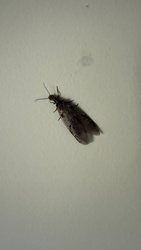
- Wings: Large, elongated, grayish or mottled brown-and-gray wings held roof-like over the back at rest, with a dense network of veins giving them a somewhat lacy, mottled appearance.
- Body color: The body is generally brown to grayish-brown, sometimes with a slightly yellowish or olive tint, and appears soft and somewhat heavy-bodied compared to more delicate winged insects.
- Mandibles: Males have dramatically elongated, curved mandibles (jaws) that can extend well beyond the length of the head, used mainly in displays and interactions with other males rather than for feeding. Females have much shorter, more standard-sized jaws.
- Antennae: Long, thread-like antennae extend forward from the head.
- Legs and body shape: Sturdy legs support a long, soft-bodied abdomen; the overall body plan is elongated and somewhat flattened.
Where and When You'd See It
Dobsonflies are associated with clean, well-oxygenated streams and rivers, since their larvae (often called hellgrammites) develop underwater beneath rocks in flowing water. Adults emerge during the warmer months, generally late spring through summer, and are most often seen at night, frequently drawn to lights near streams or rivers. During the day, adults tend to rest quietly on tree trunks, bridges, or vegetation close to water.
Similar-Looking Species
- Eastern Dobsonfly: Very similar in general appearance; often the specific range and subtle differences in wing pattern or mandible shape are used to separate regional dobsonfly species.
- Fishfly: Smaller overall, with a less bulky body and shorter mandibles even in males, though the general wing shape and habitat are similar.
- Owlfly: Has a more slender body and large, clubbed antennae, quite different from the thread-like antennae of the Dobsonfly.
The combination of very large size, mottled gray-brown wings, and (in males) the strikingly long curved mandibles makes the Dobsonfly one of the more distinctive large insects to identify near streams.
Quick ID Checklist
- Very large wingspan, often 4 inches or more
- Mottled grayish-brown wings held roof-like at rest
- Males show dramatically elongated, curved mandibles
- Found near clean, flowing streams and rivers
- Most active and visible at night, often near lights close to water
Frequently asked questions
Why do male Dobsonflies have such long jaws?
The elongated, curved mandibles seen in male Dobsonflies are mainly used in displays and interactions with other males rather than for feeding, and they make males instantly recognizable compared to females, which have much shorter jaws.
How can I tell a Dobsonfly from a Fishfly?
Dobsonflies are generally larger and bulkier, and males have noticeably longer, more dramatic curved mandibles than the shorter jaws seen on Fishflies, even in Fishfly males.
Where would I be most likely to encounter a Dobsonfly?
Adults are typically found near clean, flowing streams and rivers, especially at night when they are drawn to lights, or resting during the day on tree trunks, bridges, or vegetation close to the water.
What time of year are Dobsonflies most commonly seen?
Adults generally emerge and are active during the warmer months, from late spring through summer, corresponding with when their aquatic larvae complete development in streams.
Dobsonfly identified by the community
Recent Dobsonfly finds identified with Bug Identifier.