Eastern Dobsonfly Identification Guide
A large, mottled-winged insect of eastern streams, best known for the male's oversized, tusk-like jaws.
Read the full Eastern Dobsonfly encyclopedia entry →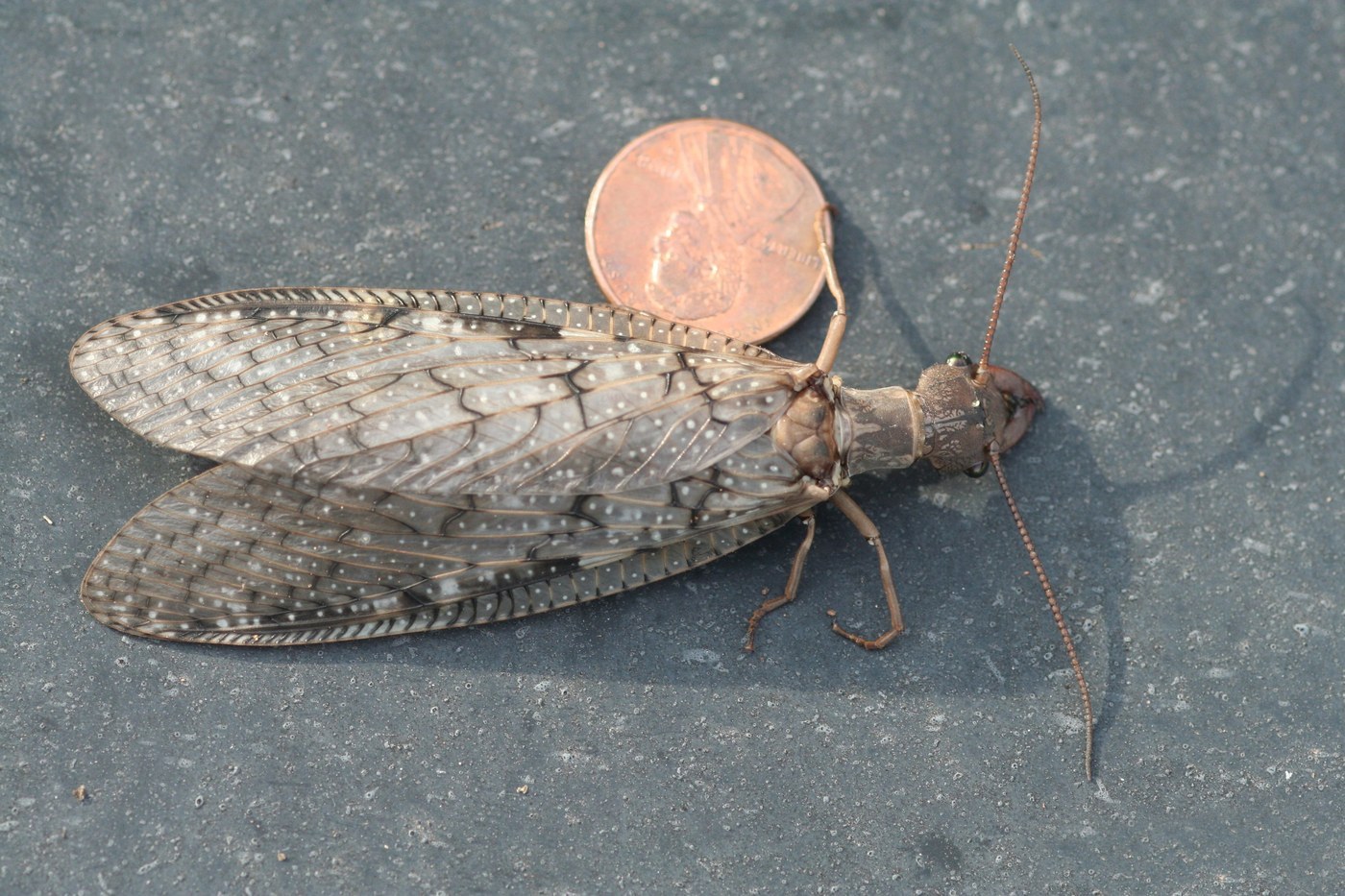
Key Visual Features
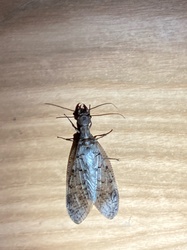
The Eastern Dobsonfly is a large winged insect, with adults reaching a wingspan of roughly 4 to 5.5 inches (10 to 14 cm), among the largest flying insects encountered in the eastern United States.
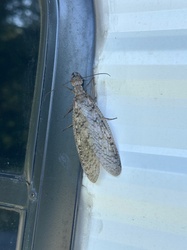
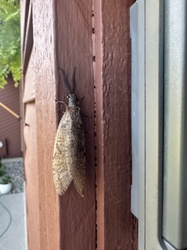
- Wings: Long, grayish to grayish-brown wings held roof-like over the back at rest, marked with a fine, mottled network of veins that gives them a somewhat lacy, patterned look.
- Body color: The body is brown to grayish-brown, with a soft, elongated, somewhat heavy build compared to smaller winged insects in similar habitats.
- Mandibles: Males show dramatically elongated, curved, tusk-like mandibles that extend well past the head, one of the most recognizable features of the species; females have much shorter, less conspicuous jaws.
- Antennae: Long, slender, thread-like antennae project forward from the head.
- Legs and body shape: Robust legs and a long, flattened abdomen, giving the insect a heavy, somewhat clumsy appearance in flight.
Where and When You'd See It
Eastern Dobsonflies are tied to clean, flowing streams and rivers across the eastern United States, where their aquatic larvae (hellgrammites) live under rocks in well-oxygenated water. Adults emerge in the warmer months, generally late spring into summer, and are primarily active at night, often gathering near outdoor lights close to streams. During daylight hours, adults typically rest on tree trunks, bridge supports, or streamside vegetation.
Similar-Looking Species
- Dobsonfly (western/other species): Very similar overall; range is often the most practical clue, since the Eastern Dobsonfly is specifically associated with eastern North American streams.
- Fishfly: Smaller and less bulky, with shorter mandibles in males compared to the pronounced tusks of the Eastern Dobsonfly.
- Owlfly: Has a slimmer body and prominent clubbed antennae, unlike the thread-like antennae of the Eastern Dobsonfly.
Size, mottled wing pattern, and (in males) the unmistakable elongated jaws are the most reliable field marks, with eastern range serving as helpful supporting context.
Quick ID Checklist
- Large wingspan, typically 4 inches or more
- Mottled gray-brown wings held roof-like at rest
- Males have long, curved, tusk-like mandibles
- Found near clean, flowing streams and rivers in the eastern U.S.
- Mostly active at night, often seen near lights close to water
Frequently asked questions
What is the clearest way to recognize a male Eastern Dobsonfly?
The elongated, curved, tusk-like mandibles are the most distinctive feature of males, making them easy to tell apart from females, which have much shorter, more typical-sized jaws.
Is the Eastern Dobsonfly found throughout North America?
It is specifically associated with the eastern United States, near clean, flowing streams and rivers, which helps distinguish it from similar dobsonfly species found in other regions.
What time of day are Eastern Dobsonflies usually active?
Adults are primarily active at night and are often drawn to outdoor lights near streams, while during the day they tend to rest quietly on tree trunks or vegetation close to water.
How does an Eastern Dobsonfly compare in size to a Fishfly?
The Eastern Dobsonfly is considerably larger and bulkier, with a much bigger wingspan and, in males, noticeably longer mandibles than the smaller, more modestly built Fishfly.
Eastern Dobsonfly identified by the community
Recent Eastern Dobsonfly finds identified with Bug Identifier.