Eastern Hercules Beetle Identification Guide
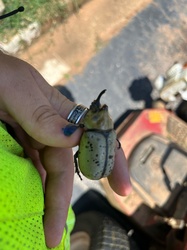
Recognize this giant rhinoceros beetle by its long forked horn, mottled olive-and-black shell, and hefty size.
Read the full Eastern Hercules Beetle encyclopedia entry →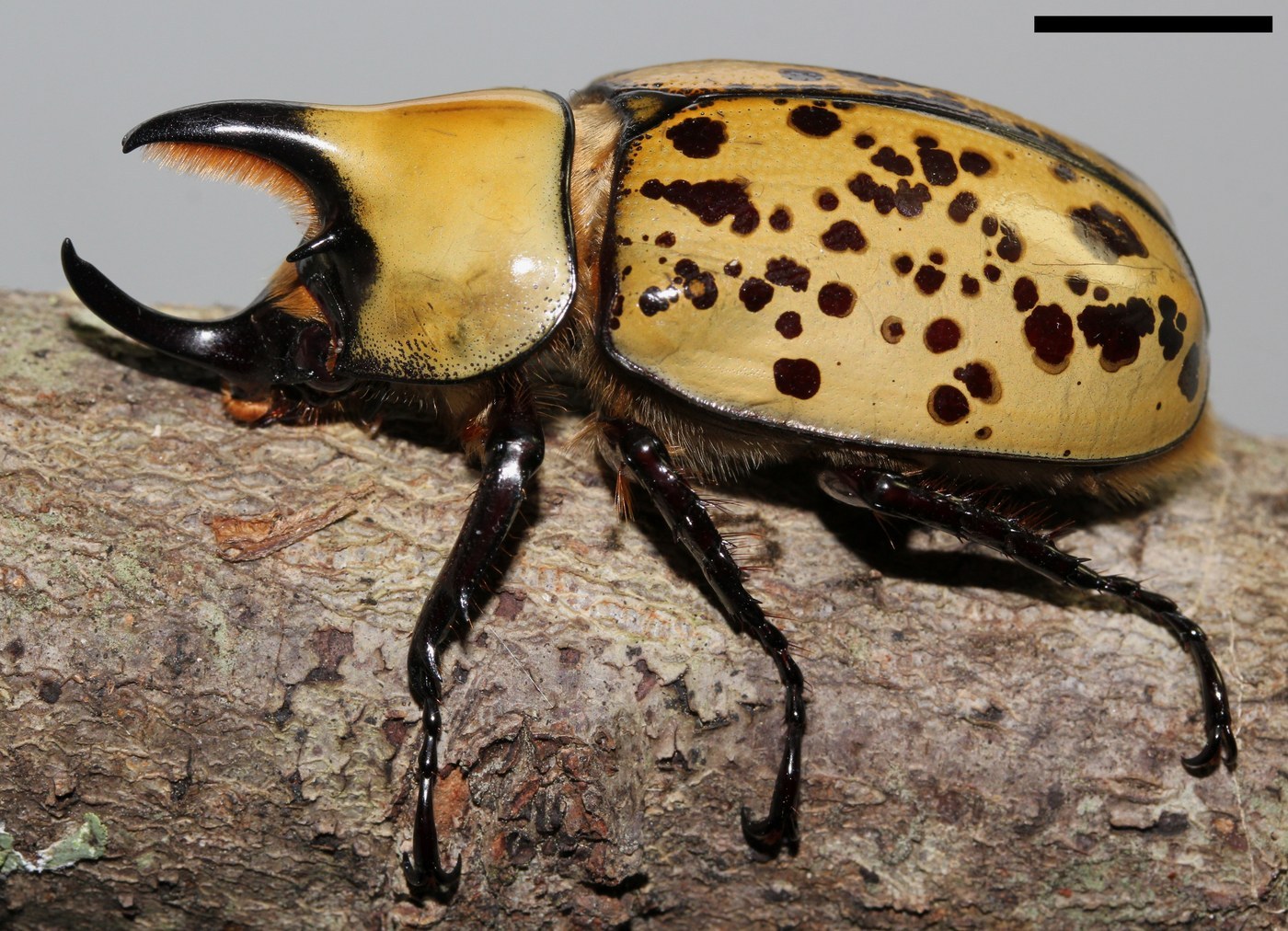
Key Visual Features
The Eastern Hercules beetle is one of the largest beetles in North America, instantly recognizable in males by its dramatic horns:
- Size: Males can reach up to 2.4 inches (60mm) long, including the horn; females are somewhat smaller and lack horns entirely.
- Horns (males): A long, curved horn extends forward from the thorax, working like a pair of forceps against a shorter horn rising from the head, used for wrestling rival males.
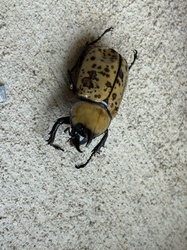
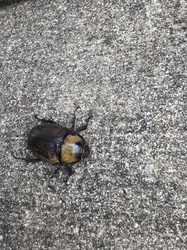
- Coloring: Olive-green to tan elytra mottled with irregular black spots and blotches; the color can shift, appearing darker and more olive in humid conditions and lighter, more tan or gray-green when dry. Females are a more uniform dark reddish-brown, without the mottled pattern.
- Body shape: Broad, heavily built, and rounded, typical of large rhinoceros beetles.
- Legs: Thick, spiny legs suited for gripping bark and digging.
Where and When You'll See One
Eastern Hercules beetles are found throughout the eastern and southeastern United States, in deciduous forests. Adults are active at night during the summer months and are often attracted to lights. During the day they tend to hide under bark or leaf litter. Larvae develop over one to two years inside rotting logs and stumps.
Similar-Looking Bugs
- Atlas beetle: Also a large horned rhinoceros beetle, but has three curved horns forming a claw-like pincer rather than the Hercules beetle's single long forceps-style horn pair, and lacks the mottled olive-and-black pattern.
- Ox beetle: Smaller and stockier, with shorter horns and a more uniformly dark or reddish-brown color, lacking the distinctive mottling.
- Rhinoceros beetle (Xyloryctes species): Smaller, with a single short curved horn rather than the elaborate two-horn forceps arrangement of the Hercules beetle.
Quick ID Checklist
- Large size, up to 2.4 inches including the horn
- Males have a long curved thoracic horn paired with a shorter head horn
- Olive-green to tan elytra with irregular black mottling (color shifts with humidity)
- Females are hornless and uniform dark reddish-brown
- Nocturnal, found in eastern deciduous forests
Frequently asked questions
Why does the color of an Eastern Hercules beetle seem to change?
The elytra can shift in appearance from a darker olive-green to a lighter tan or gray-green depending on humidity levels, which is a normal color variation rather than a sign of different species.
How can I tell a male from a female Eastern Hercules beetle?
Males have a long curved horn on the thorax paired with a shorter head horn, while females are hornless and show a more uniform dark reddish-brown color instead of the mottled olive-and-black pattern.
Where are Eastern Hercules beetles typically found?
They inhabit deciduous forests across the eastern and southeastern United States, often near rotting logs and stumps where their larvae develop.
Are Eastern Hercules beetles active during the day?
No, they are primarily nocturnal, becoming active at night and often turning up near outdoor lighting, while hiding under bark or debris during daylight hours.
Eastern Hercules Beetle identified by the community
Recent Eastern Hercules Beetle finds identified with Bug Identifier.