Eastern Tent Caterpillar Identification Guide
Identify the silky communal caterpillar known for spinning large tent-like webs in the forks of trees each spring.
Read the full Eastern Tent Caterpillar encyclopedia entry →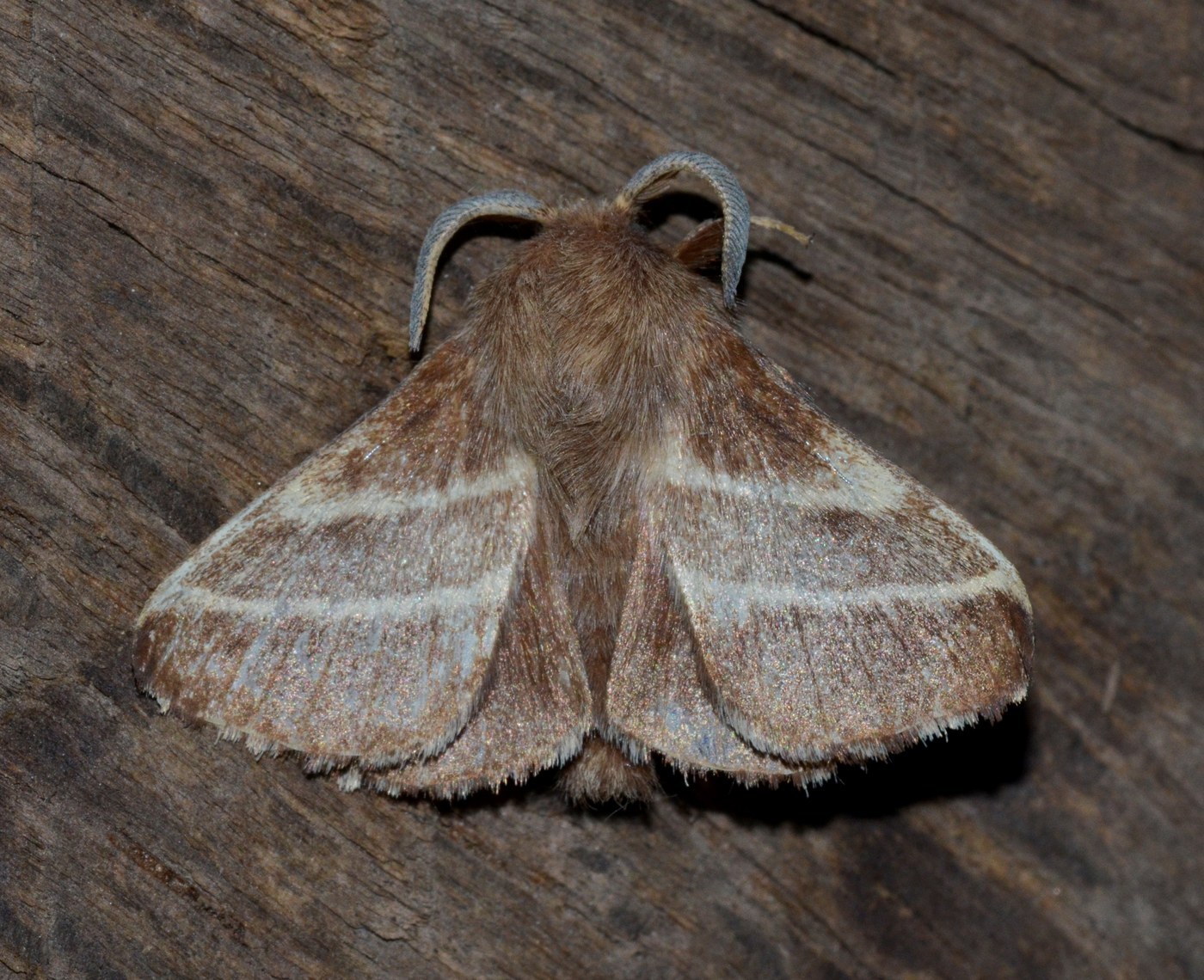
Key Visual Features
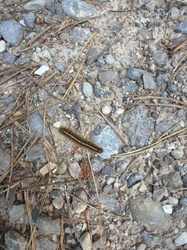
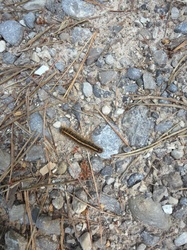
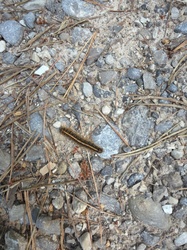
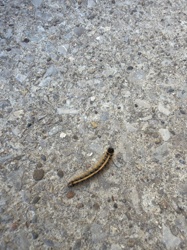
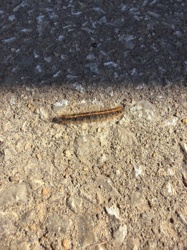
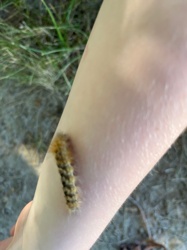
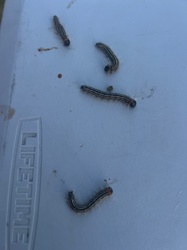
- Dark, hairy caterpillar with a distinct white stripe running down the center of its back
- Body flanked by rows of pale blue spots and faint brown or yellow side lines along a mostly black or dark brown body
- Covered in fine, soft hairs rather than stiff spines
- Grows to roughly 2 inches long at full size
- Small dark head capsule and a series of tiny legs along the underside
- Distinguishable by its habit of traveling in groups along silk trails
Where and When You'd See Them
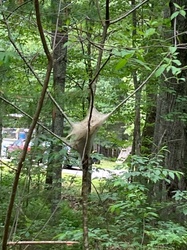
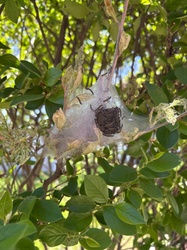
- Best known for spinning dense, silky, tent-like webs in the forks of tree branches, especially on cherry, apple, and other fruit or ornamental trees
- Caterpillars emerge in early spring, often visible from March through May depending on climate
- Groups leave the tent to feed on nearby leaves during the day, returning to the shared web at night or in poor weather
- Found in orchards, woodland edges, and residential trees with wild cherry or crabapple nearby
Similar-Looking Bugs
- Fall webworms also build silk webbing but do so in late summer to fall and enclose the leaves themselves at branch tips rather than a fork, and their caterpillars are lighter colored with longer hair tufts.
- Gypsy moth (spongy moth) caterpillars have paired blue and red spots down the back but do not build a communal silk tent, instead crawling individually.
- Forest tent caterpillars are a close relative with a row of pale, keyhole- or footprint-shaped spots down the back instead of a solid white stripe, and they do not build a true tent, just silk mats.
- Woolly bear caterpillars are uniformly fuzzy with banded black and reddish-brown hair and do not build any web structures.
Quick ID Checklist
- Solid white stripe down the back of a dark, hairy body
- Rows of pale blue spots along the sides
- Found in groups near a large silk tent in a tree branch fork
- Active in early spring on cherry, apple, or crabapple trees
- About 2 inches long when fully grown
Frequently asked questions
How do I tell an eastern tent caterpillar from a forest tent caterpillar?
Eastern tent caterpillars have one solid white stripe running down the back, while forest tent caterpillars have a row of separate pale, footprint- or keyhole-shaped spots instead of a continuous line, and only the eastern species builds a true enclosed silk tent.
What time of year are eastern tent caterpillars active?
They hatch and feed in early spring, typically visible from March into May before pupating, unlike fall webworms which appear later in summer.
Why do these caterpillars build a tent?
The silk tent serves as a shared shelter where the group of caterpillars rests between feeding trips, offering some protection from weather while they develop.
What trees are eastern tent caterpillar webs usually found in?
They favor wild cherry trees most of all, but are also commonly seen on apple, crabapple, and other trees in the rose family.
Eastern Tent Caterpillar identified by the community
Recent Eastern Tent Caterpillar finds identified with Bug Identifier.