Fire Ant Identification Guide
Learn to spot fire ants by their coppery coloring, two-node waist, and telltale dome-shaped mounds.
Read the full Fire Ant encyclopedia entry →
Key Visual Features
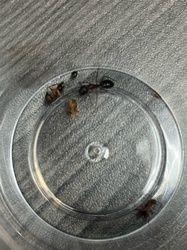
- Small ants, workers ranging from about 1/8 to 1/4 inch long, with noticeable size variation within the same colony
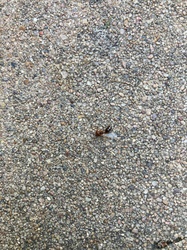
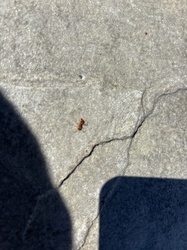
- Reddish-brown to copper-colored head and thorax paired with a darker brown-black abdomen (gaster)
- A distinctive two-segmented waist (petiole) with two raised nodes, a helpful feature for telling ants apart from other insects
- 10-segmented antennae ending in a two-segmented club
- Wingless workers with a smooth, slightly shiny exoskeleton; only reproductive males and queens (alates) grow wings for mating flights
- A small stinger at the tip of the abdomen, a feature shared with several other ant groups and used mainly for identifying the ant subfamily
Where and When You'll See Them
- Open, sunny habitats such as lawns, pastures, roadsides, parks, and cultivated fields
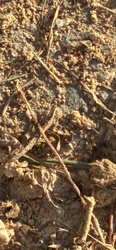
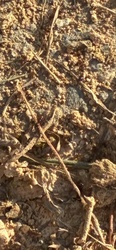
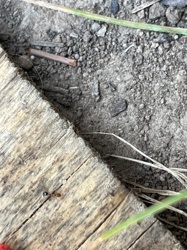
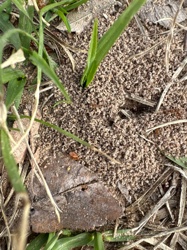
- Loose, dome-shaped dirt mounds with no obvious central entrance hole, often appearing fresh and freshly turned after rain
- Mounds can range from a few inches to well over a foot across and are usually free of surrounding vegetation
- Most active in warm months; foragers are out during the day in mild weather but shift to early morning and evening once summer heat peaks
- Winged reproductive ants may be seen emerging from mounds in large numbers during humid weather, particularly after rain, as colonies send out new queens and males
- Widespread across the southern and Gulf Coast United States, though colonies have expanded well beyond that core range into other warm regions
Similar-Looking Bugs
- Carpenter ants are much larger, have a single waist node rather than two, and never build loose dome mounds in open turf
- Pavement ants are smaller, more uniformly dark brown to black without the coppery head, and build low mounds along sidewalk cracks and pavement edges rather than open lawns
- Termites have straight (not elbowed) antennae, a broadly joined waist with no visible constriction, and equal-length wings when winged forms are present, unlike an ant's two unequal wing pairs
Quick ID Checklist
- Copper-red head and thorax contrasting with a darker abdomen
- Loose, dome-shaped mound with no visible opening
- Noticeable size variation among workers in the same mound
- Two distinct nodes in the waist
- Found in open, sunny turf or field areas
Frequently asked questions
How can I tell a fire ant mound from other ant mounds?
Fire ant mounds are loose, fluffy dome shapes with no visible central opening, often 12 to 18 inches across and most noticeable after rain.
Do fire ants have wings?
Only the reproductive queens and males (alates) grow wings during mating flights; the foraging workers you typically see are always wingless.
Why do fire ant workers look different sizes?
Fire ant colonies are polymorphic, meaning a single colony produces workers of many different sizes to handle different jobs.
What color are fire ants exactly?
Typically reddish-brown to copper on the head and thorax with a darker brown-black abdomen, though shade can vary somewhat by region.
Fire Ant identified by the community
Recent Fire Ant finds identified with Bug Identifier.