Firefly Identification Guide
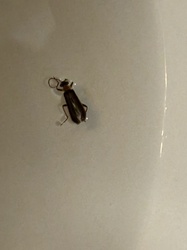
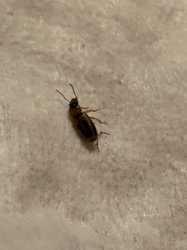
Spot a firefly by its soft leathery wing covers, orange-trimmed shield, and glowing abdomen tip.
Read the full Firefly encyclopedia entry →Key Visual Features
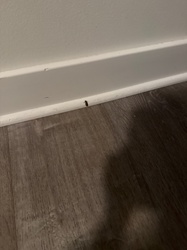
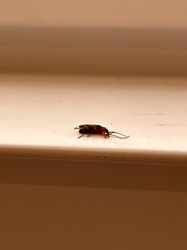
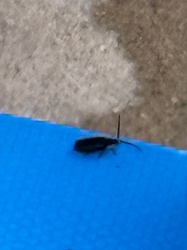
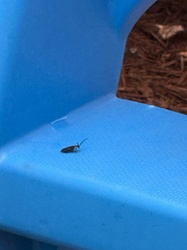
Fireflies (family Lampyridae) are soft-bodied beetles, typically 1/2 to 3/4 inch long, with an elongated, somewhat flattened body. The head is largely hidden beneath a broad, shield-like pronotum that is usually dark brown or black bordered with pink, orange, or yellow. The wing covers (elytra) are soft and leathery rather than hard and glossy, usually dark brown or black, sometimes with pale stripes along the edges. The most distinctive feature is the light-producing organ near the tip of the abdomen, visible as one or two pale, translucent segments even when the insect isn't glowing. Legs and antennae are relatively short and thin.
Where and When You'll See It
Fireflies favor moist habitats: damp meadows, tall grass, woodland edges, and areas near ponds, streams, or marshes where their larvae (which also glow and live in soil or leaf litter) can find prey. Adults are active at dusk and into the night during late spring and summer, when they produce their well-known blinking light patterns while flying low over grass and shrubs to signal potential mates. During the day they rest on vegetation and are harder to spot since their glow isn't visible in bright light.
Similar-Looking Bugs
- Click beetles: Similar elongated shape but with a hard, glossy body and no light organ; they're known for the audible "click" they make when flipping upright.
- Soldier beetles: Comparable soft-bodied shape and often similarly colored, but lack a glowing abdomen tip and are typically active in daylight on flowers rather than at dusk.
- Net-winged beetles: Have more strongly ridged, net-patterned wing covers and no light organ.
The presence of the pale light-producing segments at the abdomen tip, combined with the soft leathery wing covers and dusk activity, is the clearest way to confirm a firefly.
Quick ID Checklist
- Soft, leathery (not glossy hard) wing covers, dark with pale trim
- Broad shield-like pronotum bordered in orange, pink, or yellow
- Pale, translucent light-producing segments at the tip of the abdomen
- Active at dusk and after dark in grassy, moist habitats
- Seen flying low with blinking light patterns in late spring and summer
Frequently asked questions
Can you identify a firefly without seeing it glow?
Yes, look for the soft leathery wing covers, the pink- or orange-bordered shield behind the head, and the pale light-organ segments at the abdomen tip, which are visible even in daylight.
What time of day are fireflies active?
They're primarily active at dusk and into the night, which is when their light displays are most visible; during the day they rest quietly on grass or foliage.
How is a firefly different from a click beetle?
Click beetles have a hard, glossy body and no light organ, while fireflies have soft wing covers and a glowing abdomen tip.
Where are fireflies most commonly found?
They favor damp, grassy habitats such as meadows, woodland edges, and areas near ponds or streams, where humidity supports both larvae and adults.
Firefly identified by the community
Recent Firefly finds identified with Bug Identifier.