Green June Beetle Identification Guide
Identify this velvety green scarab by its loud, low buzzing flight over lawns and gardens in early summer.
Read the full Green June Beetle encyclopedia entry →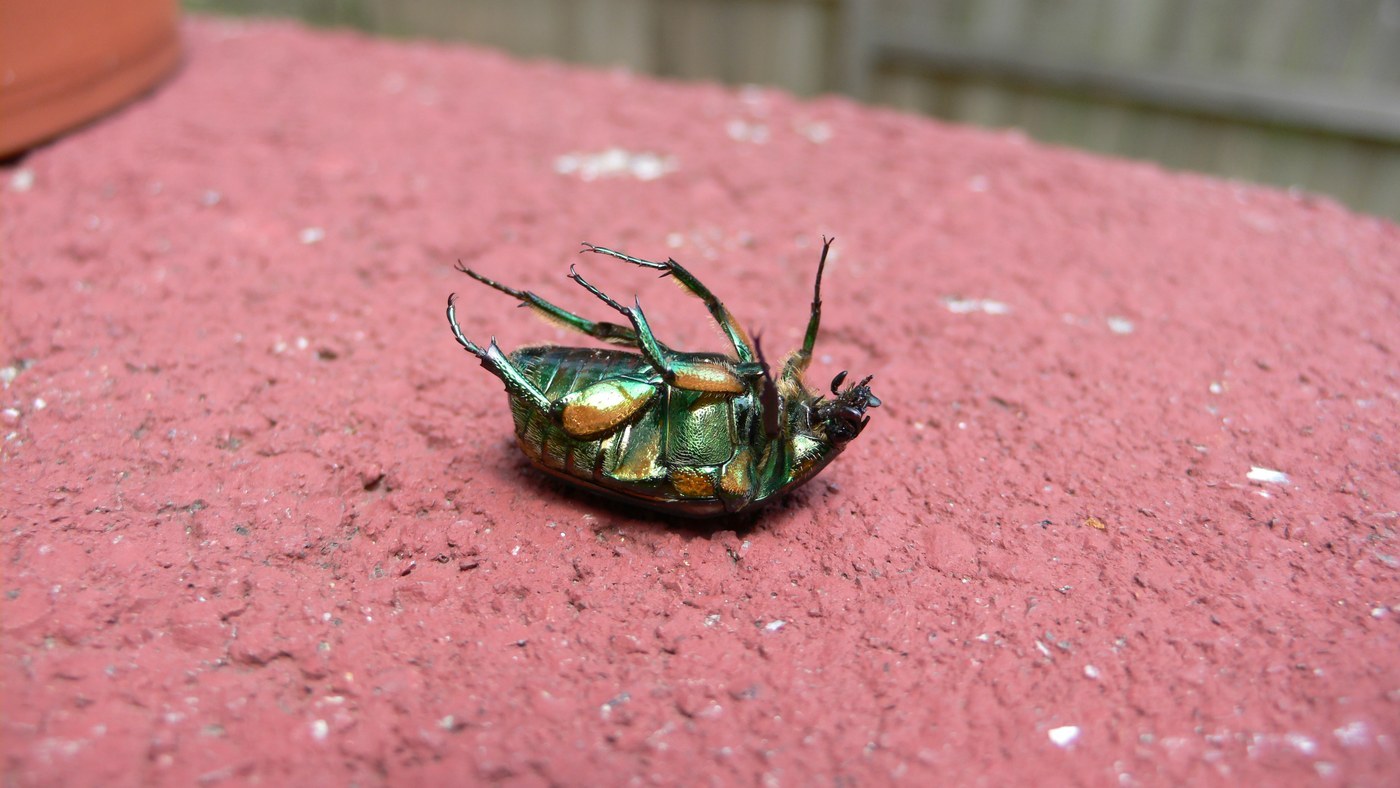
Key Visual Features
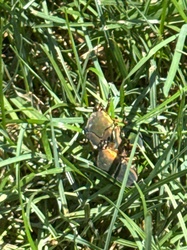
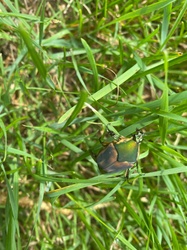
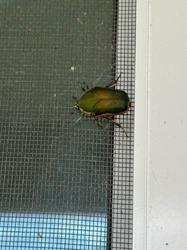
The green June beetle is a robust scarab beetle with a soft, velvety appearance:
- Size: A stout, oval body measuring about 0.6-0.9 inches (15-22mm) long.
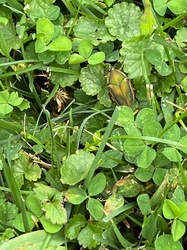
- Coloring: A dull, velvety matte green back with tan to bronze margins along the edges of the elytra (wing covers); the underside is often shinier and more metallic green.
- Body shape: Broad, rounded, and slightly flattened compared to other scarabs.
- Legs: Sturdy, spiny legs suited for digging and gripping soil.
- Flight: Produces a loud, low buzzing hum when flying, often just above the grass.
Where and When You'll See One
Green June beetles are common across the eastern and central United States. Adults emerge in early to mid-summer and are active during the day, especially on warm, sunny afternoons. Look for them flying low and fast over lawns, gardens, and open grassy areas, or resting on ripening fruit and foliage. Their grub-stage larvae live in the soil and are notable for crawling on their backs along the surface rather than underground.
Similar-Looking Bugs
- Fig beetle: A very close western relative with a nearly identical velvety green look, but generally larger and found in the western and southwestern U.S. rather than the east.
- Japanese beetle: Smaller, with a shinier metallic green thorax and coppery-brown wing covers plus tufts of white hair along the abdomen sides, unlike the green June beetle's dull, uniform green back.
- Rose chafer: Much smaller and slimmer, tan-colored with long spindly legs, quite different from the green June beetle's bulky green build.
Behavior Notes
Adults are strong but somewhat clumsy fliers, often colliding with obstacles as they zip low over open ground in search of ripening fruit, sap, or mates. Multiple individuals are frequently seen active together in the same area on hot summer days, and their larvae are notable for an unusual habit of crawling along the soil surface on their backs rather than moving right-side up like most other grubs.
Quick ID Checklist
- Stout, oval body about three-quarters of an inch long
- Dull velvety green back with tan or bronze edges
- Shinier metallic green underside
- Loud, low buzzing flight over lawns and gardens
- Active during the day in early to mid-summer
Frequently asked questions
What time of year are green June beetles most commonly seen?
They are most active in early to mid-summer, typically from June through August depending on region.
How is the green June beetle different from the Japanese beetle?
The green June beetle is larger and has a dull, velvety matte green back, while the Japanese beetle is smaller with a shinier metallic thorax, coppery wing covers, and small tufts of white hair along its sides.
Why do I hear a loud buzzing sound before I see one?
Green June beetles fly with a distinctive low, loud hum, often audible before the beetle itself comes into view as it moves low over grass and foliage.
Is the green June beetle active at night or during the day?
It is a daytime (diurnal) species, most active on warm, sunny afternoons rather than after dark.
Green June Beetle identified by the community
Recent Green June Beetle finds identified with Bug Identifier.