Green Shield Bug Identification Guide
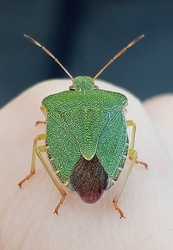
Recognize the green shield bug by its bright green, shield-shaped body that shifts to bronze tones in autumn.
Read the full Green Shield Bug encyclopedia entry →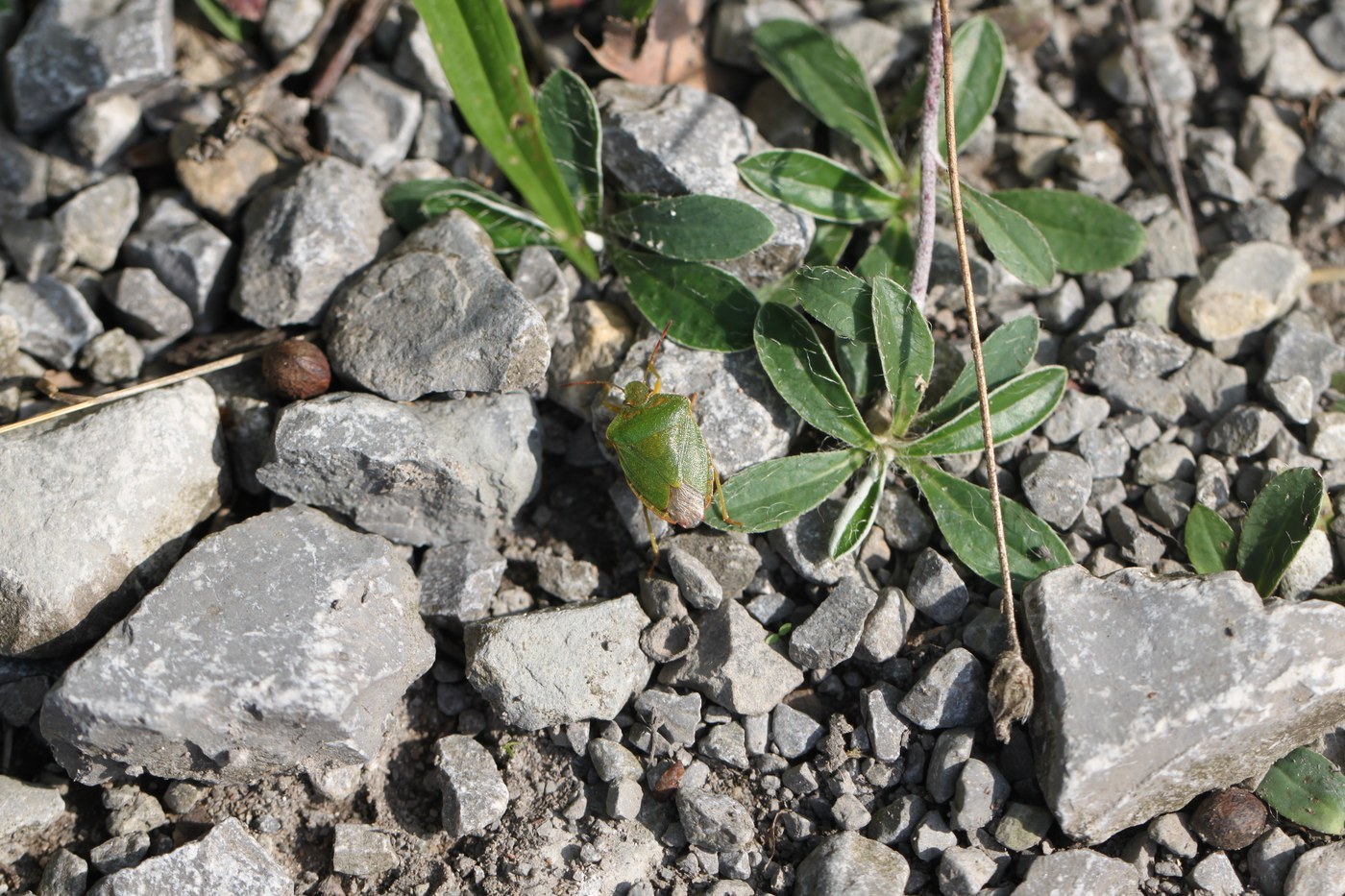
Key Visual Features
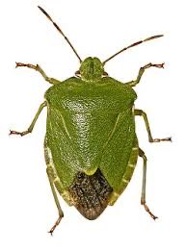
The green shield bug (Palomena prasina) is a classic shield-shaped true bug named for its broad, flattened, five-sided outline and typically bright green color.
- Size: About 12-14 mm (roughly 1/2 inch) long
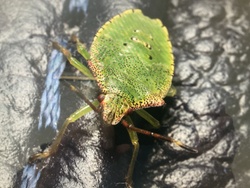
- Color: Bright grass-green during the growing season, often shifting toward bronze, reddish-brown, or mottled tones in autumn before overwintering
- Body shape: Broad, flattened, shield- or pentagon-shaped, with a wide, triangular plate (the scutellum) covering much of the central back
- Wings: Forewings are leathery at the base and membranous at the tip, folded flat and mostly hidden by the large triangular scutellum
- Legs: Moderate length, green to brownish, matching the body
- Antennae: Five-segmented, often tipped with a darker band near the end
- Markings: Fine black or dark punctures dot the surface; the outer edge of the abdomen may show alternating light and dark segments visible from above
Where and When You'd See It
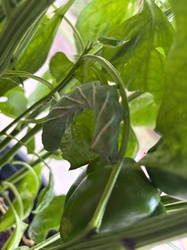
Green shield bugs are found on shrubs, hedgerows, trees, and garden plants, especially in temperate regions. They are most visible from late spring through summer while feeding on foliage and seed heads, and again in early autumn as they search for sheltered spots such as leaf litter, bark crevices, or garden structures to pass the colder months. Adults that have overwintered emerge bronze or brownish in spring before molting into their brighter green summer form.
Similar-Looking Bugs
- Southern green stink bug: Similar bright green color but with a smoother, less mottled texture and a slightly different, more elongated shield outline; ranges and seasonal color shift also differ.
- Green vegetable bug nymphs: Rounder and more patterned with spots during immature stages, becoming more uniformly colored as adults.
- Leaf-footed bugs: Longer, narrower body with flared, leaf-like hind leg segments, not present on shield bugs.
- Katydids or leafhoppers: Longer, more streamlined bodies without the broad shield-shaped back.
The wide, pentagon-like shield shape combined with the seasonal green-to-bronze color shift is the most distinctive combination for this species.
Quick ID Checklist
- Broad, shield- or pentagon-shaped body, about 12-14 mm long
- Bright green in summer, often bronze or mottled brown in autumn and early spring
- Large triangular plate covering much of the back
- Found on shrubs, hedges, and garden foliage
- Seeks shelter in leaf litter or crevices as cooler weather approaches
Frequently asked questions
How do I tell a green shield bug from other green stink bugs?
Compare the overall shape and texture: the green shield bug has a distinctly pentagon-like outline and finely punctured surface, and it often shows bronze or mottled coloring in autumn and spring rather than staying uniformly green year-round.
Why does the green shield bug sometimes look brown instead of green?
Adults shift to bronze or brownish tones in autumn before overwintering and often emerge in that color in spring, only turning bright green again after molting for the summer season.
How large is a green shield bug?
Adults measure roughly 12-14 mm, about half an inch, with a broad, flattened, shield-shaped body.
Where would I find a green shield bug?
Look on shrubs, hedgerows, and garden plants during the growing season, and in sheltered spots like leaf litter or bark crevices during cooler months.
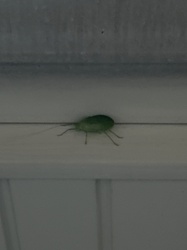
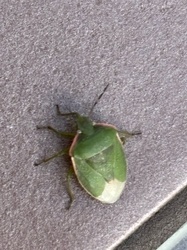
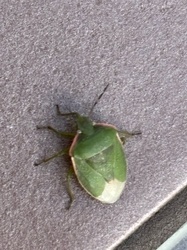
Green Shield Bug identified by the community
Recent Green Shield Bug finds identified with Bug Identifier.