Indianmeal Moth Identification Guide
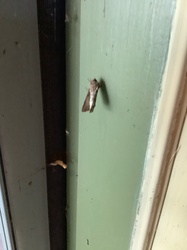
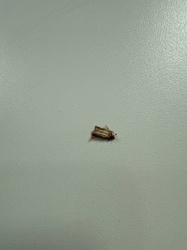
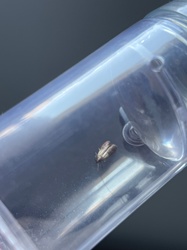
Spot the Indianmeal moth's distinctive two-tone wings — pale gray-tan near the body and coppery-bronze toward the tips.
Read the full Indianmeal Moth encyclopedia entry →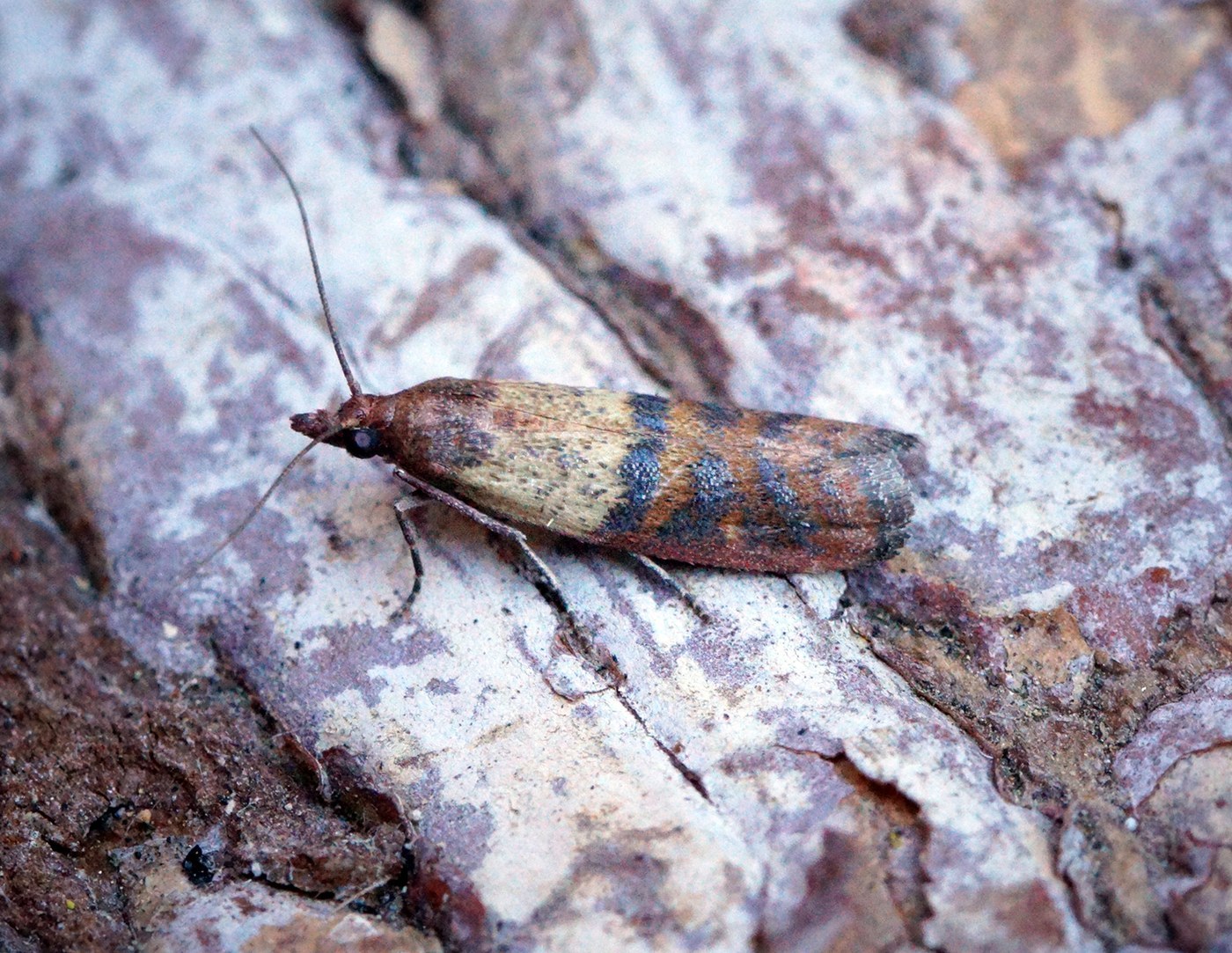
Key Visual Features
The Indianmeal moth (Plodia interpunctella) is a small moth easily recognized by its two-toned wing pattern.
- Size: Wingspan of about 16-20 mm; body length around 8-10 mm, making it noticeably smaller than common clothes-eating or garden moths.
- Wing coloring: The most distinctive feature — the outer two-thirds of the forewing is a coppery, reddish-bronze to rusty color, while the inner third near the body is pale gray or cream, creating a clear two-tone division across the wing.
- Resting posture: Wings fold in a tent-like or roof shape over the body when at rest, typical of many small moths.
- Body: Slender and covered in fine scales matching the wing coloring, tan to grayish near the head and thorax.
- Antennae: Thread-like (filiform), held back along the body when resting.
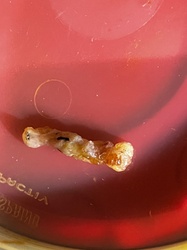
- Larvae: Cream-colored to pinkish caterpillars up to about 12-13 mm long, often seen trailing fine silk webbing across surfaces or clumping stored food particles together.
Where and When You'd See It
Indianmeal moths are found indoors around stored dry food products such as grains, cereals, dried fruit, nuts, and pet food. Adults are most active at dusk and after dark, often seen fluttering weakly near ceilings, in corners, or around pantry and cabinet areas. Activity tends to increase in warm months but can occur year-round indoors. Fine silken webbing in food packaging or along shelf edges is a strong sign of larval activity nearby.
Similar-Looking Bugs
- Clothes moths (webbing or casemaking): Smaller, more uniformly buff or golden-tan colored, without the sharp two-tone wing division seen in the Indianmeal moth, and associated with fabric rather than pantry items.
- Grain moths: Generally paler and more uniformly colored across the wing, lacking the bold copper-and-cream contrast.
- Other small "miller" moths: Larger, more mottled gray moths without the clean banding pattern.
Quick ID Checklist
- Small moth (about 16-20 mm wingspan)
- Forewings clearly two-toned: pale gray-tan base, coppery-bronze outer half
- Wings fold tent-like over the body at rest
- Cream to pinkish caterpillars with fine silk webbing near stored food
- Adults fly weakly at dusk, often near pantry or cabinet areas
Frequently asked questions
What is the single best feature for identifying an Indianmeal moth?
The two-toned forewing is the giveaway: a pale gray-tan band near the body transitions sharply into a coppery, bronze-red outer section, a pattern not shared by common clothing moths.
How is the Indianmeal moth different from a clothes moth?
Clothes moths are more uniformly buff or golden colored without the sharp two-tone wing pattern, and they are typically found around fabrics rather than stored dry food.
Why do I see silk webbing where I find Indianmeal moths?
The caterpillar stage spins fine silk threads as it moves and feeds, which can bind food particles together into loose clumps or strands — a helpful sign the moth's larvae have been active in that spot.
What time of day are Indianmeal moths most active?
Adults are typically most active at dusk and into the evening, often seen making short, fluttering flights near ceilings or storage areas rather than during bright daylight.
Indianmeal Moth identified by the community
Recent Indianmeal Moth finds identified with Bug Identifier.