Jumping Spider Identification Guide
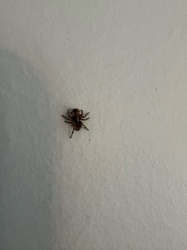
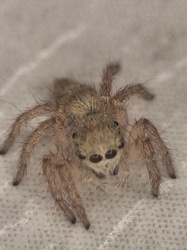
Recognize a jumping spider by its compact body, oversized front eyes, and daytime hopping behavior.
Read the full Jumping Spider encyclopedia entry →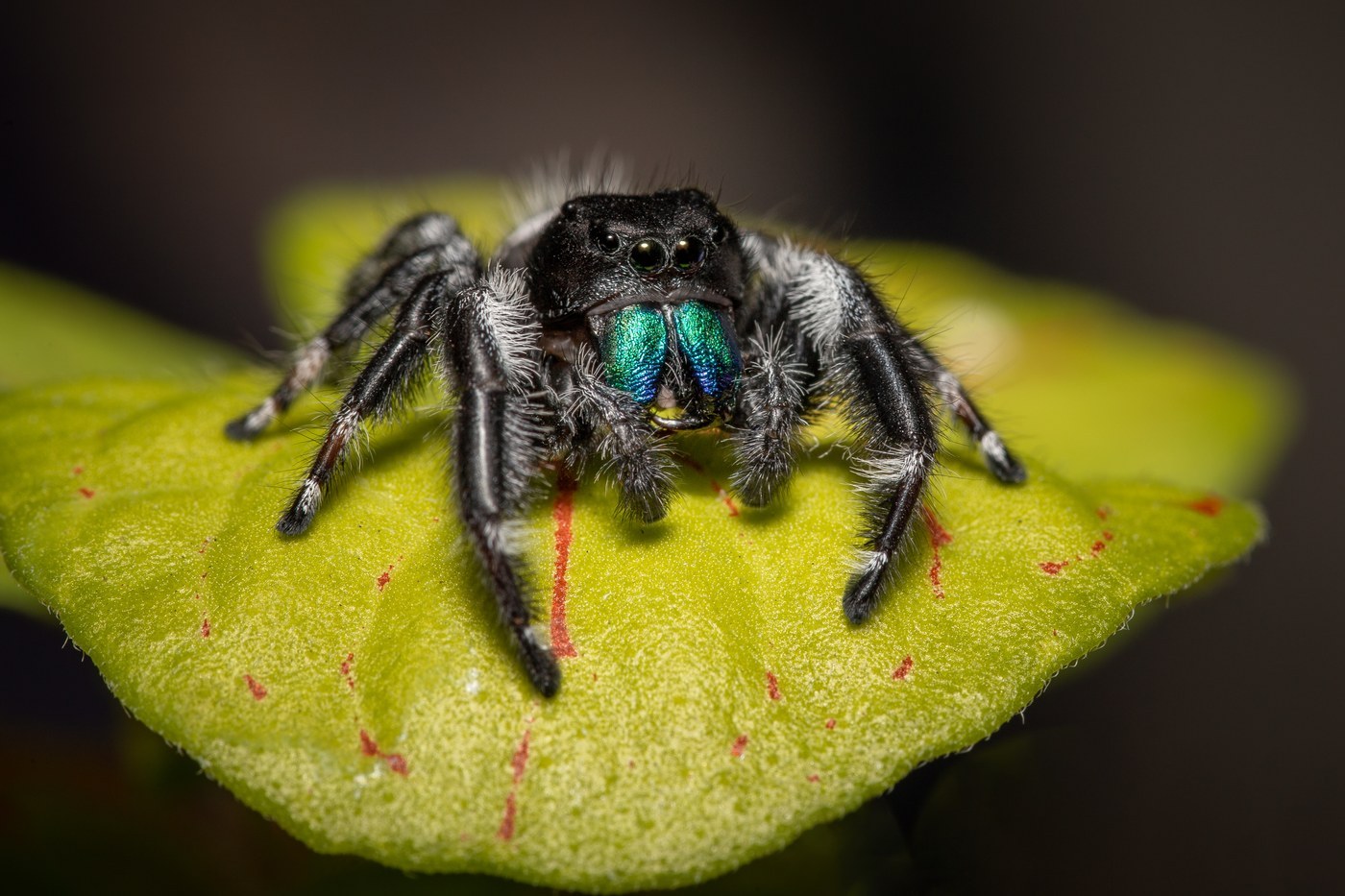
Key Visual Features
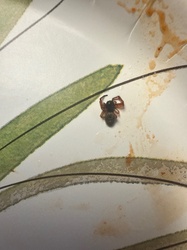
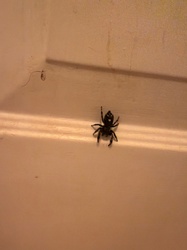
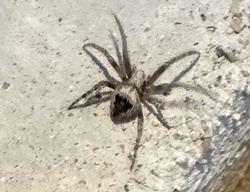
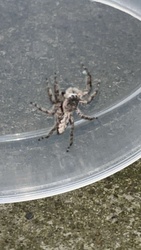
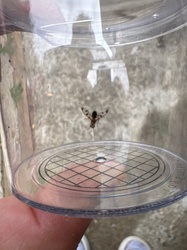
- A small, compact body ranging from about 1/8 to 3/4 inch, with a stocky build and relatively short legs compared to most other spiders
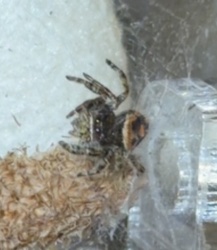
- Large, forward-facing anterior median eyes that give the spider a distinctive "face," set among eight eyes total arranged in three rows
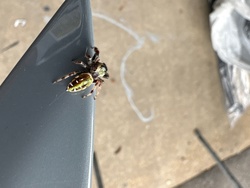
- Often shows iridescent chelicerae (fang bases) in some species, which can catch the light with a metallic sheen
- Varied colors and patterns, frequently including metallic green, blue, or bold contrasting markings such as stripes or spots
- Dense, short body hairs giving a slightly fuzzy texture, especially noticeable on the legs and abdomen
- Excellent eyesight compared to most spiders, which is reflected in the unusually large size of the front eyes relative to the head
Where and When You'll See Them
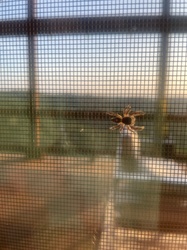
- Found nearly everywhere - on walls, fences, garden plants, tree bark, and indoors on windows and sills
- Diurnal, meaning it is active during the day, unlike many other spider families that hunt at night
- Hunts by stalking prey and pouncing rather than relying on a web to catch food, often moving in short bursts followed by pauses
- Often seen basking in direct sunlight on warm surfaces, seemingly watching passersby with its large front eyes
- One of the most commonly encountered spider families worldwide, found in virtually every terrestrial habitat
Similar-Looking Bugs
- Crab spiders are also stocky but hold their long front legs out to the sides and lack the prominent oversized front eyes
- Other small spiders generally lack the enlarged "big-eyed" face that defines jumping spiders
- Wolf spiders are larger, less compact, and have a different proportion and arrangement of eyes across three rows rather than the jumping spider's distinctive four-eyed front row
Quick ID Checklist
- Compact, stocky body
- Large, forward-facing front eyes giving a distinct face
- Active hopping and stalking behavior during daylight
- Short legs relative to body size
- Often colorful or iridescent markings
Frequently asked questions
Why do jumping spiders have such big eyes?
Their large anterior median eyes provide sharp vision for stalking and judging distance to prey, and are the easiest feature to use for identification.
Do jumping spiders build webs?
They spin silk draglines and small silk retreats for shelter, but they don't build webs to capture prey - they hunt actively instead.
Are jumping spiders active during the day or night?
Unlike many spider families, jumping spiders are primarily active during daylight hours.
How large do jumping spiders typically get?
Most are quite small, generally under 3/4 inch, making them among the smaller common spiders you'll encounter.
Jumping Spider identified by the community
Recent Jumping Spider finds identified with Bug Identifier.