
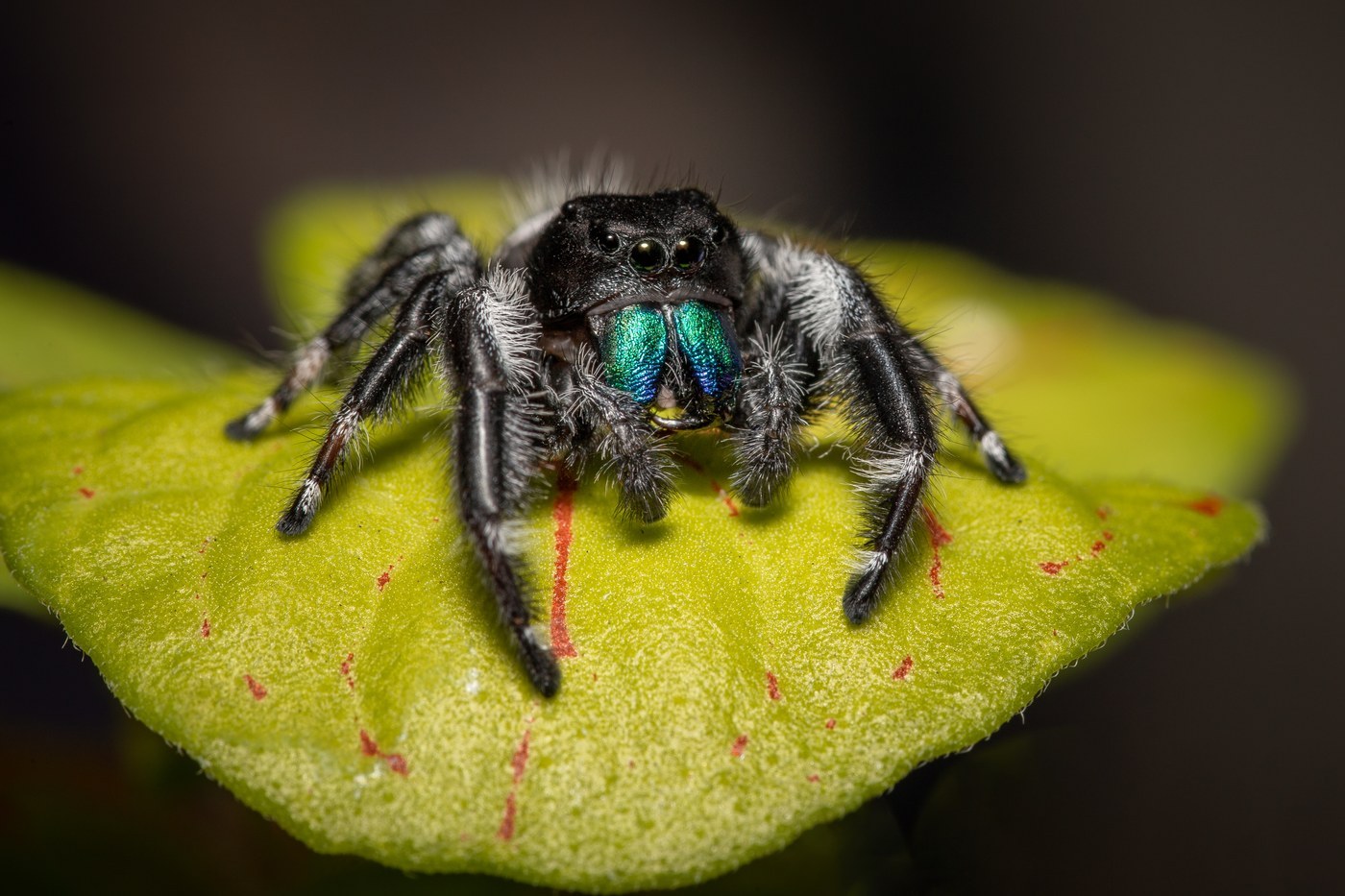
Jumping Spider
Phidippus audax
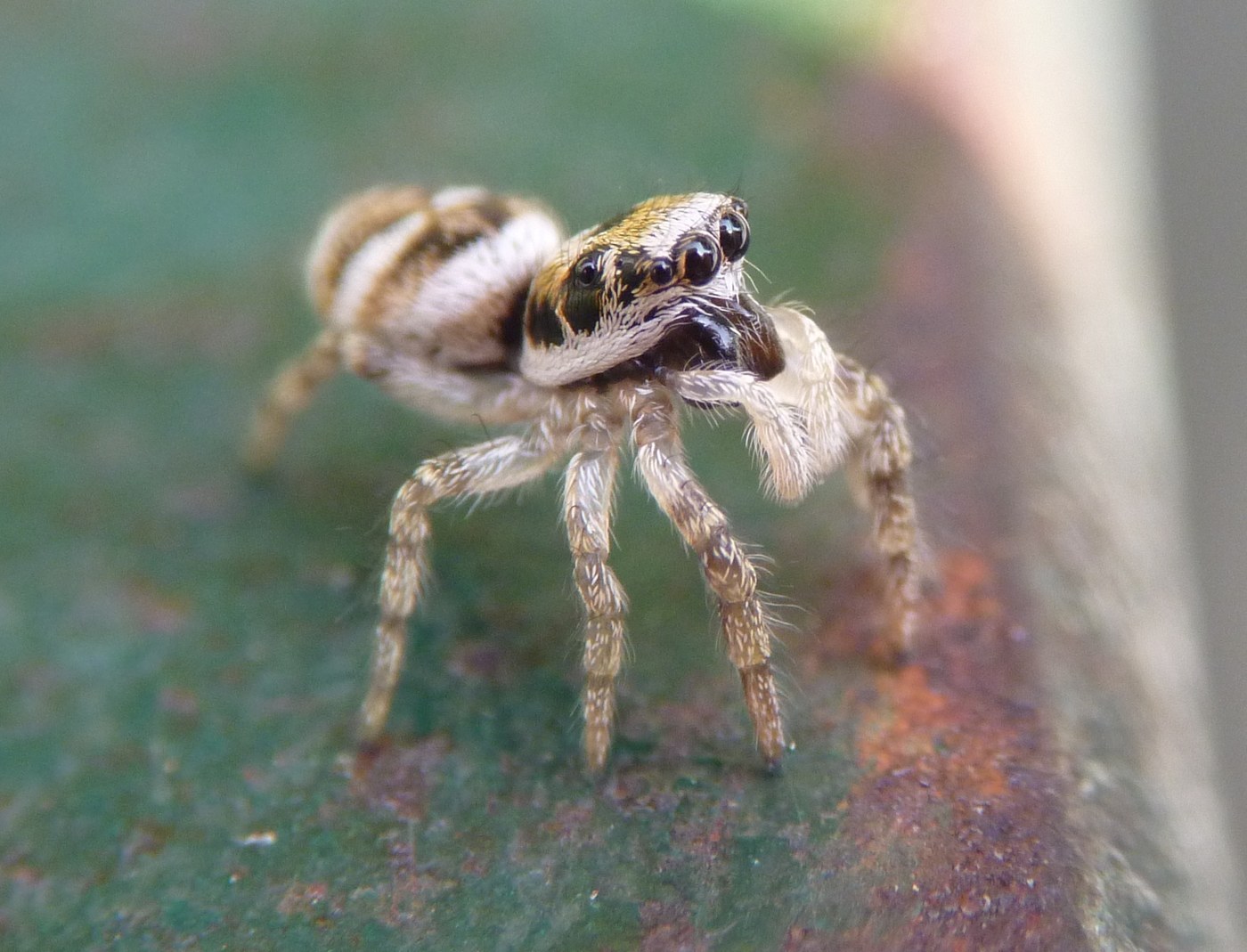
A compact, often furry, day-active spider with unusually large forward-facing eyes that give it an alert, curious look, known for stalking prey and pouncing in a sudden leap.
- Size
- 4–18 mm body
- Habitat
- Gardens, walls, foliage, sunny surfaces worldwide
- Danger
- Bites
Spotted a bug like this?
Identify any bug or insect from a photo, free.
Overview
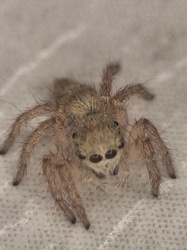
Jumping spiders make up the family Salticidae, the largest spider family in the world with thousands of described species. They are immediately recognizable by their compact, often furry bodies and their unusually large forward-facing anterior median eyes, which give them the best vision of any spider group and a distinctly alert, curious appearance.
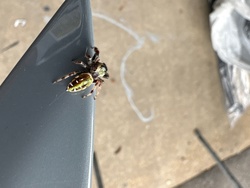
Rather than relying on webs to capture prey, jumping spiders are active daytime hunters that stalk prey visually and pounce with a sudden, powerful leap—a hunting method the family is named for. Many species, such as the bold jumping spider (Phidippus audax) common in North America, display iridescent or metallic coloring on their chelicerae or abdomen.
Found nearly worldwide, jumping spiders occupy an enormous range of habitats, from gardens and forests to building exteriors, and are considered one of the most visually engaging spider groups due to their keen vision and seemingly inquisitive behavior toward observers.
How to Identify
- Body: compact, often stocky and hairy or velvety in texture, with a wide range of colors and patterns depending on species.
- Eyes: eight eyes total, with a very large, forward-facing pair of anterior median eyes giving a distinctive 'big-eyed' face.
- Size: most species range from about 4–18 mm in body length; Phidippus audax is typically around 10–15 mm.
- Movement: short, deliberate walking punctuated by sudden jumps, rather than continuous scurrying.
- Lookalikes: sometimes mistaken for other small hairy spiders, but the oversized front eyes and jerky, investigative head movements are unique to this family.
Habitat & Range
Jumping spiders are found on every continent except Antarctica and occupy an unusually broad range of habitats, including gardens, meadows, forests, and the sunny sides of buildings and fences. They favor sunlit surfaces where they can visually track prey and bask in warmth.
They are active during the day, in contrast to many other spider groups, and are commonly seen on walls, plant foliage, and window sills in warmer months from spring through fall.
Behavior & Diet
Jumping spiders are visual hunters that stalk prey slowly before launching a sudden jump to capture it, using silk primarily as a safety dragline during the leap rather than for building a capture web. Their diet consists mainly of small insects and other arthropods they detect and track using their exceptional eyesight.
They are notably curious and responsive to movement, often turning to visually track a nearby observer, a behavior linked to their unusually acute vision among spiders. When threatened, they can bite in defense, though their first response is typically to leap away from a disturbance.
Life Cycle
Jumping spiders undergo simple spider development: egg, spiderling through several molts, and adult, without a pupal stage. Females lay eggs within a silk-lined retreat, often under bark or in a curled leaf, and may guard the egg sac until hatching.
Spiderlings disperse after hatching and molt several times as they grow toward maturity, a process that typically takes a few months. Many species complete one generation per year, with some overwintering as immature spiders in sheltered retreats.
Frequently asked questions
Why do jumping spiders have such big eyes?
Their large anterior median eyes give them the sharpest vision among spiders, which they rely on to stalk and jump on prey.
Can jumping spiders really jump far?
Yes, they can leap several times their own body length using hydraulic leg pressure combined with a silk safety line.
Do jumping spiders build webs?
They spin silk mainly for draglines and shelter retreats rather than large capture webs.
How big is a jumping spider?
Most species are small, roughly 4–18 mm in body length.
Jumping Spider guides
In-depth guides for identifying, understanding, and living alongside Jumping Spider.
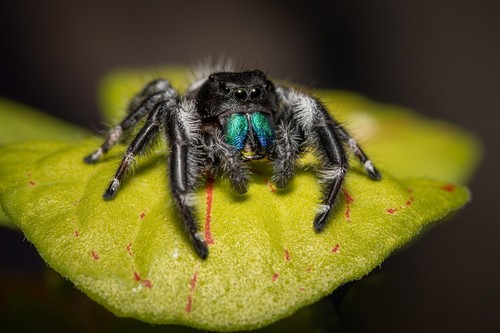
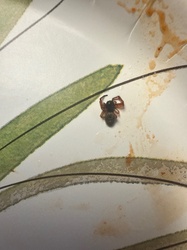
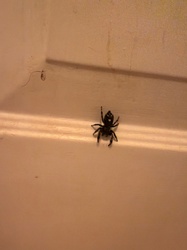
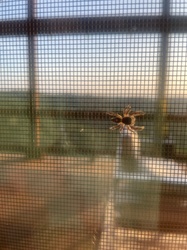
Jumping Spider identified by the community
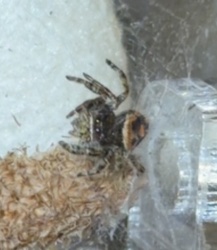
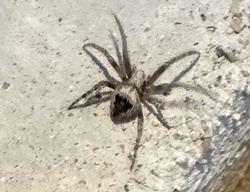
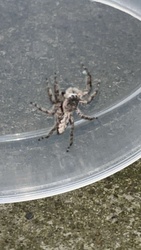
Real finds identified with Bug Identifier.
Other bugs you may enjoy
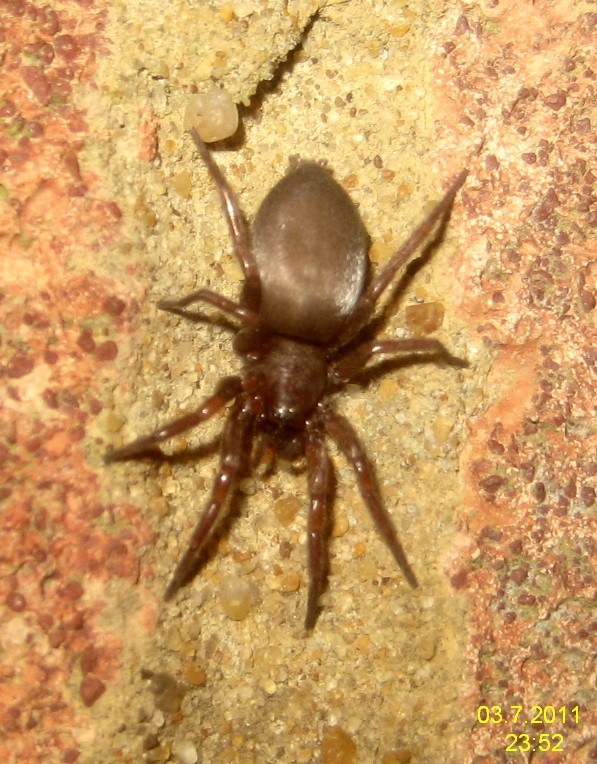
Woodlouse Spider
Damp leaf litter, under logs, stones, and mulch
Wolf Spider
Gardens, grasslands, forests, leaf litter, ground burrows
Wandering Spider
Tropical and subtropical forest floor, foliage, and banana plants
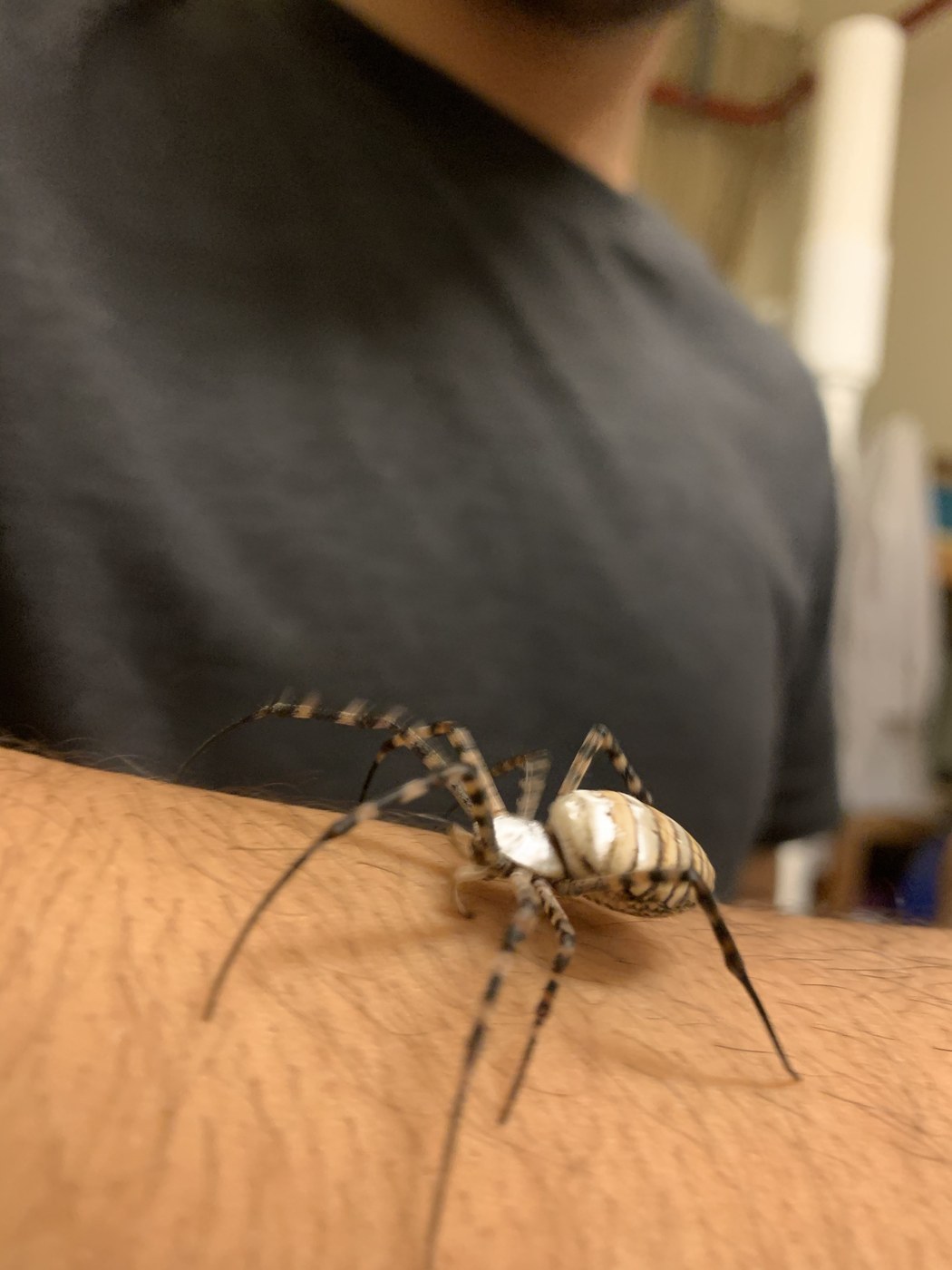
Banded Garden Spider
Tall grass, meadows, and gardens with open sunny vegetation
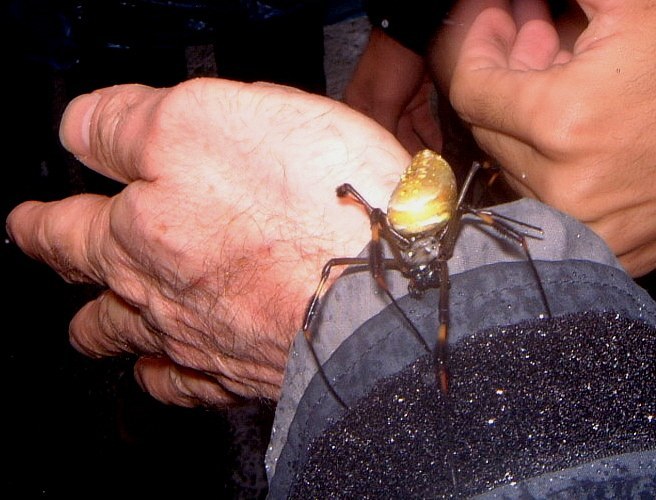
Banana Spider
Wooded trails, forest edges, and gardens across the southeastern U.S. and the American tropics
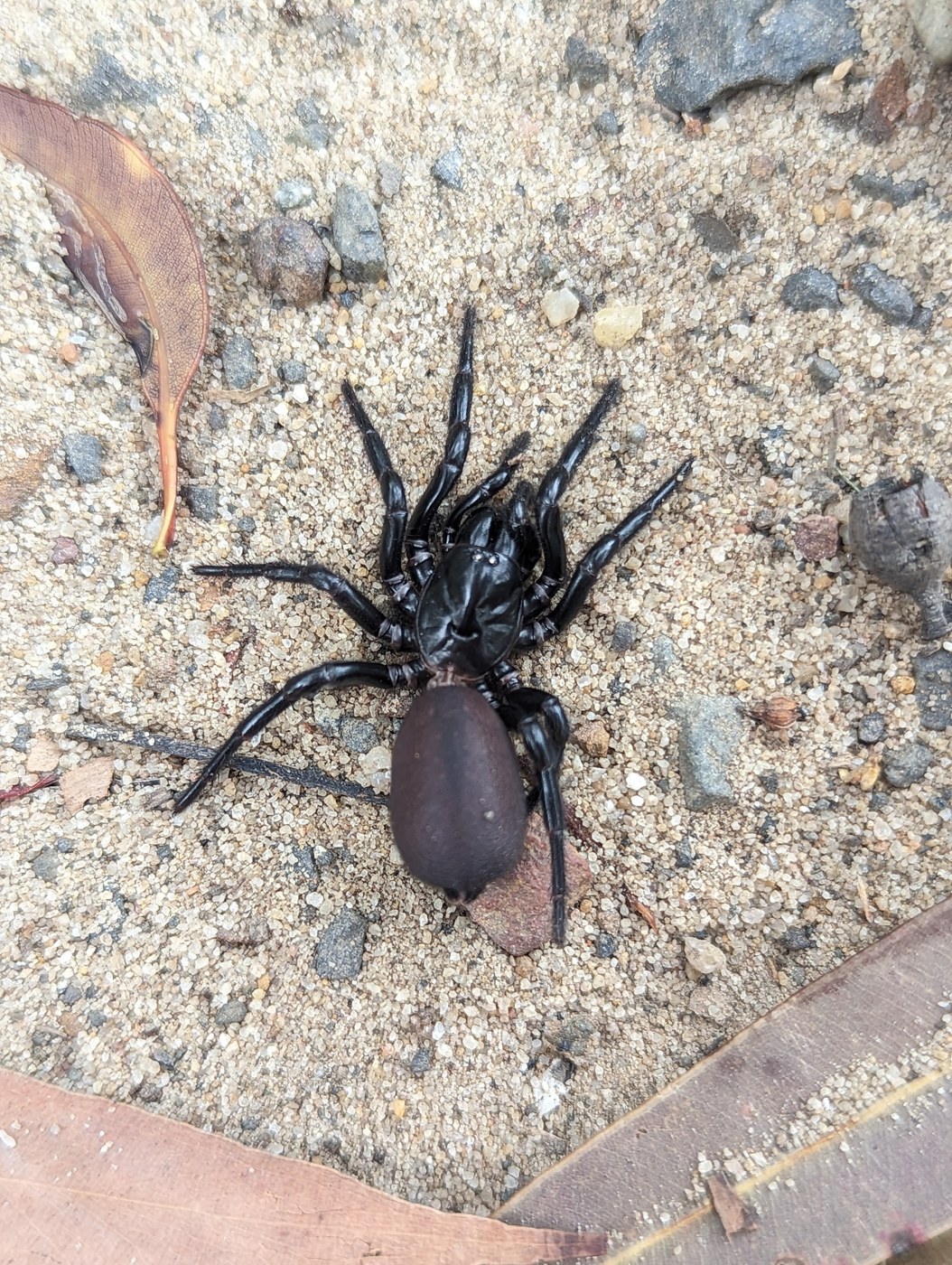
Sydney Funnel-web Spider
Burrows in moist soil, gardens, and forested gullies around the Sydney basin of eastern Australia
Trapdoor Spider
Self-dug silk-lined burrows with a camouflaged door, in dry, well-drained soil worldwide
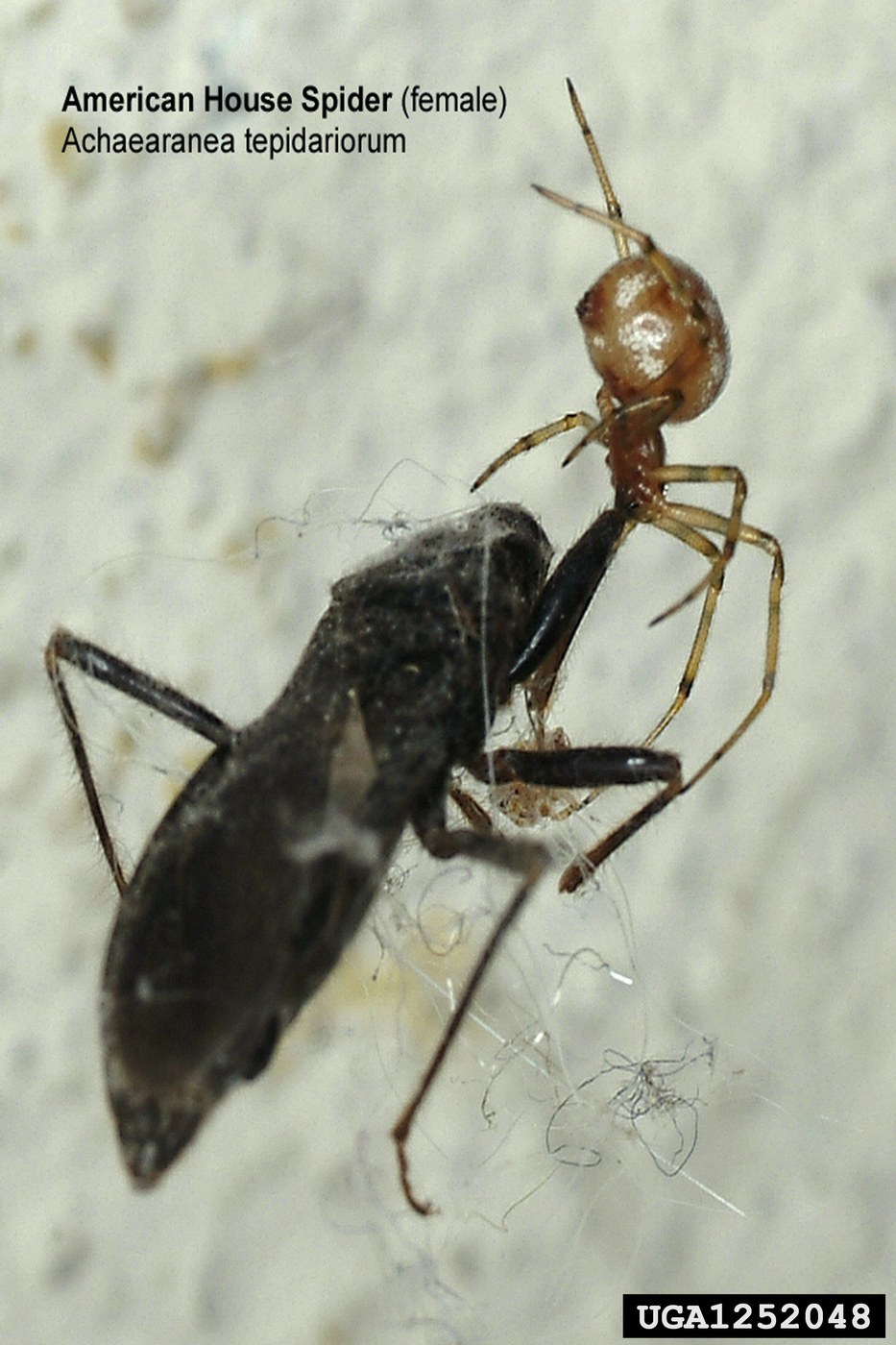
American House Spider
Corners, basements, garages, and outbuildings worldwide
Tube Web Spider
Wall crevices, bark, rockeries, and masonry
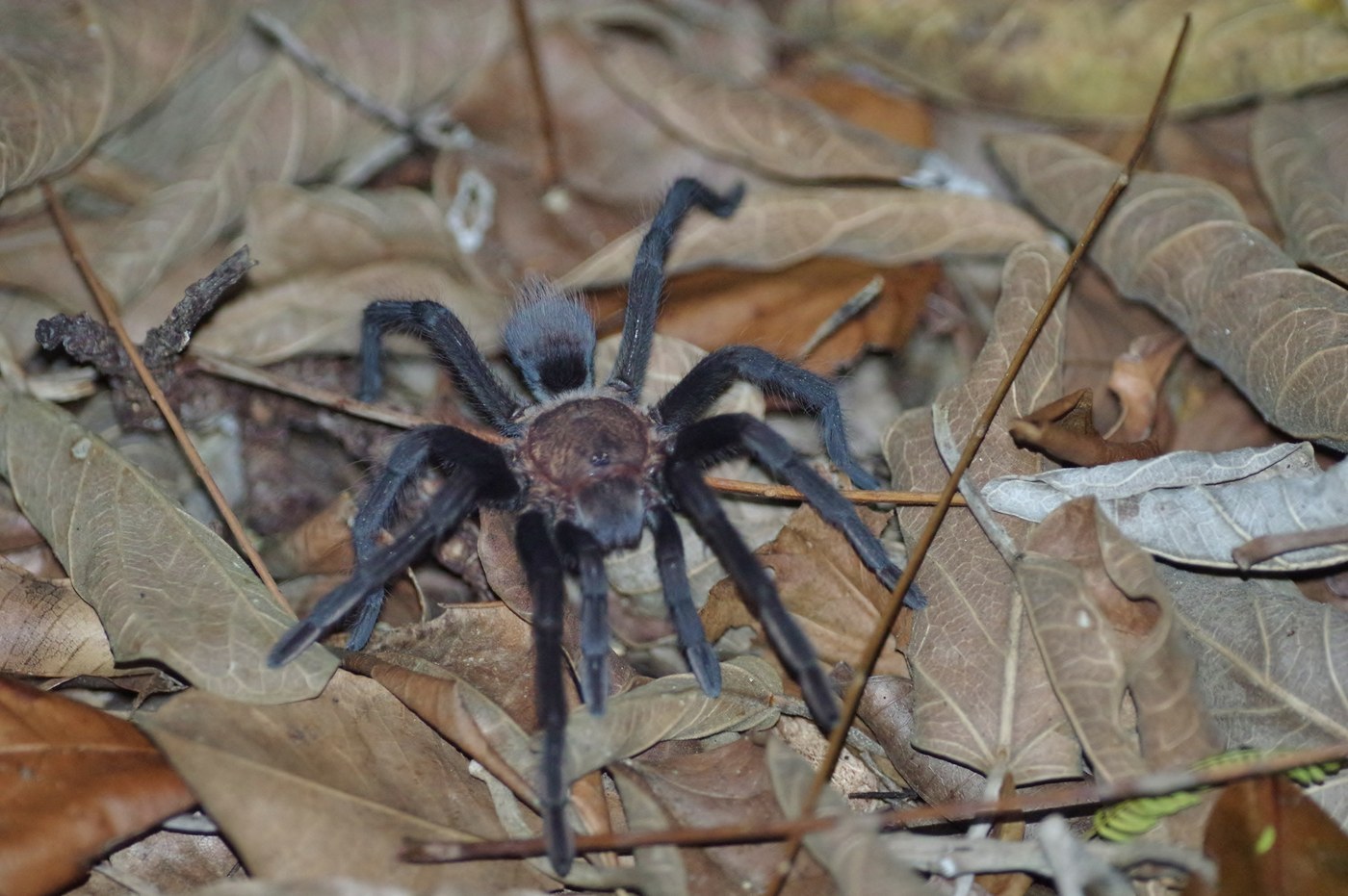
Tarantula
Burrows, rock crevices, and tree hollows in deserts, grasslands, and tropical forests worldwide
Zebra Jumping Spider
Sunny walls, fences, tree bark, and building exteriors
Wall Spider
Cracks and crevices on exterior and interior walls