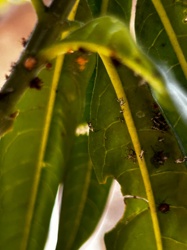
Leafhopper Identification Guide
Spot leafhoppers by their slender wedge-shaped bodies, sideways-angled hind legs, and quick sideways-scuttling, jumping movement on leaves.
Read the full Leafhopper encyclopedia entry →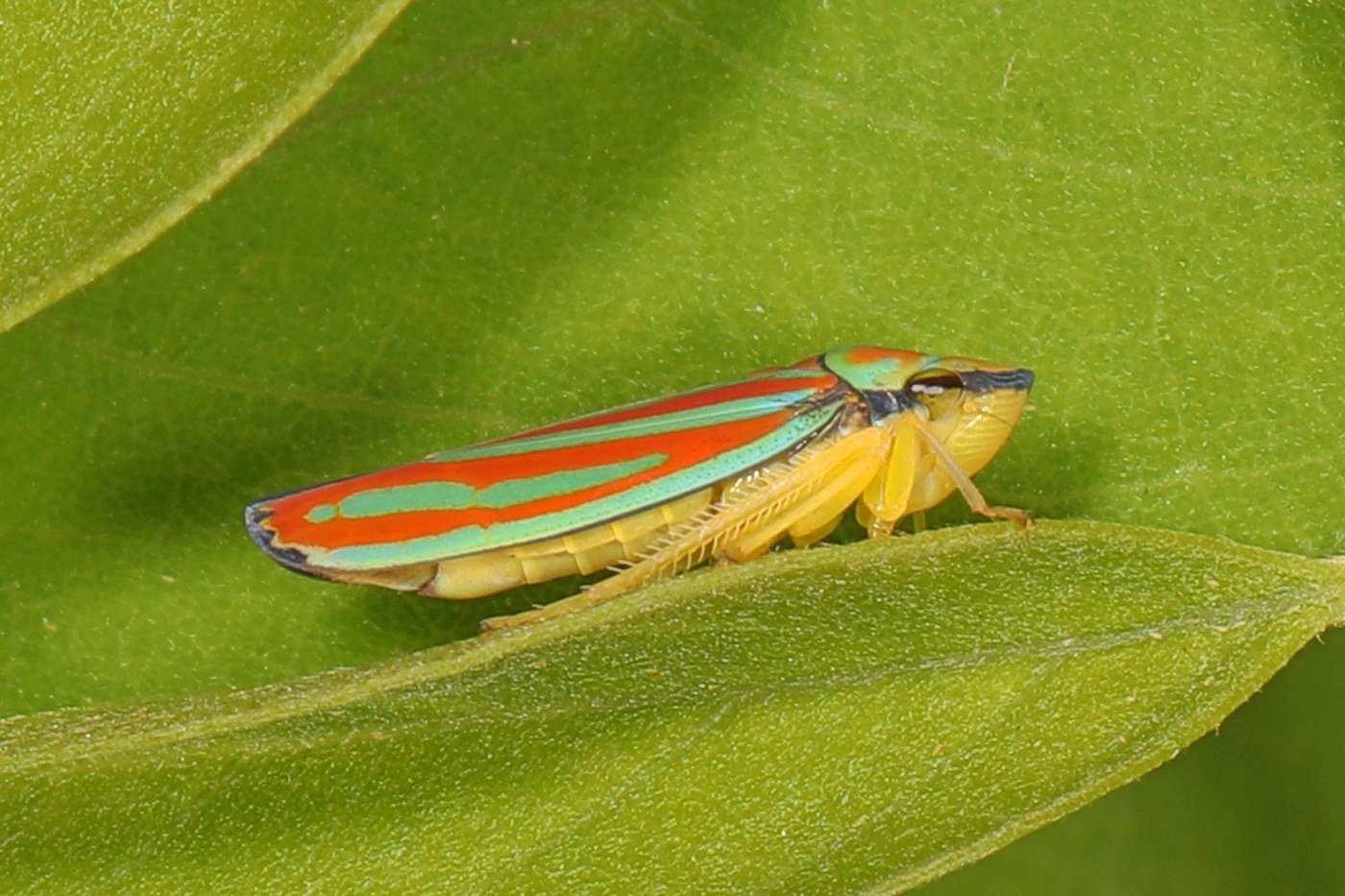
Key Visual Features
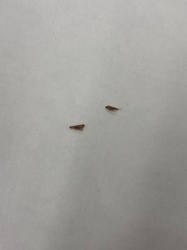
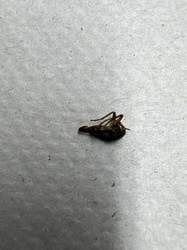
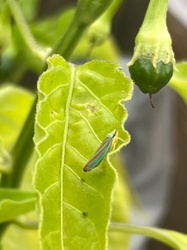
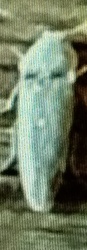
Leafhoppers are small, slender insects, usually 1/8 to 1/2 inch long, with a narrow, wedge-shaped body that tapers from a broad head to a pointed tail end.
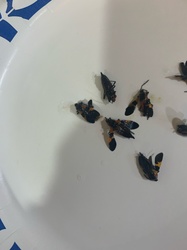
- Body: Elongated and torpedo-like, held close to the leaf surface; colors range widely including green, yellow, brown, or brightly patterned with stripes and spots depending on species.
- Wings: Two pairs of wings folded flat and roof-like over the back, often translucent or colored to match the body.
- Legs: Hind legs are noticeably enlarged with rows of small spines, built for powerful jumping.
- Head: Broad and blunt with short antennae and eyes set to the sides.
- Movement: Known for moving sideways in quick, crab-like shuffles across a leaf before hopping or flying away when disturbed.
Where and When You'd See It
Leafhoppers are found on the undersides and tops of leaves in gardens, lawns, meadows, and agricultural fields, feeding on plant sap from a wide variety of grasses, shrubs, and crops. They are active from spring through fall in most temperate regions, with populations often peaking in summer. They tend to be most visible during the day, scattering rapidly when a leaf is disturbed, and can sometimes be seen in swarms flying up from grass when walked through.
Similar-Looking Bugs
Leafhoppers can be mistaken for:
- Aphids – Aphids are soft-bodied, pear-shaped, and slow-moving, lacking the leafhopper's quick jumping ability and wedge shape.
- Planthoppers – Similar in shape but generally bulkier, with a more triangular head profile and sometimes waxy secretions.
- Froghopper/Spittlebug nymphs – Nymphs hide inside foamy "spittle" masses on stems, unlike leafhoppers which stay exposed on leaf surfaces.
- Small grasshoppers – Grasshoppers are larger overall with much longer antennae in some cases and a more robust body.
Quick ID Checklist
- Narrow, wedge-shaped body tapering to a point
- Enlarged hind legs built for jumping
- Quick sideways-shuffling movement on leaves
- Small size, generally under 1/2 inch
- Wings folded flat and roof-like when at rest
Many species also secrete tiny drops of clear liquid waste as they feed, sometimes leaving faint sticky specks on leaves below a heavily infested branch, another subtle clue that leafhoppers are present nearby.
Frequently asked questions
What makes a leafhopper's movement distinctive?
Leafhoppers often shuffle sideways in quick bursts across a leaf before hopping away, a movement pattern that helps distinguish them from slower-moving sap-feeding insects like aphids.
How do I tell a leafhopper from a planthopper?
Leafhoppers have a slimmer, more torpedo-like body and a row of small spines on the hind legs, while planthoppers tend to be bulkier with a more triangular head and sometimes waxy coatings.
Do leafhoppers come in different colors?
Yes, coloring varies greatly by species, ranging from plain green or brown to vividly striped or spotted patterns, but the wedge-shaped body and jumping hind legs remain consistent identifying traits.
When are leafhoppers most commonly seen?
They are most visible during the warmer months, from spring through fall, and are easiest to spot by disturbing grass or foliage, which causes them to hop or fly up in numbers.
Leafhopper identified by the community
Recent Leafhopper finds identified with Bug Identifier.