Mealworm Identification Guide
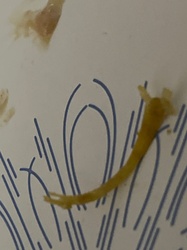
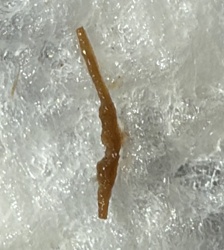
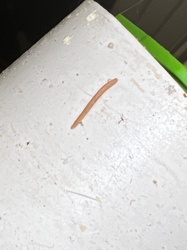
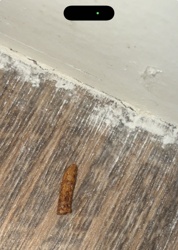
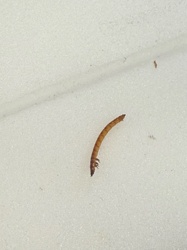
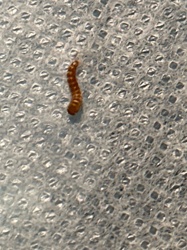
Recognize the hard-shelled, segmented mealworm by its shiny golden-brown exoskeleton and cylindrical shape.
Read the full Mealworm encyclopedia entry →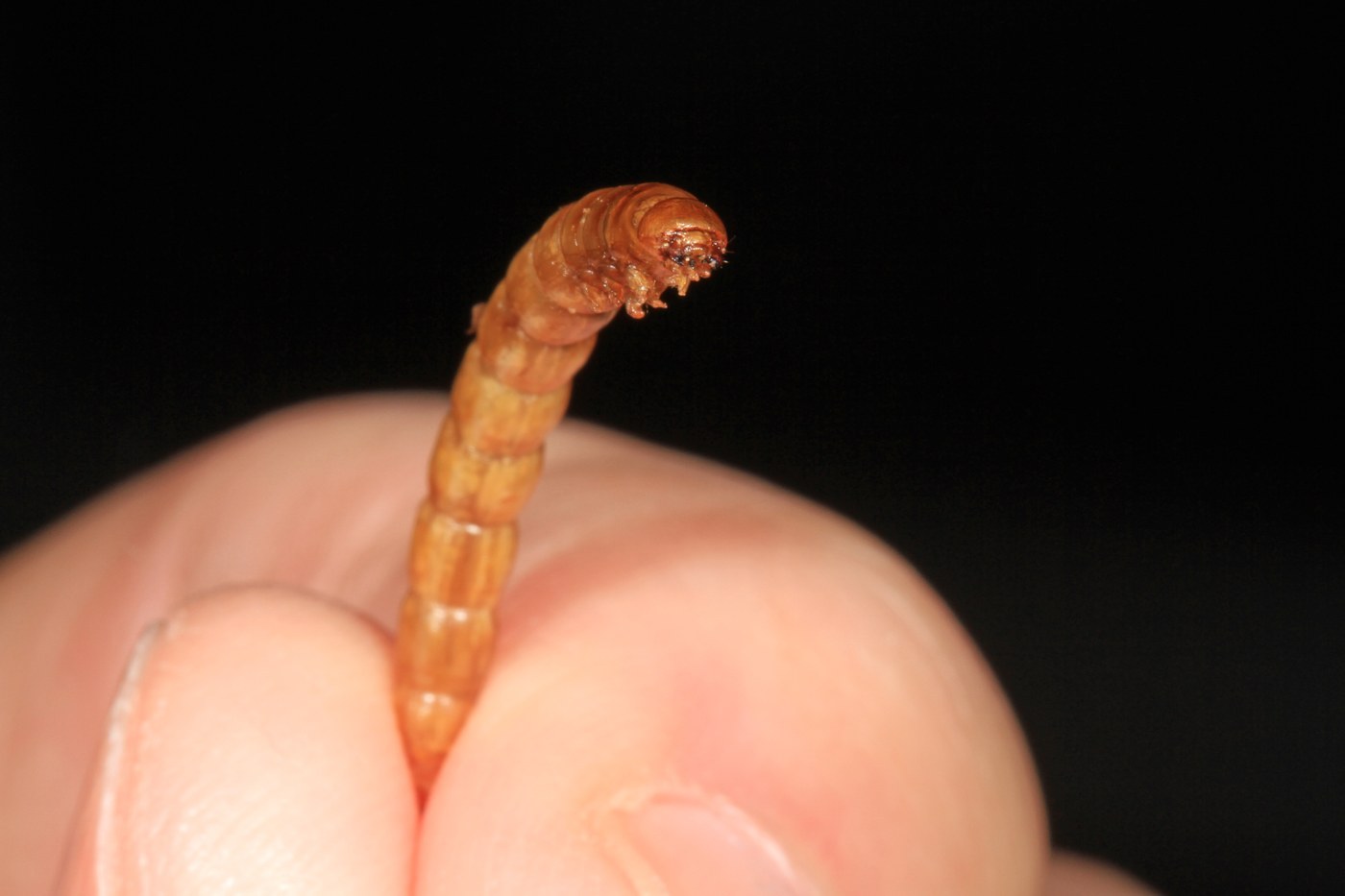
Key Visual Features
- Cylindrical, worm-like body with a hard, shiny exoskeleton, distinctly segmented along its length
- Golden-brown to dark amber coloring, appearing glossy compared to the dull, soft skin of true larvae like maggots
- Six small legs clustered near the head end, though they can be hard to spot without close inspection
- Head is slightly darker and more defined than the rest of the body, with tiny visible mouthparts
- Body maintains a fairly uniform width throughout, without the strong tapering seen in maggots
- Grows to roughly 1 to 1.25 inches long at full larval size before pupating
Where and When You'd See Them
- Found in stored grain products, dry pet food, flour, meal, and other dry organic material in pantries, storage bins, and feed containers
- Can be present indoors year-round wherever suitable dry food sources are stored, without strong seasonal limits
- Usually found in groups within the food source itself rather than roaming openly
- Prefers dark, undisturbed storage areas with a steady food supply
Similar-Looking Bugs
- Wireworms look similar with a hard, shiny, cylindrical body but are typically found in soil around plant roots rather than in stored dry food products.
- White grubs are much plumper, curl into a "C" shape, and have a soft body, unlike the mealworm's straight, uniformly cylindrical, hard-shelled form.
- Maggots are soft, legless, and tapered at the front, lacking the mealworm's hard shell and visible legs entirely.
- Confused flour beetle larvae are similar in habitat but tend to be smaller and more slender, without the mealworm's thicker, more heavily armored segments.
Quick ID Checklist
- Hard, shiny, golden-brown cylindrical body with clear segmentation
- Six small legs near the head end
- Fairly uniform body width from end to end, no strong C-curl
- Found in stored grain, flour, or dry pet food
- About 1 to 1.25 inches long when fully grown
Frequently asked questions
How do I tell a mealworm from a maggot?
Mealworms have a hard, shiny, golden-brown segmented shell and visible legs near the head, while maggots are soft, pale, legless, and taper to a point at the front.
Where would I typically find mealworms?
They are usually found in stored dry goods such as flour, grain, meal, or dry pet food, often clustered within the food source itself.
What color is a mealworm's body?
It ranges from golden-brown to a darker amber shade, with a glossy, hardened appearance that sets it apart from soft-bodied larvae.
Does a mealworm curl into a C-shape like a white grub?
No, a mealworm keeps a fairly straight, uniformly cylindrical posture rather than curling tightly, which helps distinguish it from the plump, C-shaped white grub.
Mealworm identified by the community
Recent Mealworm finds identified with Bug Identifier.