Pandora Sphinx Moth Identification Guide
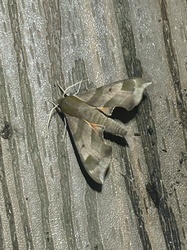
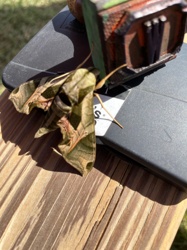
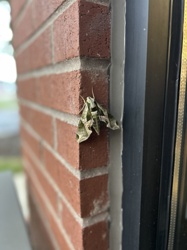
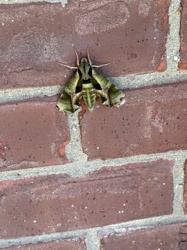
Identify this large camouflaged hawk moth by its olive-green and pink scalloped wings resembling grape leaves.
Read the full Pandora Sphinx Moth encyclopedia entry →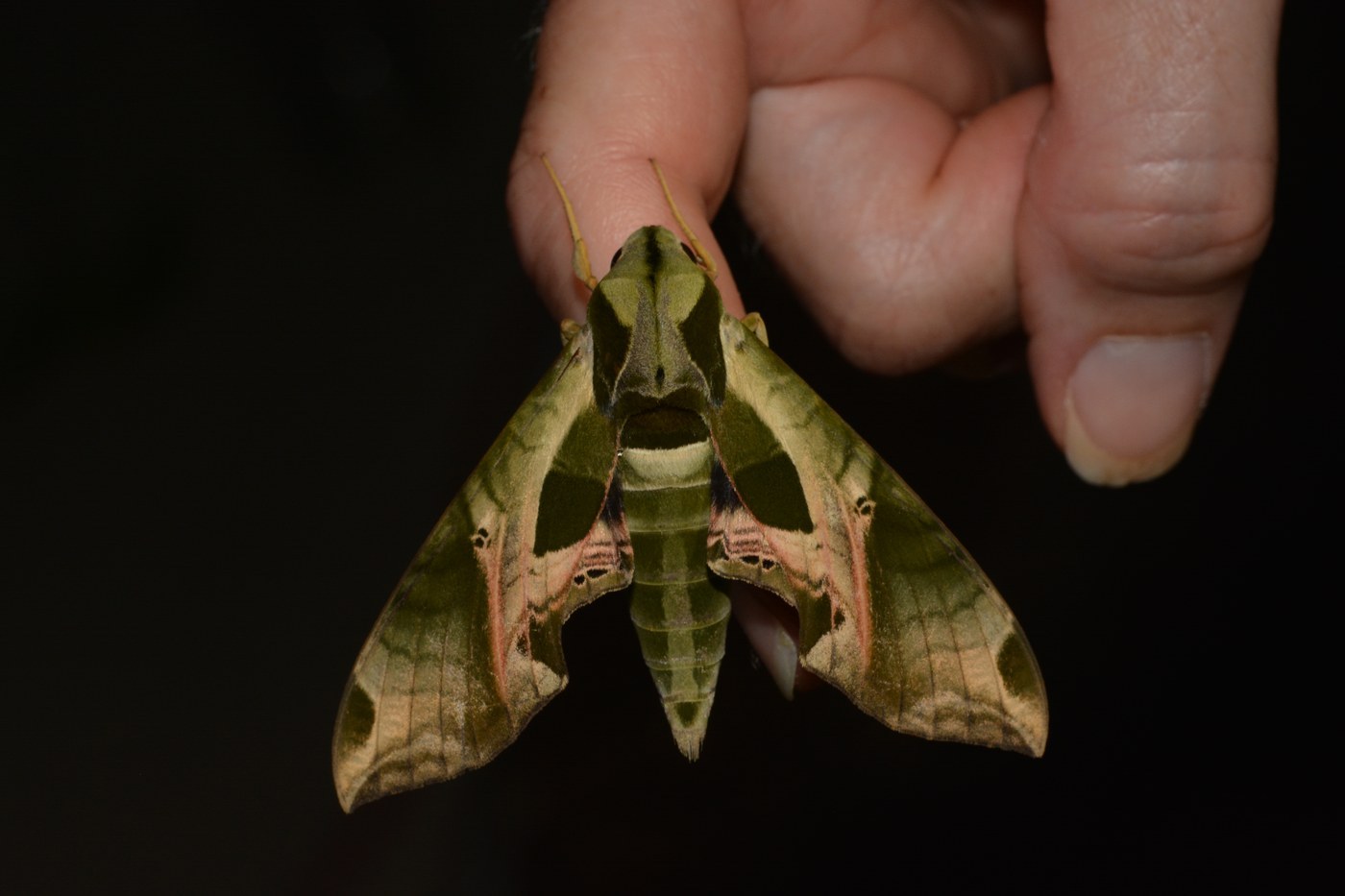
Key Visual Features
The Pandora sphinx moth is a large, beautifully camouflaged hawk moth named for its intricate leaf-like pattern.
- Size: Large, with a wingspan of about 3-4.5 inches (75-115mm).
- Color and pattern: Wings are olive-green to pinkish-tan with scalloped patches of darker olive and soft pink, creating a mottled camouflage that mimics grape leaves. Small dark crescent or eye-like markings appear scattered across the forewings.
- Body shape: Stout, torpedo-shaped body tapering toward the rear, with pink markings along the abdomen.
- Wings: Forewings have a distinctive scalloped or notched outer margin, unusual among sphinx moths. Hindwings are pinkish with darker markings near the base.
- Legs and antennae: Antennae are moderately thick and tapered, typical of sphinx moths, and are held close along the body when perched.
Where and When You'll See It
Look for this species near grapevines and Virginia creeper, its caterpillar host plants, along woodland edges, riverbanks, and in gardens across eastern and central North America. Adults are strictly nocturnal and are often drawn to outdoor lights after dark, sometimes appearing at porch lights well away from obvious host plants. They fly from late spring through summer, with peak sightings in early to mid-summer, and during the day they rest motionless and camouflaged against tree bark or dense tangled foliage where their leaf-like pattern makes them very hard to spot.
Similar-Looking Moths
Several other large sphinx moths share an olive-and-pink color scheme, including the Achemon sphinx, which has a similar palette but a smoother, less deeply scalloped wing margin and a different arrangement of pale patches, plus pinker forewings overall. The twin-spotted sphinx can also appear superficially similar with its mottled brown-green tones. The Pandora sphinx's elongated, notably scalloped forewing edge combined with its green-and-pink leaf-mimicking pattern and stouter body are the most reliable distinguishing features when comparing these species side by side.
Quick ID Checklist
- Large, stout-bodied moth with a 3-4.5 inch wingspan
- Olive-green and pink mottled, leaf-like camouflage
- Scalloped, notched outer edge on the forewings
- Found near grapevines or Virginia creeper
- Nocturnal, often seen at lights after dark
Frequently asked questions
Why does the Pandora sphinx moth look like a leaf?
Its olive-green and pink mottled pattern with a scalloped wing edge mimics grape leaves, providing camouflage while resting.
How can I tell it apart from the Achemon sphinx?
The Pandora sphinx has a more deeply scalloped forewing margin, while the Achemon sphinx's wing edge is smoother.
Where is this moth most commonly found?
Near grapevines and Virginia creeper, which serve as host plants for its caterpillars.
Is the Pandora sphinx active during the day?
No, it is nocturnal and rests camouflaged on bark or foliage during daylight hours.
Pandora Sphinx Moth identified by the community
Recent Pandora Sphinx Moth finds identified with Bug Identifier.