Red Velvet Mite Identification Guide
A guide to identifying the plush, bright-red velvet mites that appear after rain.
Read the full Red Velvet Mite encyclopedia entry →Key Visual Features
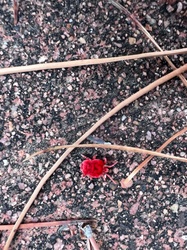
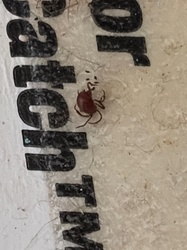
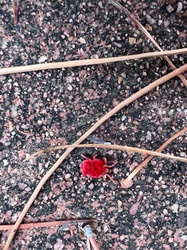
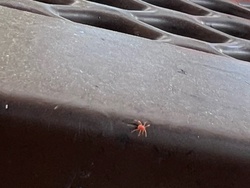
Red velvet mites are hard to miss once you know what to look for — they are among the largest and most vividly colored mites in the world.
- Size: Typically 4–10 mm long, noticeably larger than most other mites.
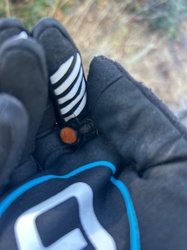
- Color: Bright, uniform velvety red or orange-red across the entire body.
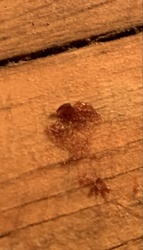
- Body shape: Rounded, plump, and oval, with a soft, densely fuzzy texture caused by short setae (hair-like bristles) covering the exoskeleton.
- Legs: Eight legs, also reddish, giving the whole animal a solid, one-color appearance.
- Wings/antennae: None — like all mites, they lack wings and true antennae.
- Markings: Usually a single solid color with no patterning; the velvety texture itself is the standout feature.
Where and When You'd See Them
Red velvet mites live in soil and leaf litter and are most conspicuous just after rain, when adults emerge and wander across open ground, sidewalks, and garden soil in daylight. They are common in temperate grasslands, deserts after seasonal rains, and garden beds. Sightings cluster in spring and summer, often in large numbers following a rain event, then taper off as conditions dry.
Similar-Looking Bugs
- Clover mites are far smaller (under 1 mm), lack the velvety texture, and are usually seen near building foundations rather than open soil.
- Velvet ants (which are actually wasps) are larger, have a distinct three-part insect body with a narrow waist, six legs, and a harder exoskeleton rather than a soft velvety one.
- Chigger mites, the juvenile stage of some velvet mite relatives, are microscopic and cannot be seen without magnification, unlike the large, easily visible adult red velvet mite.
- Spider mites are a fraction of the size and lack any fuzzy texture.
Quick ID Checklist
- Solid bright red or orange-red color from head to legs
- Plump, rounded body with a visibly velvety, fuzzy texture
- Roughly pea-seed sized — 4–10 mm, large for a mite
- Eight legs, no wings or antennae
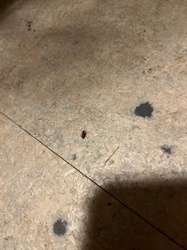
- Seen wandering on open soil or pavement shortly after rainfall
Frequently asked questions
Why do red velvet mites suddenly appear after it rains?
Adults live in soil burrows and emerge to move across the surface once rain softens the ground, which is why sightings spike right after a storm.
What makes their texture look velvety?
The exoskeleton is covered in short, dense hair-like setae that scatter light and give the surface a soft, fuzzy appearance rather than a shiny one.
How do I tell a red velvet mite from a velvet ant?
Velvet ants are wasps with six legs and a narrow waist between thorax and abdomen, while red velvet mites have eight legs and one continuous rounded body with no waist.
Are all velvet mites the same bright red?
Most species show a strong red or orange-red hue, though shade can vary slightly by species and region, from deep crimson to a lighter orange-red.
Red Velvet Mite identified by the community
Recent Red Velvet Mite finds identified with Bug Identifier.