Stag Beetle Identification Guide
Learn to identify this large woodland beetle by the antler-like mandibles found on males.
Read the full Stag Beetle encyclopedia entry →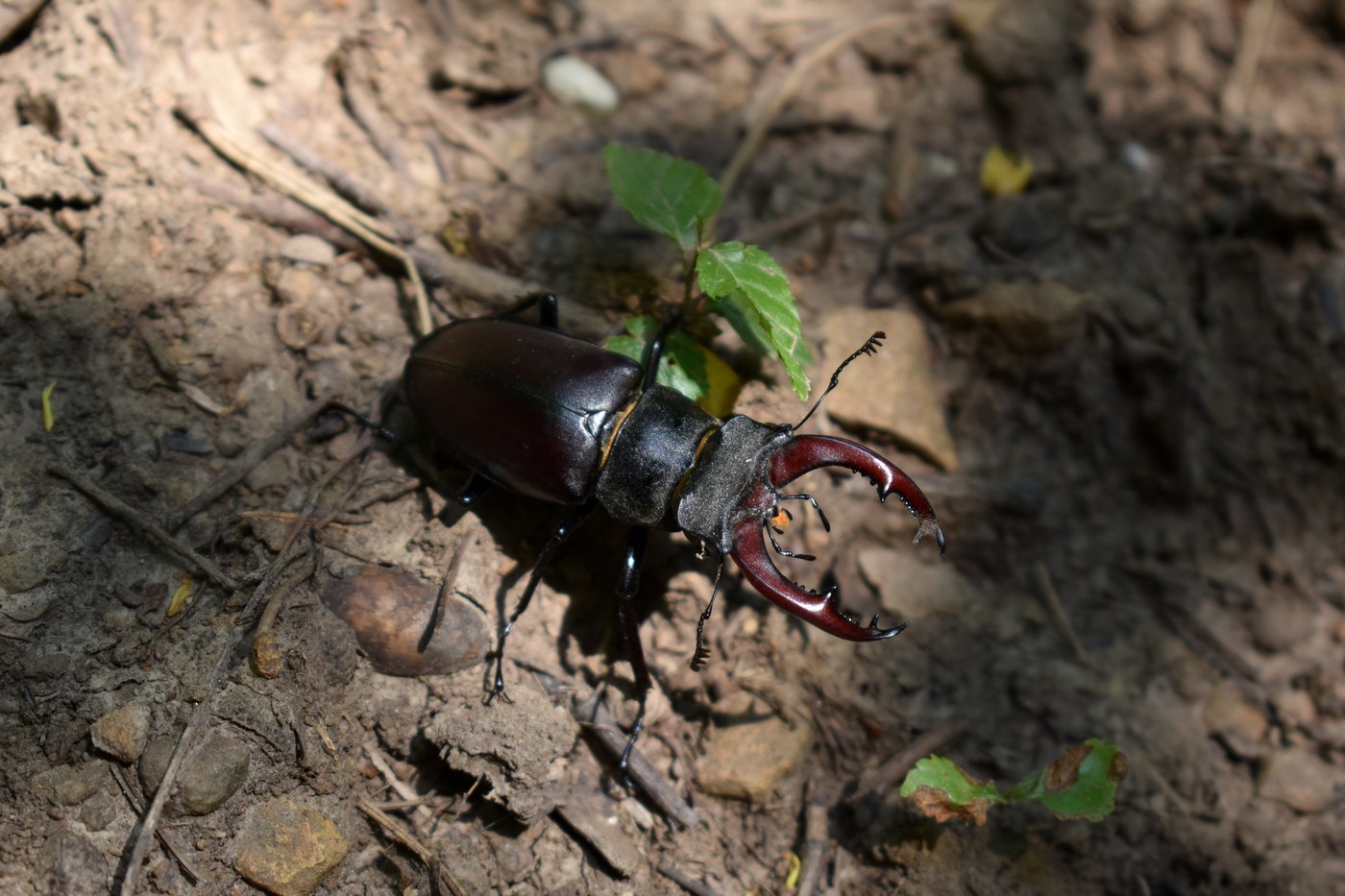
Key Visual Features
Stag beetles (family Lucanidae) are among the largest and most dramatic-looking beetles, named for the males' oversized, antler-like mandibles:
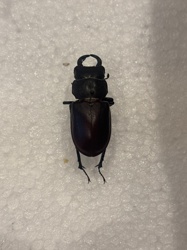
- Enlarged, branched mandibles in males, resembling deer antlers, used in wrestling contests with rival males; these can make up a significant portion of the beetle's total body length
- Much smaller, less pronounced mandibles in females, which more closely resemble those of other large beetles
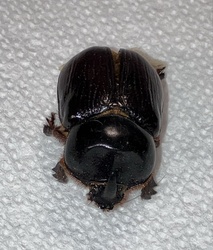
- Glossy black, dark brown, or reddish-brown exoskeleton, often with a slight sheen
- Large, robust body, with total length (including mandibles in males) commonly reaching 3–8 cm (1.2–3.2 inches) depending on species
- Broad head and thorax relative to body width, especially pronounced in males to support the large jaw muscles
- Clubbed, elbowed antennae, typical of the broader beetle group, though less conspicuous than the mandibles
Where and When You'd See It
Stag beetles are associated with mature woodlands, parks, and gardens containing old or decaying trees, since their larvae develop over several years inside rotting wood and stumps. Adults emerge in late spring through summer, and are most often seen at dusk or after dark, when males fly in search of mates and females search for suitable egg-laying sites. Sightings often occur near deadwood piles, old tree roots, or fallen logs, particularly in warm, still evening conditions.
Similar-Looking Bugs
- Rhinoceros beetles: have a single, forward-pointing horn on the head or thorax rather than the paired, branched mandibles seen in male stag beetles
- Ground beetles: generally smaller, more uniformly dark, and lack the oversized jaws distinguishing male stag beetles
- Female stag beetles vs. other large dark beetles: females can be trickier to identify since they lack large mandibles, but their broad body shape and association with deadwood habitats are helpful clues
Quick ID Checklist
- Males with large, branched, antler-like mandibles
- Glossy black to reddish-brown body
- Large overall size, often several centimeters long
- Found near mature trees, deadwood, and old stumps
- Adults most active at dusk and after dark in late spring and summer
Frequently asked questions
How can I tell a male from a female stag beetle?
Males have large, branched, antler-like mandibles that can account for a significant portion of their body length, while females have much smaller, less pronounced jaws.
What is the best time of day to spot a stag beetle?
Adults are most active at dusk and after dark during late spring and summer, when males in particular take flight searching for mates.
Where do stag beetle larvae live?
Larvae develop over several years inside decaying wood, such as old tree stumps, fallen logs, and rotting root systems, which is why mature woodland and deadwood habitat is important for the species.
How is a stag beetle different from a rhinoceros beetle?
Stag beetles are identified by paired, branched, antler-like mandibles in males, while rhinoceros beetles instead have a single, forward-pointing horn on the head or thorax.
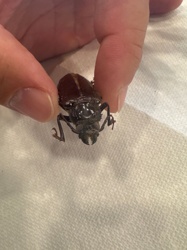
Stag Beetle identified by the community
Recent Stag Beetle finds identified with Bug Identifier.