Sweat Bee Identification Guide
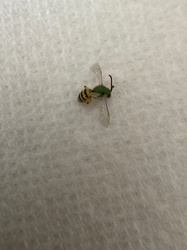
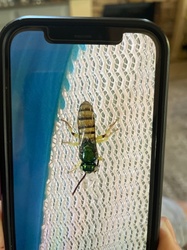
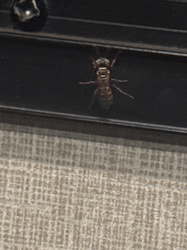
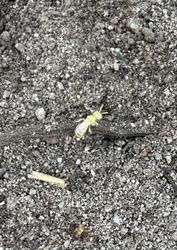
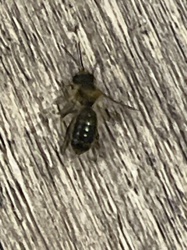
Identify these small, often metallic bees by their compact bodies and fine hair bands across the abdomen.
Read the full Sweat Bee encyclopedia entry →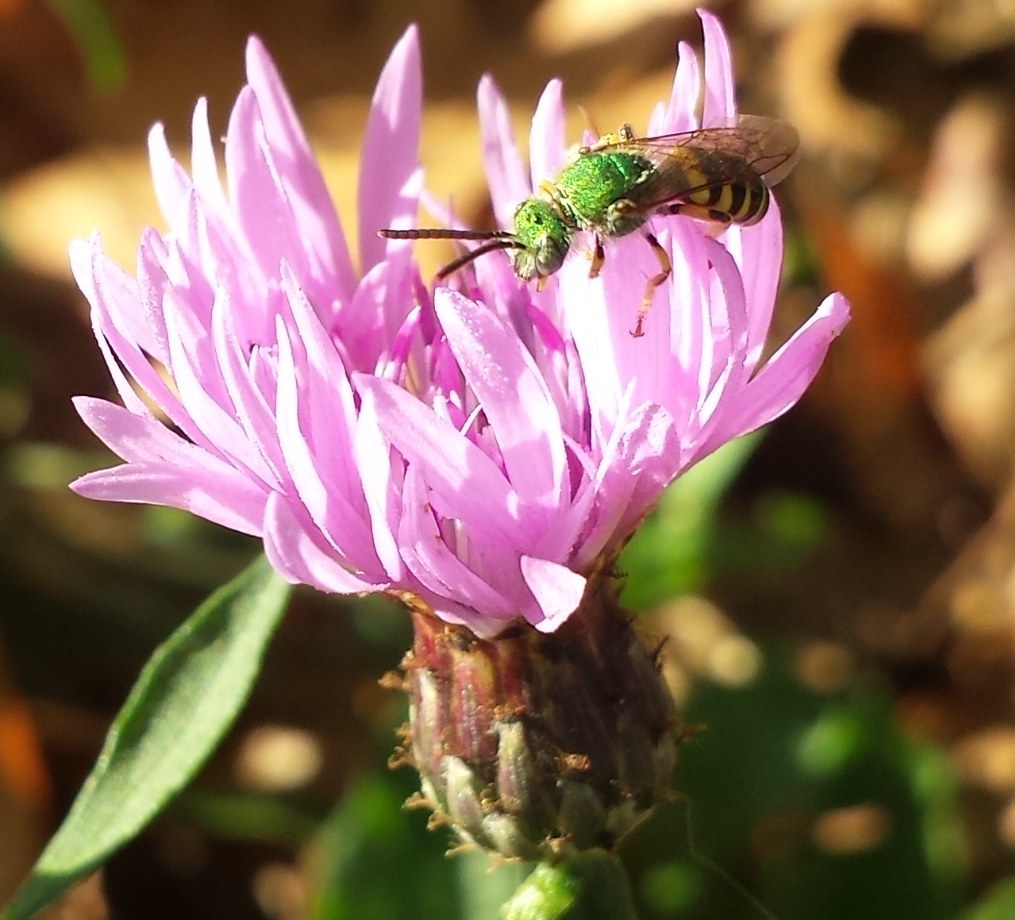
Key Visual Features
Sweat bees are a diverse group of small bees, and while their appearance varies by species, several shared traits help with identification.
- Most species are small, ranging from about 1/8 to 3/8 inch (4-10 mm) long, noticeably smaller and more compact than honey bees or bumble bees.
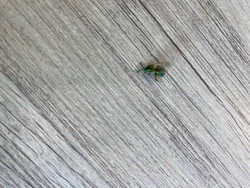
- Many species show a metallic sheen in shades of green, blue, or coppery bronze, while others are plain black or brown without metallic coloring.
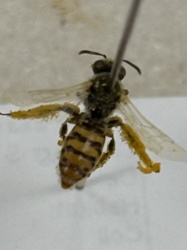
- The body has fine hairs, though generally less dense and fuzzy than a bumble bee, with hair often concentrated in narrow bands across the abdomen segments.
- The abdomen is relatively slender and tapered compared to the rounder shape of bumble bees, and the overall body plan is more streamlined.
- Females of species that carry pollen show dense hair patches (scopa) on their hind legs, useful for identifying pollen-collecting individuals.
Where and When You'd See It
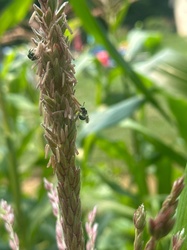
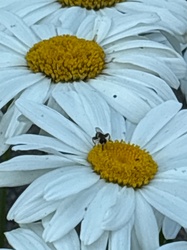
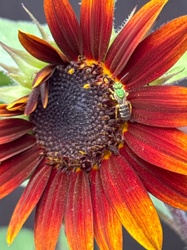
Sweat bees are found in gardens, meadows, and open sunny areas, visiting a wide range of flowers for nectar and pollen. Many species nest in the ground, digging small burrows in bare or sparsely vegetated soil, while others nest in rotting wood or plant stems. They are active during the day, especially in warm, sunny conditions, and are common from spring through fall depending on the species and region. Some species are solitary, with each female provisioning her own nest, while others show varying degrees of social behavior, sharing nest entrances or cooperating in small groups.
Similar-Looking Bugs
- Honey bees are larger, more uniformly golden-brown and fuzzy, without the metallic green or blue sheen seen in many sweat bee species.
- Small wasps may share a slender body but lack the branched body hairs and pollen-carrying leg structures characteristic of bees, and typically appear smoother and shinier overall.
- Flies mimicking bees have only one pair of wings and short, stubby antennae, compared to a sweat bee's two pairs of wings and longer antennae.
- Bumble bees are much larger, rounder, and densely fuzzy throughout, clearly different from the smaller, more streamlined sweat bee.
Quick ID Checklist
- Small, compact body, generally under 3/8 inch long
- Often metallic green, blue, or bronze, though some are plain black
- Fine hair bands across the abdomen rather than dense overall fuzz
- Found nesting in bare soil, rotting wood, or plant stems
- Active on flowers in sunny gardens and open habitats from spring through fall
Frequently asked questions
Why are sweat bees sometimes hard to identify by color alone?
The group includes both metallic green or blue species and plain black or brown species, so body shape and hair pattern are more consistent identification clues than color.
How can I tell a sweat bee from a small wasp?
Sweat bees have branched body hairs and, in females, dense pollen-carrying hair patches on the hind legs, while wasps have smoother bodies without these pollen-collecting structures.
Where do sweat bees typically nest?
Many species nest in burrows dug into bare or sparsely vegetated soil, while others use rotting wood or hollow plant stems.
How big is a typical sweat bee compared to a honey bee?
Sweat bees are generally smaller and more slender, often under 3/8 inch long, compared to the larger, fuzzier honey bee.
Sweat Bee identified by the community
Recent Sweat Bee finds identified with Bug Identifier.