Tortoise Beetle Identification Guide
Learn to spot the flattened, shield-shaped beetles whose bodies hide their head and legs like a tiny turtle shell.
Read the full Tortoise Beetle encyclopedia entry →Key Visual Features
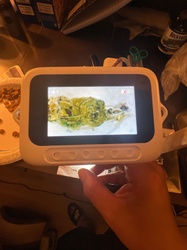
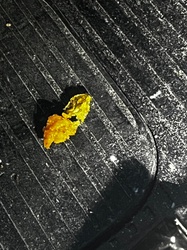
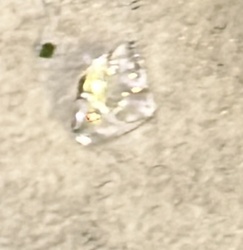
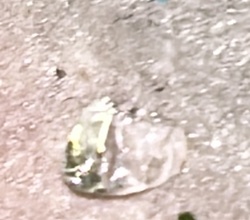
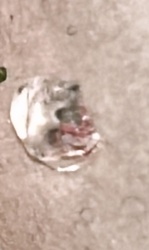
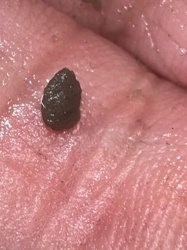
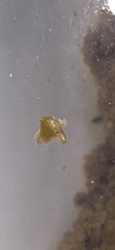
Tortoise beetles are small, unusually shaped beetles, generally 5-11 mm long, named for their broad, flattened, disc-like body that extends outward from the legs like a turtle's shell. Viewed from above, the pronotum and wing covers expand into a rounded or oval outline that conceals the head and legs almost entirely, so the beetle looks like a tiny domed shield or button resting on the leaf. Colors vary widely by species, ranging from plain green, tan, or brown to metallic gold, and some species can shift color when disturbed. The edges of the shell are often translucent or thin, giving the outline a slightly glassy border.
Where and When You're Likely to See Them
Tortoise beetles are found on the leaves of their specific host plants, commonly morning glory, sweet potato, and related vines, as well as various other broadleaf plants depending on species. They are active in warm months, from spring through fall, and are usually seen during the day resting flat against a leaf surface, where their shape and color help them blend in. Look closely at leaf undersides and edges, since larvae also feed nearby and can be found in the same locations.
Similar-Looking Bugs
Because of their flattened, shield-like shape, tortoise beetles are sometimes mistaken for small lady beetles or leaf beetles, but the key difference is how completely the shell covers the head and legs from above, making tortoise beetles look almost circular or oval with no visible head, unlike lady beetles which show a distinct rounded head region. Some tortoise beetle species with metallic gold coloring can also be confused with jewel beetles, but jewel beetles have a more elongated, bullet-shaped body rather than a flat disc shape.
Quick ID Checklist
- Flattened, disc- or shield-shaped body, 5-11 mm long
- Head and legs mostly hidden beneath the expanded shell when viewed from above
- Colors range from green and tan to metallic gold depending on species
- Found resting on leaves of host vines such as morning glory or sweet potato
- Thin, sometimes translucent shell edges extending beyond the legs
Frequently asked questions
Why can't I see the tortoise beetle's head or legs?
Its flattened shell extends outward over the body, hiding the head and legs from a top-down view, which is the main feature that gives this beetle its turtle-like appearance.
Do all tortoise beetles have metallic gold coloring?
No, only some species display shifting metallic gold or silver tones; many others are plain green, tan, or brown, so color alone is not a reliable identifier across the whole group.
What plants should I check to find tortoise beetles?
Look on morning glory, sweet potato, and other broadleaf vines, since many tortoise beetle species feed on these specific host plants.
How is a tortoise beetle different from a lady beetle?
Tortoise beetles have a much flatter, more disc-like outline that completely hides the head from above, while lady beetles are more dome-shaped with a visible, distinct head.
Tortoise Beetle identified by the community
Recent Tortoise Beetle finds identified with Bug Identifier.