Antlion Identification Guide
Learn to identify both the winged adult antlion and its pit-digging larval form, the classic 'doodlebug.'
Read the full Antlion encyclopedia entry →Key Visual Features
Antlions have two dramatically different life stages, and identification depends on which one you are looking at — the slow, fluttery winged adult or the burrowing larva known as a "doodlebug."
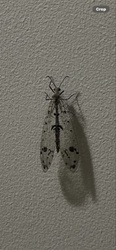
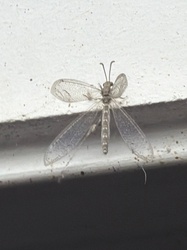
- Adult size: Roughly 2.5 to 5 centimeters including the wings, with a long, slender body.
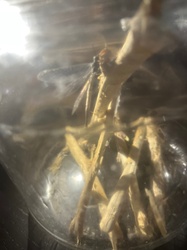
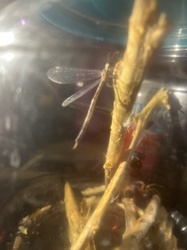
- Adult body shape: Elongated and narrow, superficially similar to a damselfly, with a long abdomen and a small head.
- Adult color: Typically brown, tan, or gray, often with mottled or spotted wing patterns.
- Adult wings: Two pairs of long, narrow, clear to lightly patterned wings held together over the back (roof-like) at rest, rather than outstretched like a dragonfly.
- Adult antennae: Short, clubbed antennae with a noticeable thickened tip — a key feature separating antlions from damselflies, which have very short, bristle-like antennae.
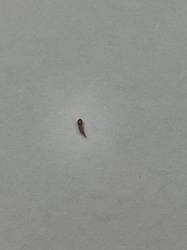
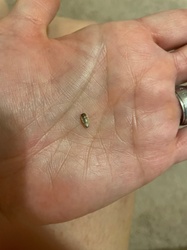
- Larva ("doodlebug"): A stout, flattened, oval-bodied grub with a large head and prominent, long, curved, sickle-like pincer jaws; the body is mottled brown or tan and often covered in coarse bristles, blending in with the sandy soil it lives in.
Where and When You'd See Them
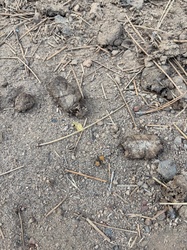
Adult antlions are active mainly at night from late spring through summer, when they are weak, fluttery fliers often attracted to lights, and spend the day resting on vegetation or structures. Larvae are found in dry, loose, sandy soil sheltered from rain — under eaves, in sandy garden patches, or at the base of trees — where they dig small, distinctive cone-shaped pits and wait buried at the bottom for small prey to stumble in.
Similar-Looking Bugs
- Damselflies: Adult antlions closely resemble damselflies in overall shape, but damselflies have very short, bristle-like antennae, while antlions have longer antennae ending in a distinct club.
- Lacewings: Adult antlions can be mistaken for large lacewings due to similarly veined wings, but lacewing antennae are long and uniformly thread-like without a clubbed tip.
- Ant lion larva vs. tiger beetle larva: Both dig pits or burrows and ambush prey, but tiger beetle larvae live in vertical burrows rather than cone-shaped pits and have a distinctive hump on their back used to brace themselves, which antlion larvae lack.
- Doodlebug pits vs. ant hills: Antlion pits are smooth, cone-shaped depressions with sloped sides and no entrance tunnel visible, distinct from the mounded, tunnel-entrance structure of an ant hill.
Quick ID Checklist
- Adult: slender, damselfly-like body with clubbed antennae, wings held roof-like
- Larva: flattened, bristly, oval body with large curved pincer jaws
- Larvae dig small, smooth, cone-shaped pits in dry sandy soil
- Adults are weak nighttime fliers, often near lights
- Clubbed antennae distinguish adults from true damselflies
Frequently asked questions
What is a 'doodlebug'?
It's a common nickname for the antlion larva, named for the winding, doodle-like trails it sometimes leaves in loose sand while moving or digging its pit.
How can I tell an adult antlion from a damselfly?
Look at the antennae: antlions have longer antennae that end in a noticeable club, while damselflies have very short, bristle-like antennae.
How do antlion larvae capture prey?
They dig a small, cone-shaped pit in loose, dry soil and bury themselves at the bottom, waiting with their pincer jaws exposed for small prey to fall in.
When are adult antlions most active?
Mainly at night during late spring and summer, when they fly weakly and are sometimes drawn to outdoor lighting.
Antlion identified by the community
Recent Antlion finds identified with Bug Identifier.