Booklice (Psocid) Identification Guide
Learn to identify tiny, pale booklice by their soft bodies, long antennae, and preference for damp, papery materials.
Read the full Booklice (Psocid) encyclopedia entry →Key Visual Features
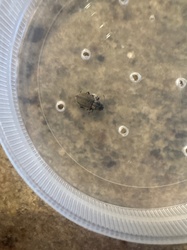
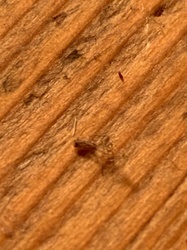
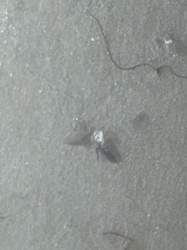
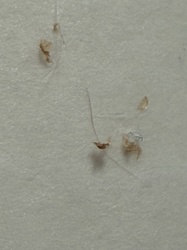
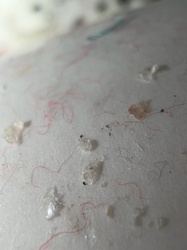
Booklice, also called psocids, are tiny soft-bodied insects often mistaken for true lice despite being unrelated.
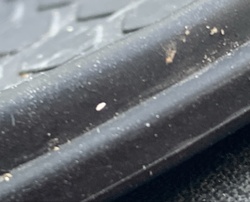
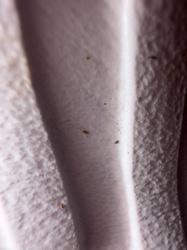
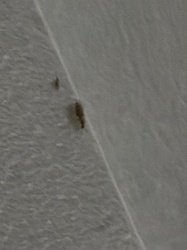
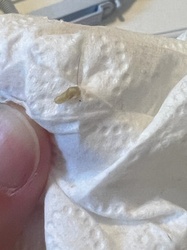
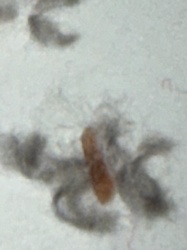
- Size: extremely small, typically only 1/16 to 1/8 inch long, making close inspection or magnification helpful for identification.
- Color: pale, ranging from translucent white to light tan or grayish-brown.
- Body shape: soft, flattened, and somewhat pear-shaped, with a noticeably larger head relative to the body.
- Wings: most indoor booklice are wingless, though some outdoor psocid species have delicate, clear wings held rooflike over the body.
- Antennae: long, thin, and thread-like, often extending well beyond the head.
- Movement: slow and somewhat clumsy walkers, without jumping ability, unlike true fleas or springtails.
Where and When You'd See It
- Strongly associated with damp, humid conditions and materials that support mold growth, since many species feed on mold and fungal spores.
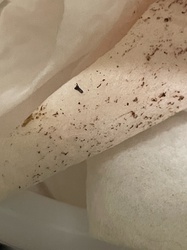
- Commonly found in stacks of paper, old books, wallpaper glue, cardboard boxes, and areas with high humidity such as basements or bathrooms.
- Populations can increase noticeably during humid seasons or after water damage, since moisture supports the mold they rely on.
- Often found in clusters on damp surfaces or paper materials rather than scattered individually.
Similar-Looking Bugs
- Bed bugs (nymphs): booklice are much smaller and more translucent, without the flattened oval, reddish-brown appearance of young bed bugs.
- Termites: booklice lack the bead-like antennae and straight waist scale of termites and are far smaller in size.
- Springtails: springtails have a forked jumping organ (furcula) on the underside of the abdomen and can jump, while booklice cannot jump and move more slowly.
Behavior Notes
Booklice tend to appear suddenly in large numbers when conditions turn humid, since populations can build quickly wherever mold is available as a food source, then decline just as quickly once the area dries out. They are most often noticed by their sheer numbers clustered together on a damp windowsill, box, or stack of paper rather than as single wandering insects.
Quick ID Checklist
- Extremely tiny, pale, soft-bodied insect
- Larger head relative to body size
- Long thread-like antennae
- Usually wingless indoors
- Found in damp paper, books, or high-humidity areas
Frequently asked questions
Are booklice related to true lice?
No, despite the name, booklice (psocids) are a different group of insects unrelated to true parasitic lice.
Why are booklice often found around books and paper?
They feed on mold and fungal spores, which tend to grow on damp paper, book bindings, and wallpaper glue.
Can booklice jump like fleas?
No, booklice walk slowly and do not have jumping ability, which helps distinguish them from fleas or springtails.
Do booklice have wings?
Most indoor booklice are wingless, though some outdoor psocid species have delicate clear wings.
Booklice (Psocid) identified by the community
Recent Booklice (Psocid) finds identified with Bug Identifier.