Caddisfly Larva Identification Guide
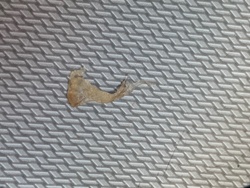
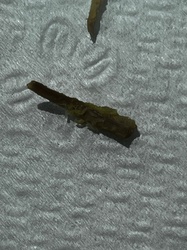
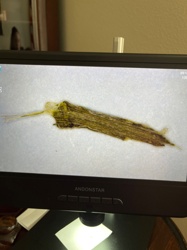
Recognize a caddisfly larva by the portable case it builds from sand, pebbles, or plant debris, or its soft, worm-like body if caseless.
Read the full Caddisfly Larva encyclopedia entry →Key Visual Features
Caddisfly larvae are aquatic and best known for the protective cases many species build and carry around.
- Size: Typically 0.3-1.2 inches (8-30 mm) long, including the case in case-building species.
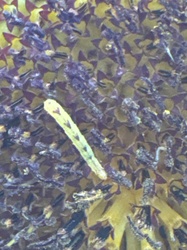
- Body shape: Soft, elongated, worm- or caterpillar-like body with a hardened head capsule and a hardened plate on the thorax segment just behind the head.
- Coloring: Pale tan, cream, gray, or greenish body, often hidden from view inside a case.
- The case: Many species construct a protective tube from local materials — sand grains, small pebbles, twig fragments, or cut leaf pieces — bound together with silk; case shape and material vary distinctly by species, from tightly spiraled pebble cases to log-cabin-style stick cases.
- Caseless species: Some caddisfly larvae do not build portable cases and instead spin silk nets to catch food or live freely, appearing as a soft, pale, caterpillar-like larva with prominent hooked legs.
- Legs: Three pairs of true legs near the head, used to drag the case along or crawl when caseless; a pair of hooked prolegs at the rear anchors the larva inside its case.
- Gills: Thread-like gills may be visible along the abdomen in some species, used for breathing underwater.
Where and When You'll See It
Caddisfly larvae live in streams, rivers, ponds, and lakes, especially in clean, well-oxygenated water, and can be found for much of the year since larval development often spans several months to over a year. Case-building species are usually seen crawling slowly along the stream or pond bottom, dragging their case behind them, or anchored to rocks and submerged wood. Net-spinning species attach silk nets to rocks in flowing water to filter food from the current. They are commonly found by turning over submerged rocks or debris.
Similar-Looking Bugs
- Bagworm (a moth larva, but sometimes confused when a case is seen out of water): Bagworm cases are found on land, on trees and shrubs, not underwater, and are made mostly of silk and plant bits rather than sand or pebbles.
- Caseless mayfly or stonefly nymphs: Lack any case or silk retreat and instead have visible tail filaments, which caddisfly larvae do not have.
- Aquatic beetle larvae: Typically have a more segmented, hardened body throughout and no silk case, distinguishing them from case-bearing caddisfly larvae.
Quick ID Checklist
- Soft, worm-like body with a hardened head capsule
- Often housed in a self-built case of sand, pebbles, sticks, or leaf bits
- No tail filaments (unlike mayfly or stonefly nymphs)
- Found crawling slowly on stream or pond bottoms, dragging a case
- Caseless species may instead be found near small silk capture nets on rocks
Frequently asked questions
How do I identify a caddisfly larva if it's inside a case?
Look for a soft, worm-like larva with a hardened head peeking from a tube built of sand, pebbles, twigs, or leaf fragments bound with silk — the case itself is a strong identification clue.
Do all caddisfly larvae build cases?
No, some species are caseless and instead spin silk nets to catch food or live and crawl freely without any protective case.
How can I tell a caddisfly larva from a mayfly or stonefly nymph?
Caddisfly larvae lack the tail filaments seen in mayfly and stonefly nymphs and instead have a soft, caterpillar-like body, often inside a built case.
Where is the best place to find caddisfly larvae?
Check under submerged rocks and debris in clean streams, rivers, or ponds, where case-bearing larvae crawl slowly along the bottom.
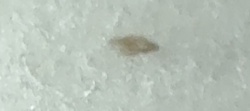
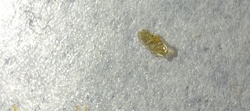
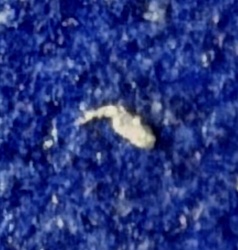
Caddisfly Larva identified by the community
Recent Caddisfly Larva finds identified with Bug Identifier.