Cigarette Beetle Identification Guide
Learn to spot the tiny, humpbacked cigarette beetle by its rounded profile, smooth wing covers, and habit of turning up in stored dry goods.
Read the full Cigarette Beetle encyclopedia entry →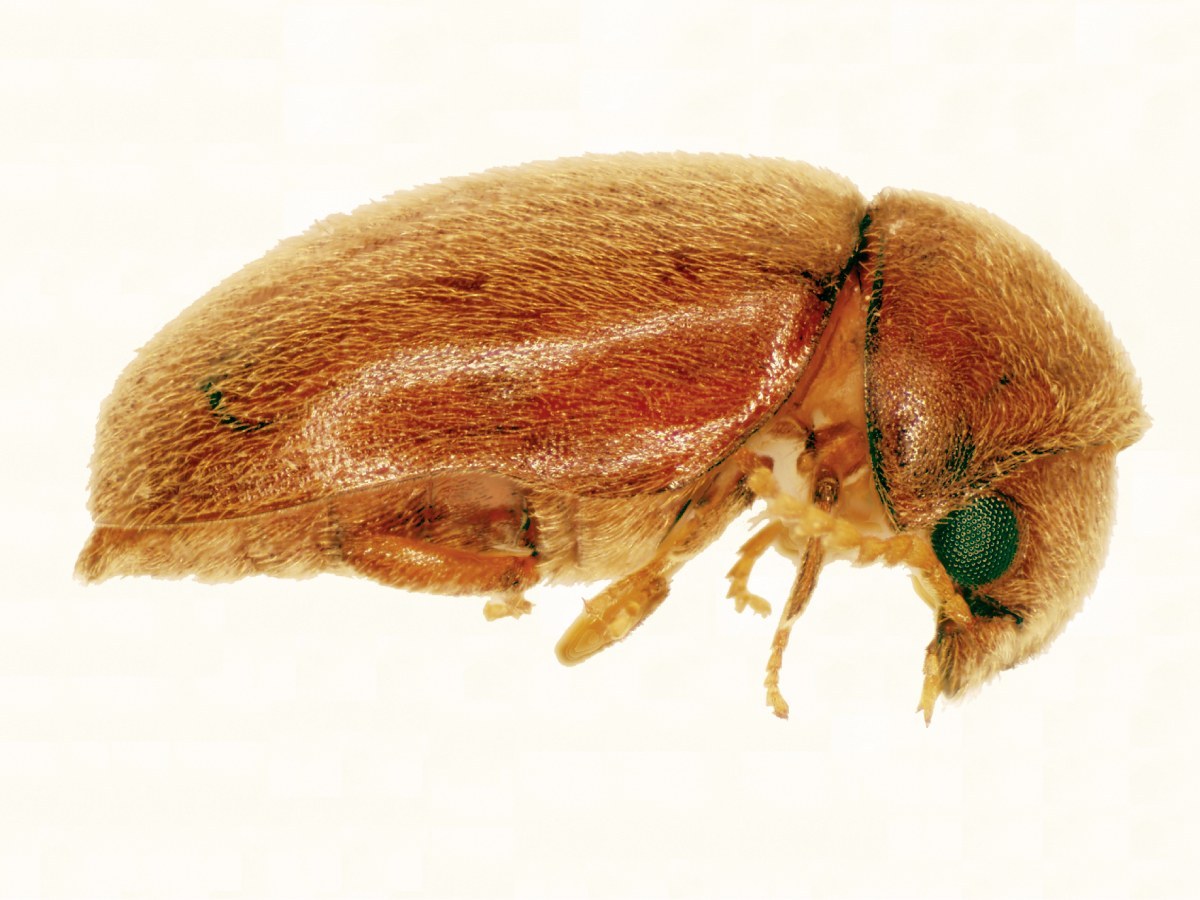
Key Visual Features
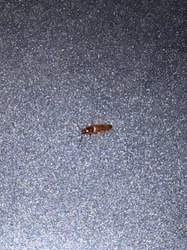
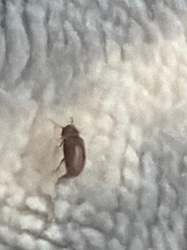
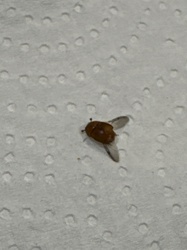
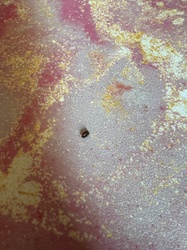
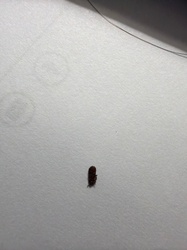
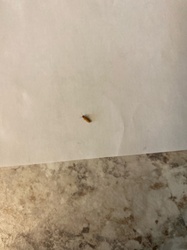
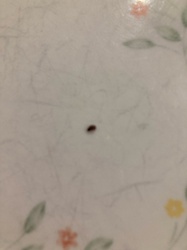
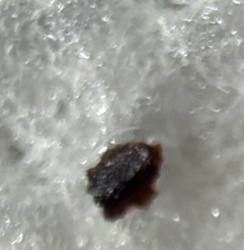
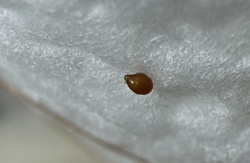
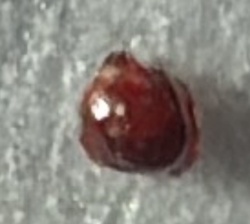
The cigarette beetle (Lasioderma serricorne) is a small, oval, reddish-brown beetle that measures only about 2-3 mm long.
- Size & shape: Tiny and compact, with a distinctly humped or rounded back when viewed from the side, giving it a "hunchback" profile.
- Color: Uniform light brown to reddish-brown, without stripes, spots, or contrasting markings.
- Wing covers: The elytra (hardened forewings) are smooth, not grooved or pitted with rows of punctures, which helps separate it from close relatives.
- Head: Tucked down and often hidden beneath the thorax when the beetle is viewed from above, adding to its rounded, ball-like appearance.
- Antennae: Short, saw-toothed (serrated) along their length, a feature that gives the species its scientific name.
- Legs: Short and often drawn in close to the body; the beetle may tuck its legs and antennae in and play dead when disturbed.
Where and When You'd See It
Cigarette beetles are found indoors year-round in climate-controlled buildings, but activity often peaks in warmer months. They are strongly associated with stored dry plant products such as tobacco, dried herbs, spices, cereal, and similar packaged goods. Adults are capable fliers and are frequently seen near windows or lights in the evening, drawn to artificial light sources. Look for them on pantry shelves, inside cabinets, or resting on walls and ceilings near a food storage area.
Similar-Looking Bugs
- Drugstore beetle: Nearly identical in size and shape, but its wing covers show fine longitudinal grooves (striations), and its antennae end in three enlarged segments rather than being evenly serrated.
- Spider beetles: Also small and round-bodied, but typically have longer legs and a more glossy, spider-like gait.
- Carpet beetles: Similarly small and oval, but usually patterned with scales in mottled white, brown, and orange rather than a solid reddish-brown color.
Quick ID Checklist
- Tiny (2-3 mm), oval, reddish-brown beetle with a humpbacked profile
- Wing covers are smooth (no grooves or rows of pits)
- Antennae are evenly saw-toothed along their length, not clubbed
- Head is bent downward and hidden from a top-down view
- Found near dried plant-based goods indoors, often attracted to light at night
Frequently asked questions
How can I tell a cigarette beetle from a drugstore beetle?
Check the wing covers under magnification: the cigarette beetle's are smooth, while the drugstore beetle's show fine parallel grooves. Antennae shape is another clue — the cigarette beetle's antennae are uniformly serrated, while the drugstore beetle has three larger segments at the antenna tip.
Why does the cigarette beetle look like a tiny ball?
Its head is angled sharply downward and tucked beneath an arched thorax, which combined with its smooth, rounded wing covers gives it a distinctly humpbacked, ball-like silhouette compared to flatter beetles.
What time of day are cigarette beetles most active?
Adults are most often noticed in the evening, when they are drawn toward indoor light sources and can be seen flying or resting on nearby walls and windows.
Do cigarette beetles have wings?
Yes, they have functional hindwings folded beneath their hardened forewing covers and are active, if somewhat clumsy, fliers.
Cigarette Beetle identified by the community
Recent Cigarette Beetle finds identified with Bug Identifier.