
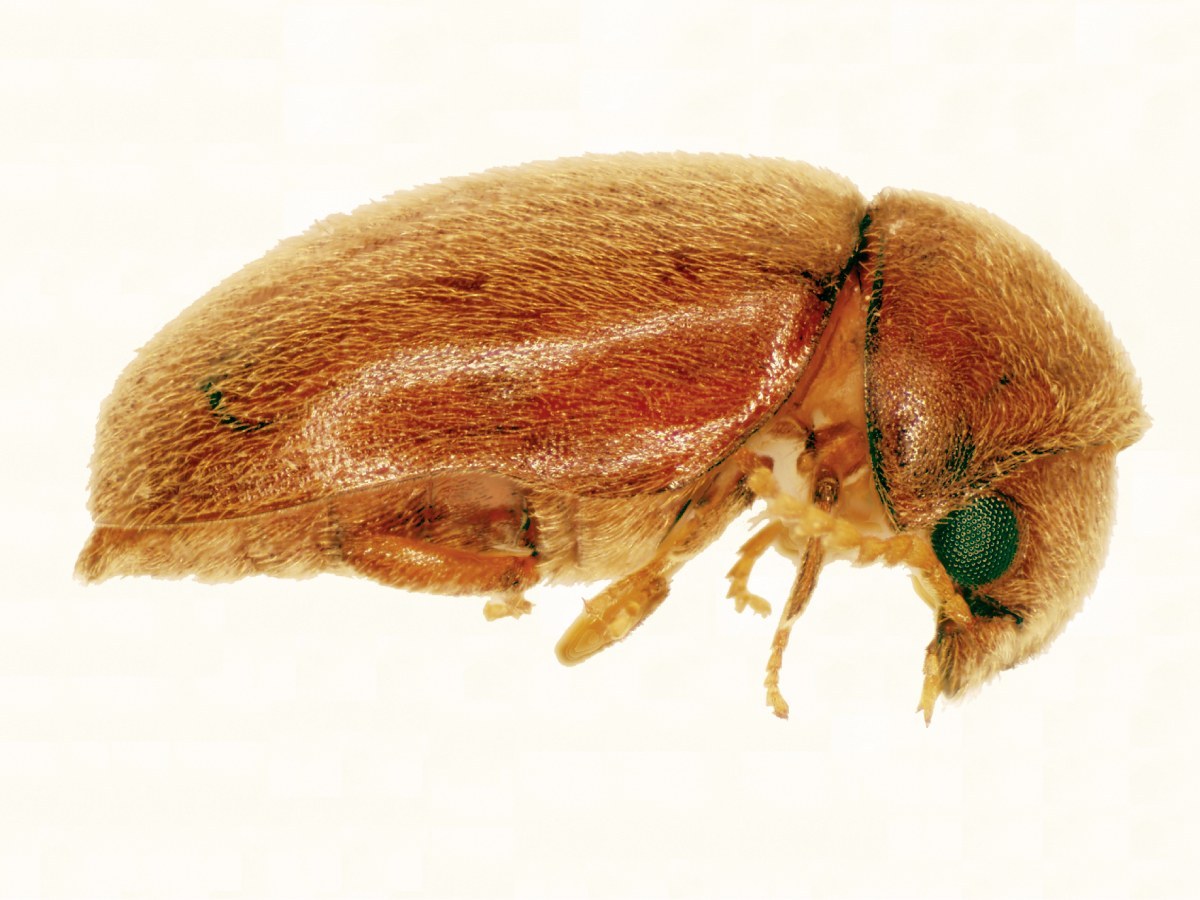
Cigarette Beetle
Lasioderma serricorne
A tiny, reddish-brown, humpbacked beetle that rides along in stored dried herbs, spices, and tobacco wherever it hitches a ride.
- Size
- 2–3 mm long
- Habitat
- Stored dried plant products worldwide, especially warm regions
- Danger
- Nuisance pest
Spotted a bug like this?
Identify any bug or insect from a photo, free.
Overview
The cigarette beetle is a very small, oval beetle in the family Ptinidae (formerly Anobiidae), so named because it was historically a well-known pest of cured tobacco. Its distinctive humpbacked profile and smooth, uniformly reddish-brown body make it one of the more recognizable small beetles associated with stored dried plant products.
Originally believed to have spread from warmer regions of the world, the cigarette beetle is now found nearly worldwide, largely through the global movement of dried goods. It is a generalist feeder as a larva, developing in a wide variety of dried plant-based materials beyond tobacco, including spices, dried flowers, herbs, and grain products.
Because both larvae and adults tend to avoid light, infestations of stored products often go unnoticed until adult beetles emerge and fly toward windows or light fixtures, which is frequently the first sign of their presence.
How to Identify
- Small, oval, and strongly convex body, 2–3 mm long
- Uniform light reddish-brown to tan coloring with no pattern
- Head is bent sharply downward, tucked beneath the pronotum, giving a distinct "humpbacked" profile
- Antennae are saw-toothed (serrate) along their length, not clubbed
- Elytra (wing covers) are smooth, without rows of pits
- Easily confused with the drugstore beetle, which has grooved elytra and antennae ending in a three-segmented club rather than being serrate throughout
Habitat & Range
Cigarette beetles occur worldwide, with greatest abundance in warm and tropical-to-subtropical climates, though they are also found in heated indoor environments in cooler regions. They are strongly associated with stored dried plant products in pantries, warehouses, and processing facilities, including tobacco, spices, dried herbs, cereal products, and dried flowers. Activity and reproduction speed up in warm conditions, with populations building fastest during summer months.
Behavior & Diet
Adults are capable fliers and are strongly attracted to light, often seen resting on windowsills. Both sexes tend to be most active at dusk or in dim light. Larvae are the primary feeders, tunneling through dried plant material and often through packaging to reach food, leaving behind fine, powdery debris and small emergence holes. The species plays a minor ecological role as a generalist decomposer of dried plant matter, but it is best known as a pest of stored products, where it feeds broadly on dried organic goods.
Life Cycle
Females lay dozens of tiny eggs directly on or near a suitable food source, and eggs hatch within one to two weeks. The small, hairy, C-shaped larvae burrow through dried plant material as they feed and grow, passing through four to six instars over several weeks to a few months. The mature larva spins a loose silken cocoon, often incorporating bits of food debris, within which it pupates for one to two weeks. Under warm conditions a full generation can complete in as little as a month and a half, allowing several generations per year, with development slowing considerably in cooler temperatures.
Frequently asked questions
How is the cigarette beetle different from the drugstore beetle?
The cigarette beetle has smooth wing covers and saw-toothed antennae, while the drugstore beetle has grooved wing covers and antennae ending in a small club.
Does the cigarette beetle only infest tobacco?
No, despite its name it feeds on a wide range of dried plant products, including spices, dried herbs, and cereal goods.
Why are cigarette beetles often seen near windows?
Adults are strongly attracted to light and fly toward windows once they emerge from infested stored products.
How quickly can this beetle complete a generation?
In warm conditions, development from egg to adult can take roughly six weeks, allowing multiple generations each year.
Cigarette Beetle guides
In-depth guides for identifying, understanding, and living alongside Cigarette Beetle.
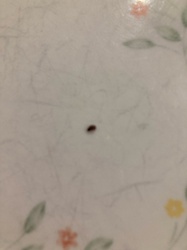
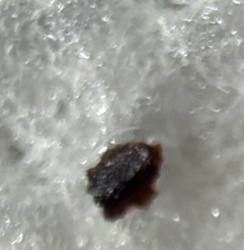
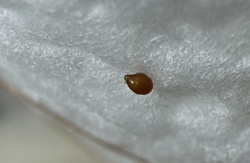
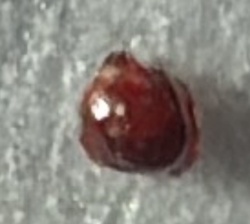
Cigarette Beetle identified by the community
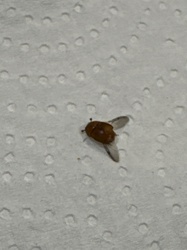
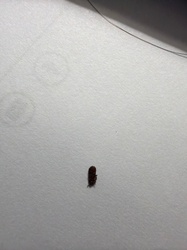
Real finds identified with Bug Identifier.


Other bugs you may enjoy
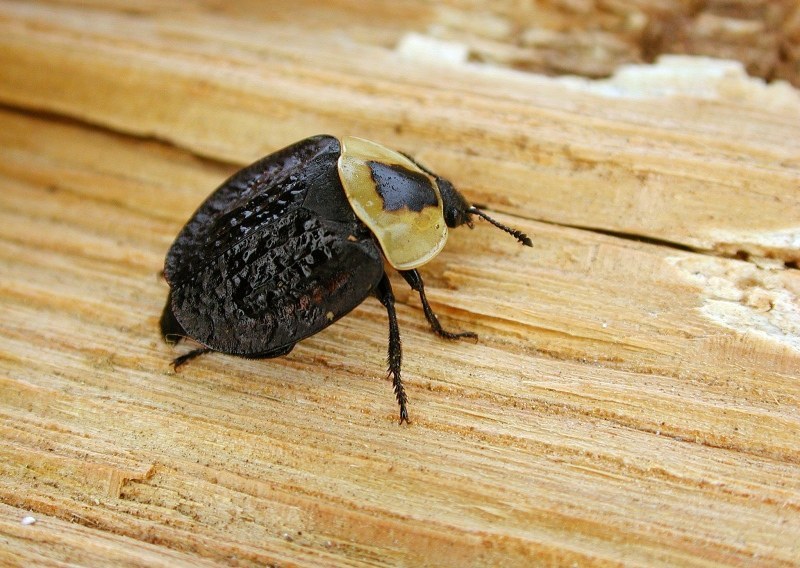
American Carrion Beetle
Forests, fields, and roadsides across North America, near decaying animal carcasses
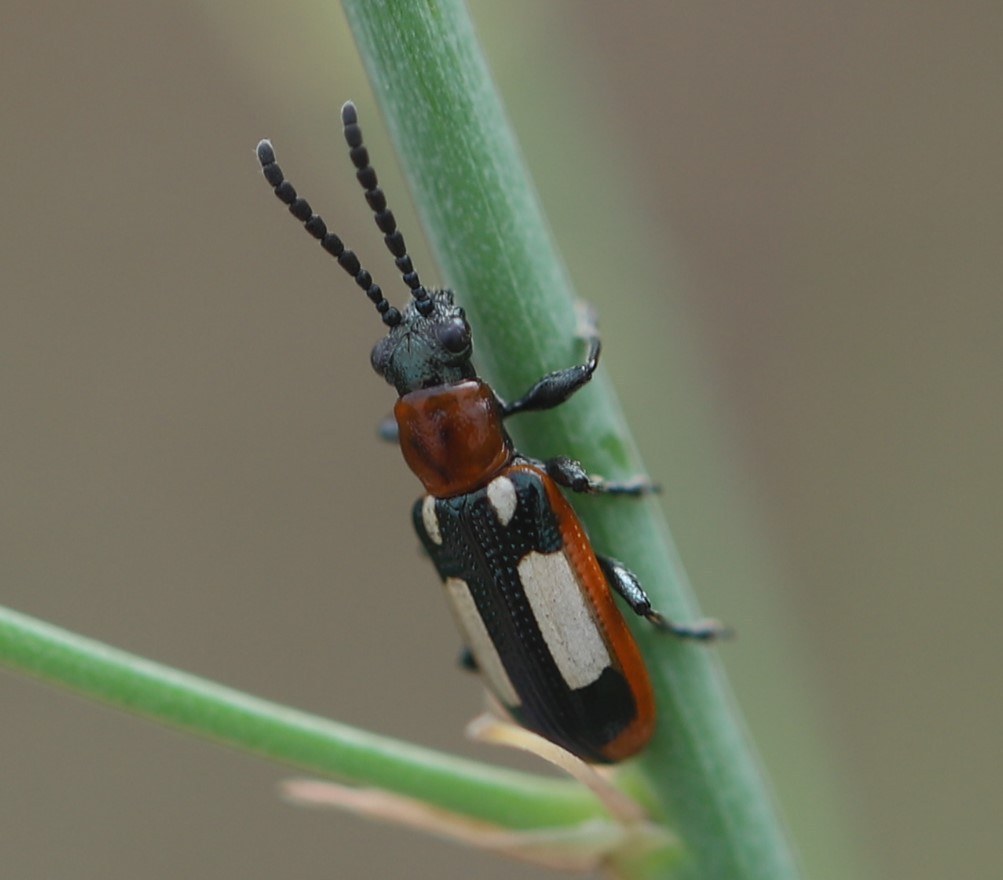
Asparagus Beetle
Asparagus patches, gardens, and farm fields
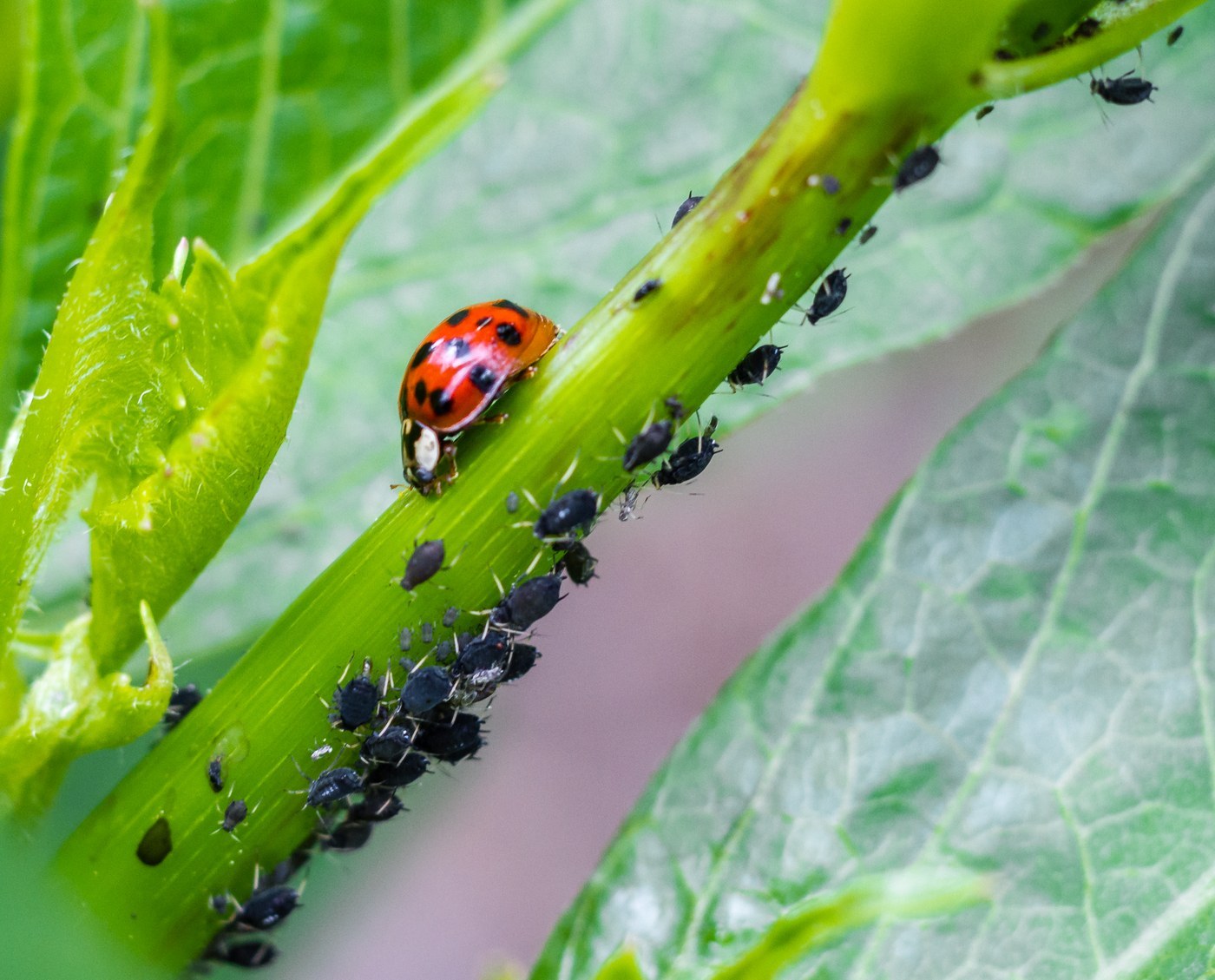
Asian Lady Beetle
Gardens, crop fields, woodlands, buildings
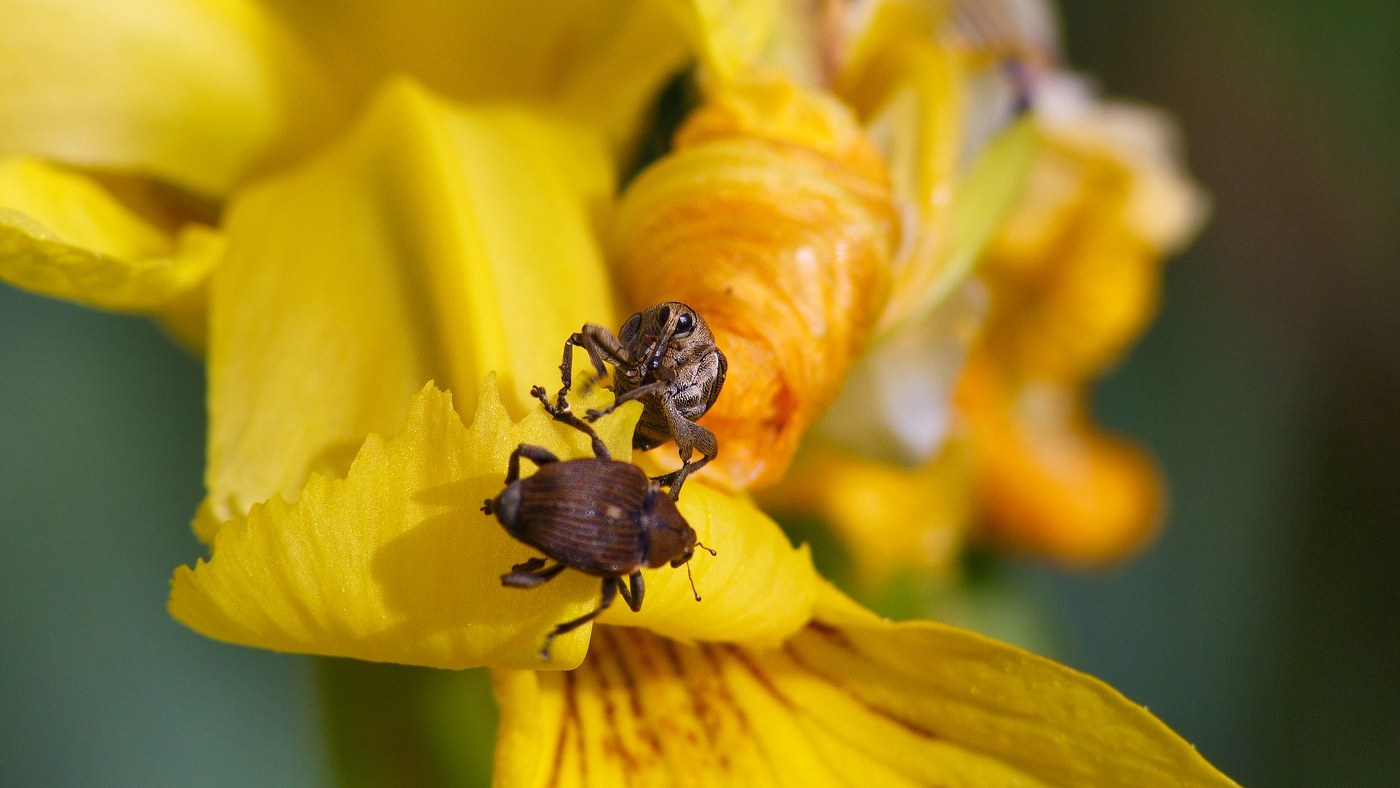
Acorn Weevil
Oak woodlands and forests, on and beneath oak trees
Wireworm
Soil of grasslands, gardens, and cultivated fields worldwide
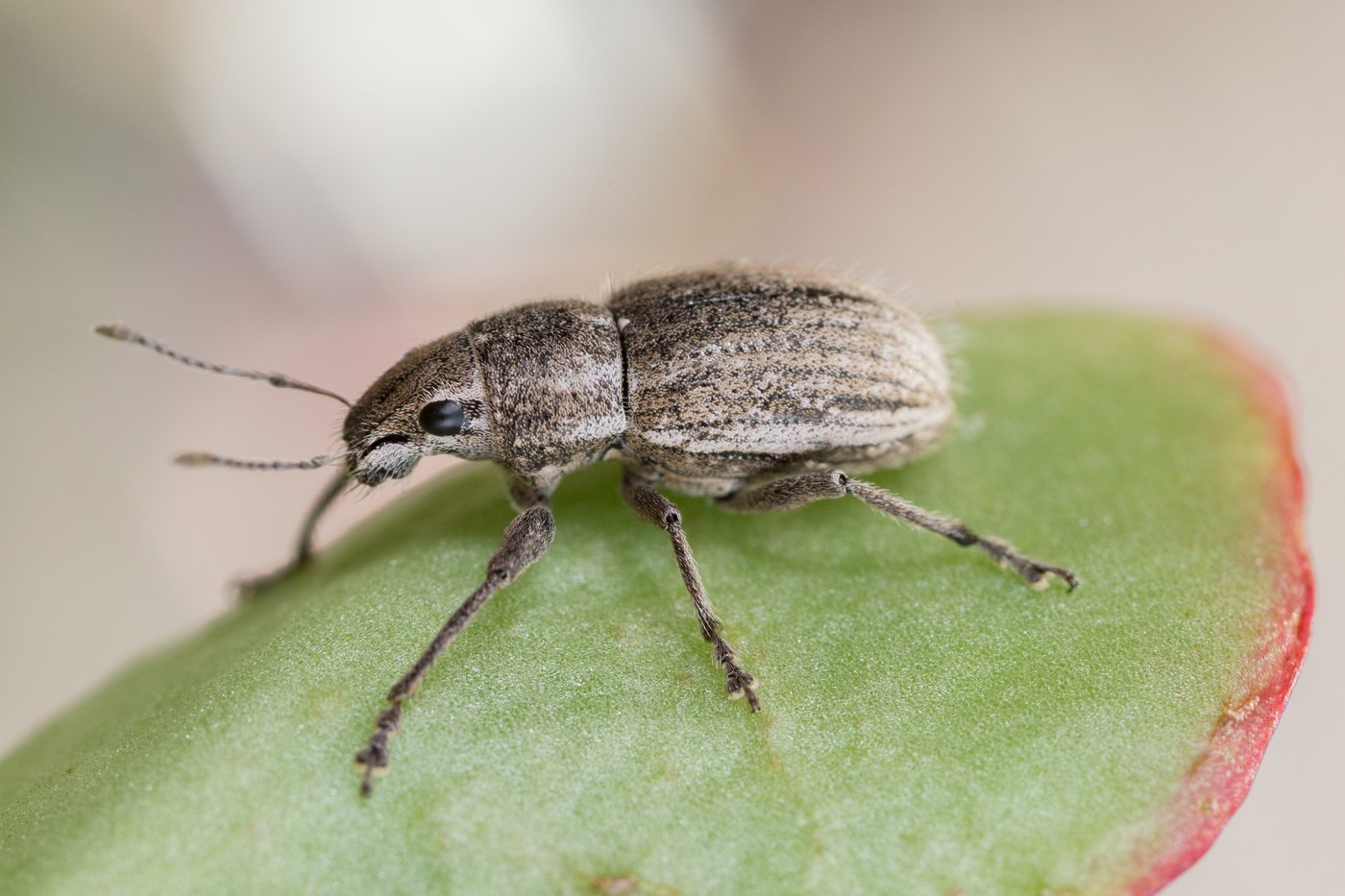
Whitefringed Beetle
Pastures, row crops, lawns, disturbed soils
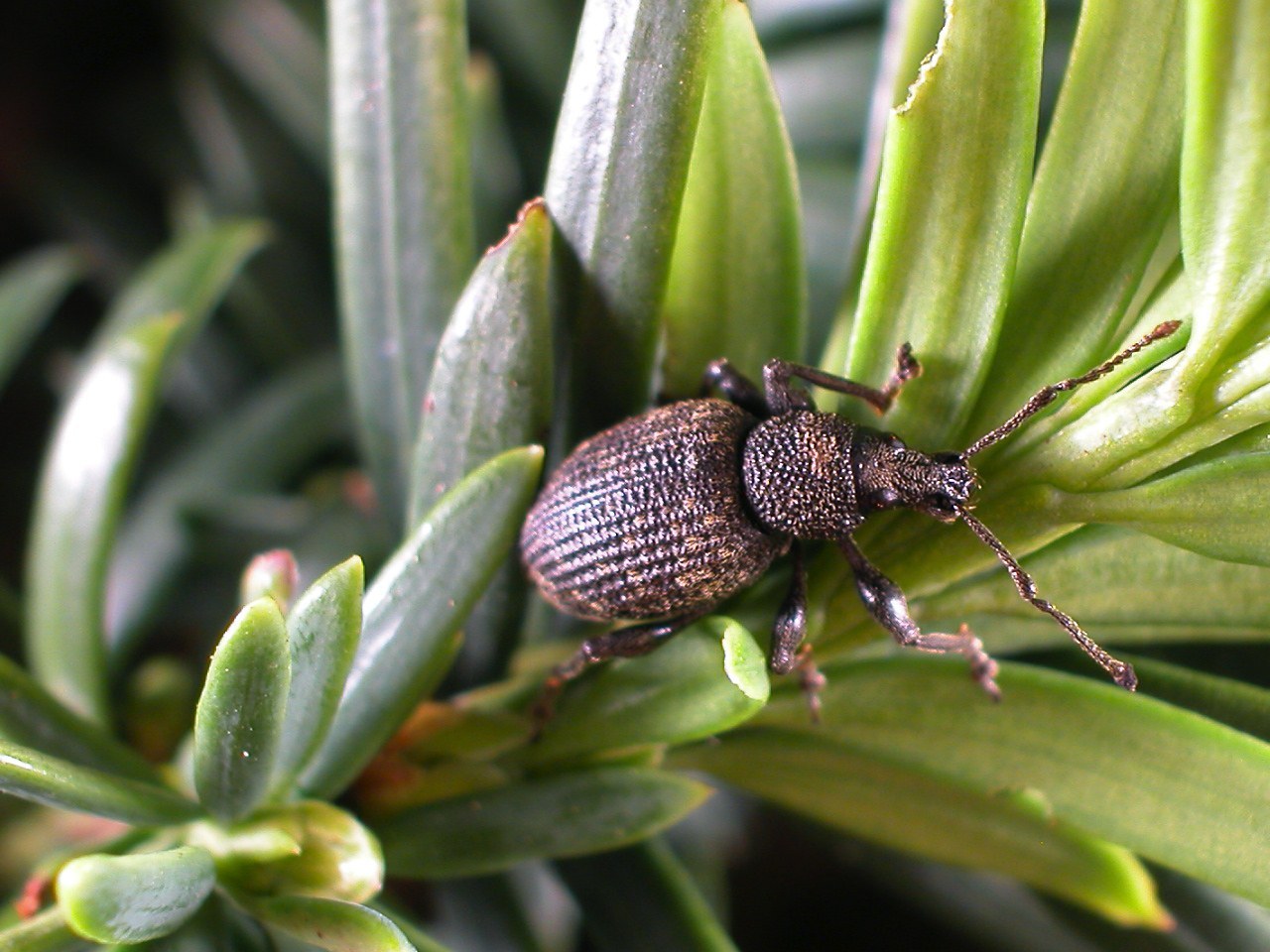
Vine Weevil
Gardens, nurseries, greenhouses, and container plantings
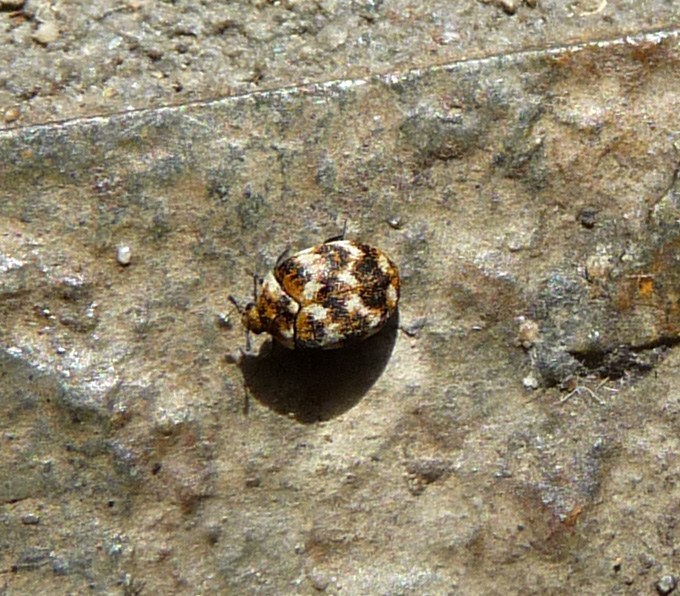
Varied Carpet Beetle
Homes, nests of birds and mammals, and flowers outdoors
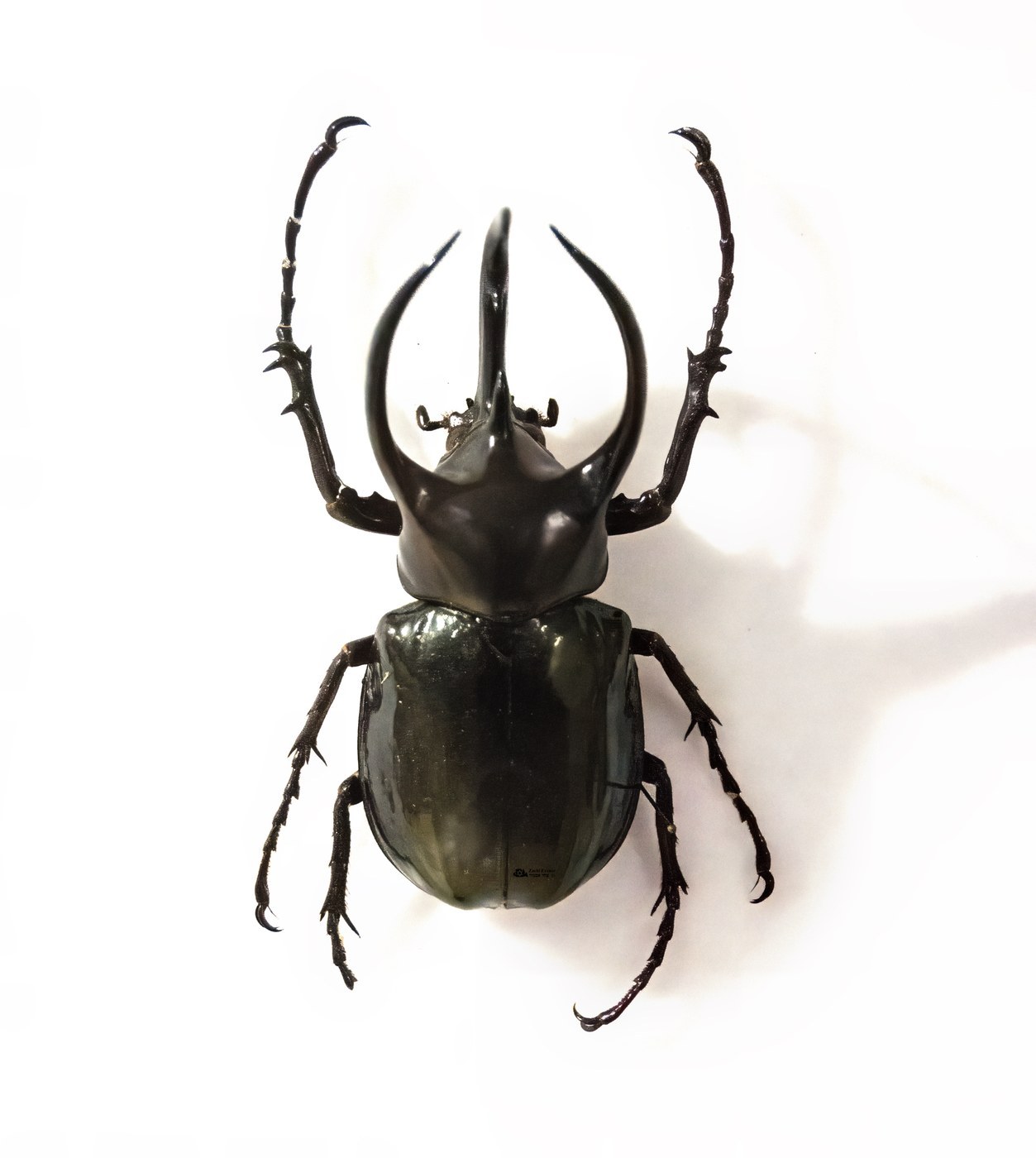
Atlas Beetle
Tropical forests of Southeast Asia
Titan Beetle
Amazon rainforest of South America
Ten-lined June Beetle
Sandy soils, pine forests, and orchards of western North America
Squash Beetle
Vegetable gardens and fields growing squash, pumpkin, and other cucurbits