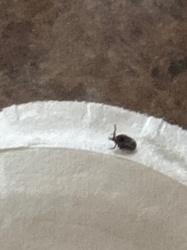
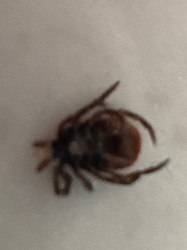
Deer Tick Identification Guide
Distinguish the small, dark-legged deer tick from other ticks by its teardrop shape and reddish-brown coloring.
Read the full Deer Tick encyclopedia entry →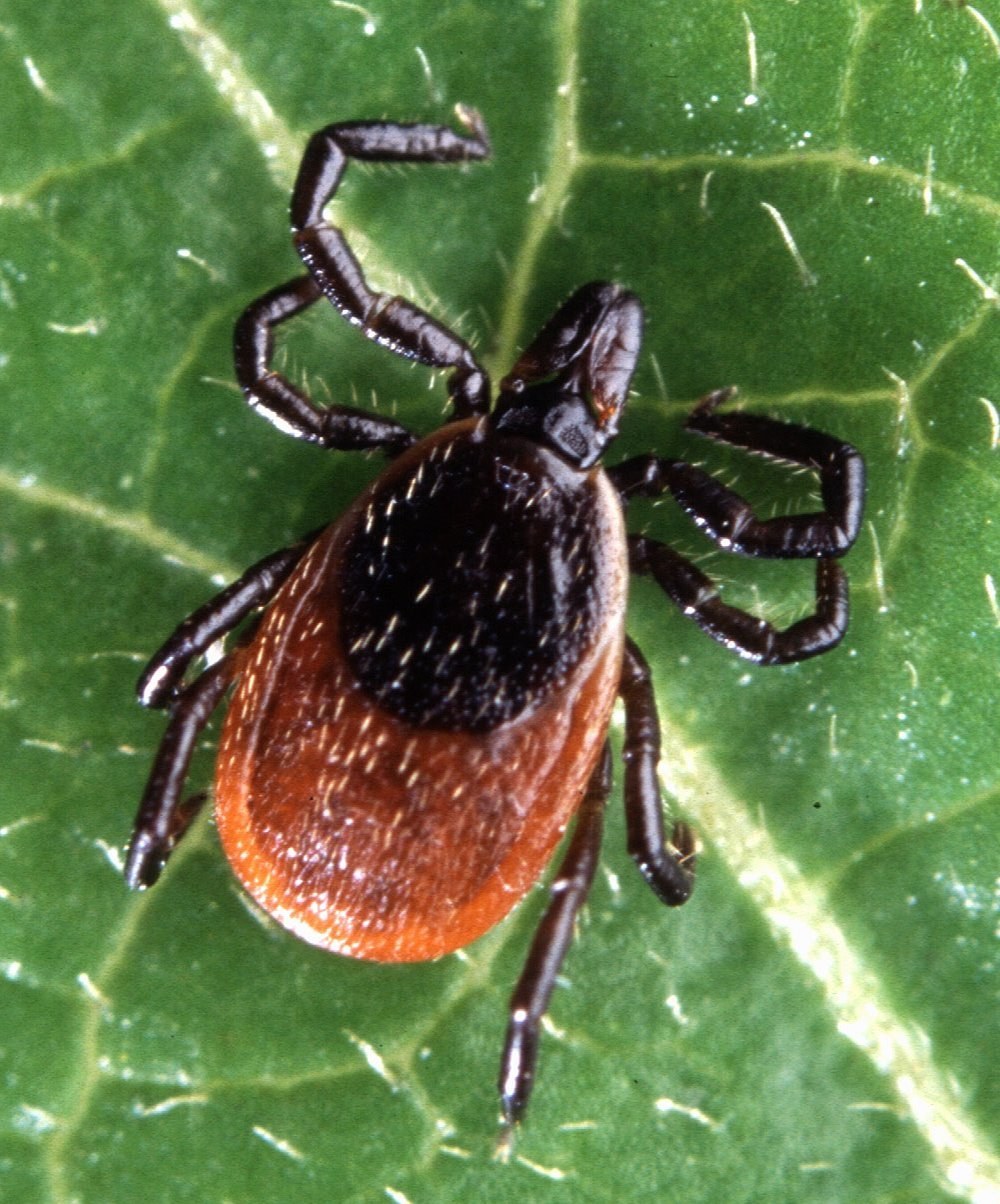
Key Visual Features
The deer tick, also known as the blacklegged tick, is smaller and more uniformly colored than many other common tick species.
- Body shape: A teardrop-shaped, flat body that narrows toward the front, rounding out and darkening once engorged with a blood meal.
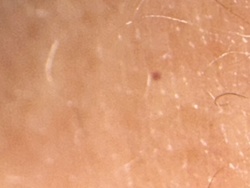
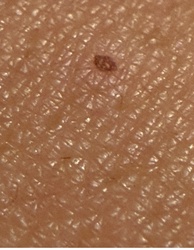
- Size: Quite small—adults are roughly the size of a sesame seed, while nymphs are closer to the size of a poppy seed, making them easy to overlook.
- Color: Dark, near-black legs contrast with a reddish-brown or orange-tinted abdomen in adult females; males are darker and more uniformly brown-black overall.
- Markings: Unlike some other tick species, deer ticks lack bold white or patterned markings on their back (scutum), giving them a plainer appearance.
- Legs: Eight legs (six in larvae), notably dark compared to the body.
Where and When You'll See Them
Deer ticks favor wooded and brushy habitats with ample leaf litter, where they quest on low vegetation and leaf edges waiting for a host to brush past. They're notable for remaining active across a long season—adults can be found questing in fall and even on mild winter days, in addition to the more typical spring and summer activity of nymphs and larvae.
Similar-Looking Bugs
- American dog tick: Noticeably larger, with a mottled white or cream pattern on the scutum (back shield) that deer ticks lack.
- Lone star tick: Also larger, and females have a single distinctive white dot in the center of their back.
- Other tick species generally: Compare overall size and leg color—the deer tick's combination of small size and dark legs against a plainer reddish body is the most reliable field cue.
Quick ID Checklist
- Small size, close to a sesame seed or smaller
- Dark, near-black legs against a reddish-brown body
- Teardrop-shaped body with no bold white markings on the back
- Found questing on low vegetation in wooded or brushy areas
- Active even in cooler months, not just summer
Frequently asked questions
How is a deer tick different from an American dog tick?
Deer ticks are smaller, have dark legs, and lack the pale mottled pattern on the back that the larger American dog tick shows.
Why is the deer tick also called a blacklegged tick?
Its legs are distinctly darker than its body, a contrast that's visible even without magnification and gives the species its common alternate name.
Can deer ticks be active outside of summer?
Yes, adult deer ticks can be found questing on mild days throughout fall and winter, unlike many other tick species that are mostly active in warmer months.
How small are deer tick nymphs?
Nymphs are extremely small, roughly the size of a poppy seed, which makes them much harder to spot than adult ticks.
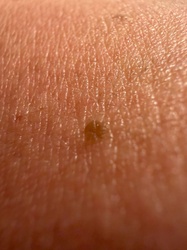
Deer Tick identified by the community
Recent Deer Tick finds identified with Bug Identifier.