
Deer Tick
Ixodes scapularis
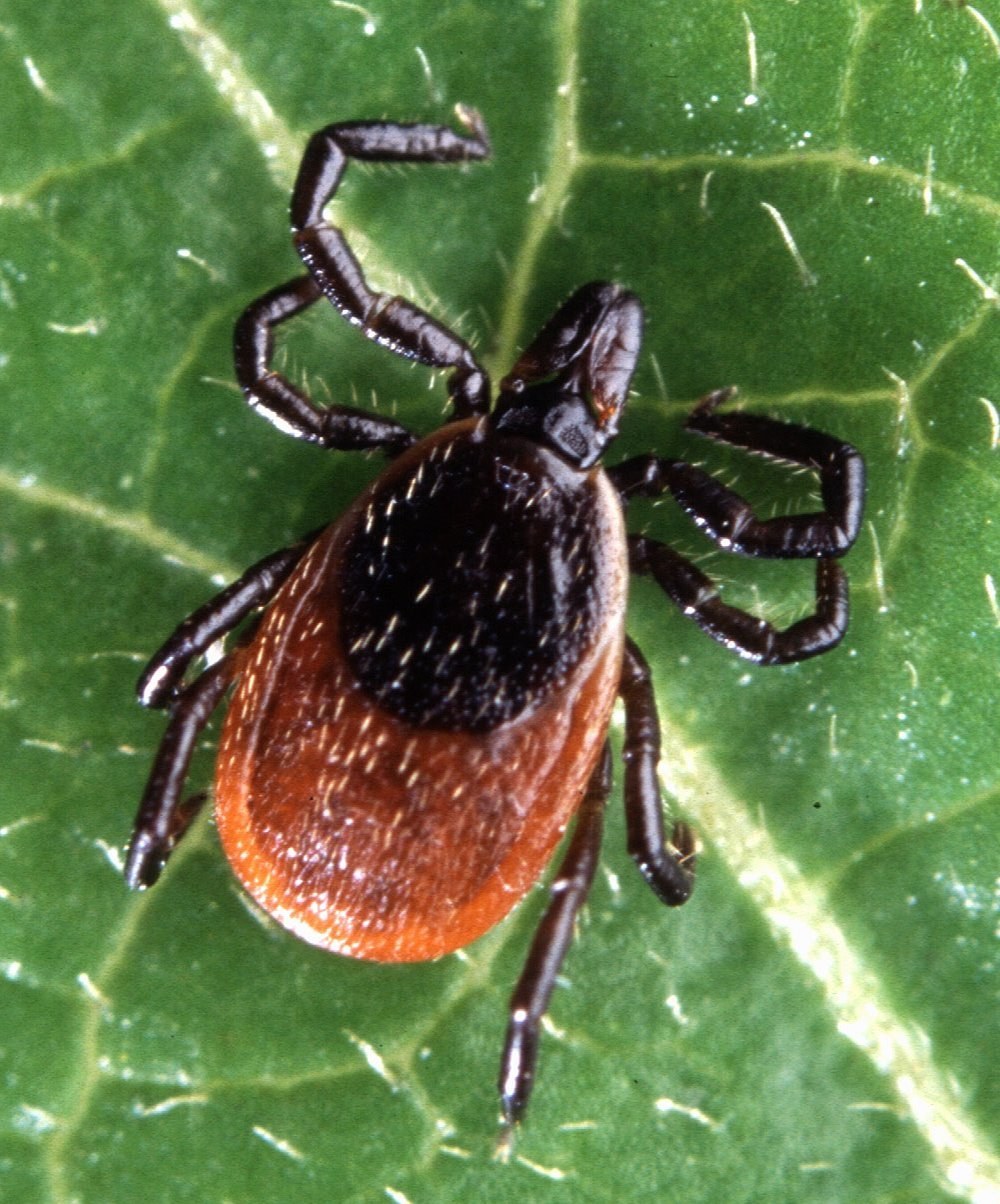
A small, dark-legged tick with a reddish-brown, teardrop-shaped body, noticeably smaller than many other common tick species and often found questing in wooded or grassy edge habitats.
- Size
- Adults 3–5 mm unfed; nymphs about 1–2 mm; engorged females larger
- Habitat
- Wooded areas, leaf litter, tall grass, and edges between forest and open land
- Danger
- Bites
Spotted a bug like this?
Identify any bug or insect from a photo, free.
Overview
The deer tick, or black-legged tick, is a hard tick in the family Ixodidae, closely related to other members of the genus Ixodes found across the Northern Hemisphere. It is generally smaller and more delicately built than species like the American dog tick, with uniformly dark legs that give rise to its alternate common name.
This species relies on a range of vertebrate hosts across its multi-stage life cycle, including small mammals and birds as juveniles and larger mammals such as deer as adults, which is reflected in its common name. Its close association with deer populations and wooded or edge habitats has made it a frequently studied and monitored tick species in regions where it occurs.
As with other ticks, it plays an ecological role as an external parasite integrated into forest and edge-habitat food webs, feeding at each life stage on a different host before molting or reproducing.
How to Identify
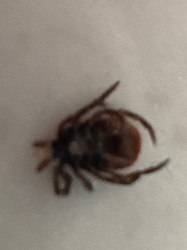
- Small, teardrop-shaped body, reddish-brown to dark brown, generally smaller and slimmer than the American dog tick.
- Legs are uniformly dark, near-black, giving rise to the "black-legged tick" name; scutum (dorsal shield) is plain and unmarked, unlike the mottled shield of some other tick species.
- Adult females have a small dark scutum near the front covering a portion of an otherwise reddish-brown body; adult males are smaller and uniformly darker overall.
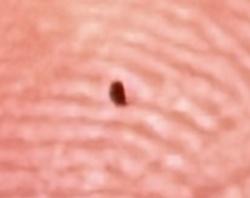
- Nymphs are notably tiny, roughly poppy-seed sized, and easily overlooked.
- Lookalikes: American dog tick/wood tick (larger, with a mottled or patterned scutum and reddish-brown legs rather than uniformly black ones).
Habitat & Range
This species is found across parts of North America, particularly in wooded, brushy, and edge habitats where leaf litter and understory vegetation provide humid shelter and where host animals such as deer, rodents, and birds are common. It favors forested areas, overgrown fields, and the transition zones between woods and open land.
Activity varies seasonally, with different life stages often most active at different times of year, from spring into fall depending on region and stage, and ticks generally seek out humid, shaded leaf litter to avoid drying out when not actively questing.
Behavior & Diet
Like other hard ticks, the deer tick quests from the tips of grass, leaves, or low shrubs, extending its legs to grasp onto a passing host rather than jumping or actively chasing prey. Each active life stage requires a blood meal from a host before it can molt to the next stage or, in adult females, reproduce.
It uses different host types at different stages, with immature stages commonly feeding on small mammals and birds and adults often feeding on larger mammals such as deer, reflecting the ecological breadth of hosts this species relies on. It generally remains attached to a host for an extended feeding period before dropping off to molt or lay eggs.
Life Cycle
Adult females lay a large cluster of eggs in a sheltered spot such as leaf litter, which hatch into six-legged larvae that seek a first blood meal, typically from a small mammal or bird. After feeding, larvae molt into eight-legged nymphs, which seek a second host and blood meal before molting into adults.
Adults seek a final host for a blood meal and mating, after which females lay eggs to complete the cycle. The full life cycle typically spans about two years, with the tick often overwintering in an unfed stage between host encounters, and different life stages tend to be most active in different seasons.
Frequently asked questions
How is a deer tick different from other ticks?
It is generally smaller with uniformly dark, near-black legs and a plain, unmarked scutum, distinguishing it from larger species like the American dog tick, which has a mottled shield pattern.
Why is it called a deer tick?
The name reflects the adult stage's frequent association with deer as a host, though immature stages typically feed on smaller mammals and birds.
How small are the nymphs?
Nymphal deer ticks are quite tiny, often compared to the size of a poppy seed, making them easy to overlook.
Do deer ticks jump onto hosts?
No, like other hard ticks they quest by climbing vegetation and extending their legs to grasp a host that brushes past, rather than jumping or flying.
Deer Tick guides
In-depth guides for identifying, understanding, and living alongside Deer Tick.
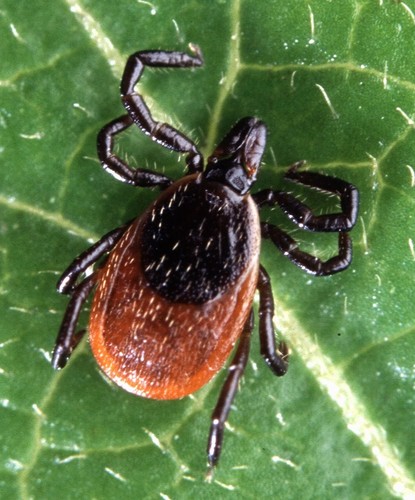
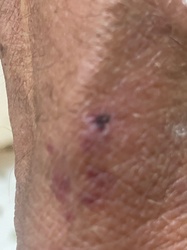
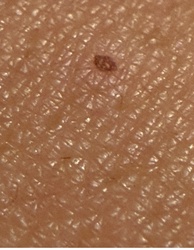
Deer Tick identified by the community
Real finds identified with Bug Identifier.
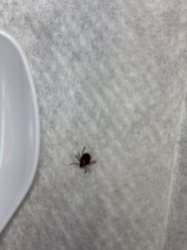
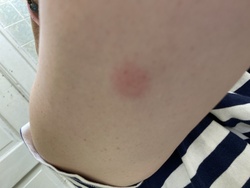
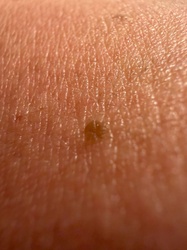
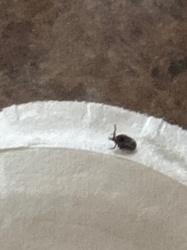
Other bugs you may enjoy
Wood Tick
Grassland, shrub-steppe, and open woodland of western North America
Yellow Scorpion
Arid scrubland, rocky slopes, and desert margins
Whip Spider
Tropical caves, rainforest leaf litter, and under bark
Water Mite
Ponds, lakes, streams, and other freshwater bodies
American Dog Tick
Grassy fields, trails, and low vegetation near woodlands
Arizona Bark Scorpion
Rocky desert terrain, tree bark, and structures in the Southwest
Tick
Tall grass, brush, woodland edges, and animal trails
Soil Mite
Soil, leaf litter, moss, and decaying organic matter worldwide
Rocky Mountain Wood Tick
Sagebrush shrublands, grasslands, and montane forest edges
Two-Spotted Spider Mite
Undersides of leaves on garden plants, crops, and houseplants
Spider Mite
Undersides of leaves on garden plants, houseplants, and field and orchard crops worldwide
Whip Scorpion
Tropical and subtropical caves, tree bark, and rock crevices worldwide