Flesh Fly Identification Guide
Learn to spot the flesh fly's checkerboard gray-and-black abdomen and red-tipped tail among the many gray flies buzzing around outdoor spaces.
Read the full Flesh Fly encyclopedia entry →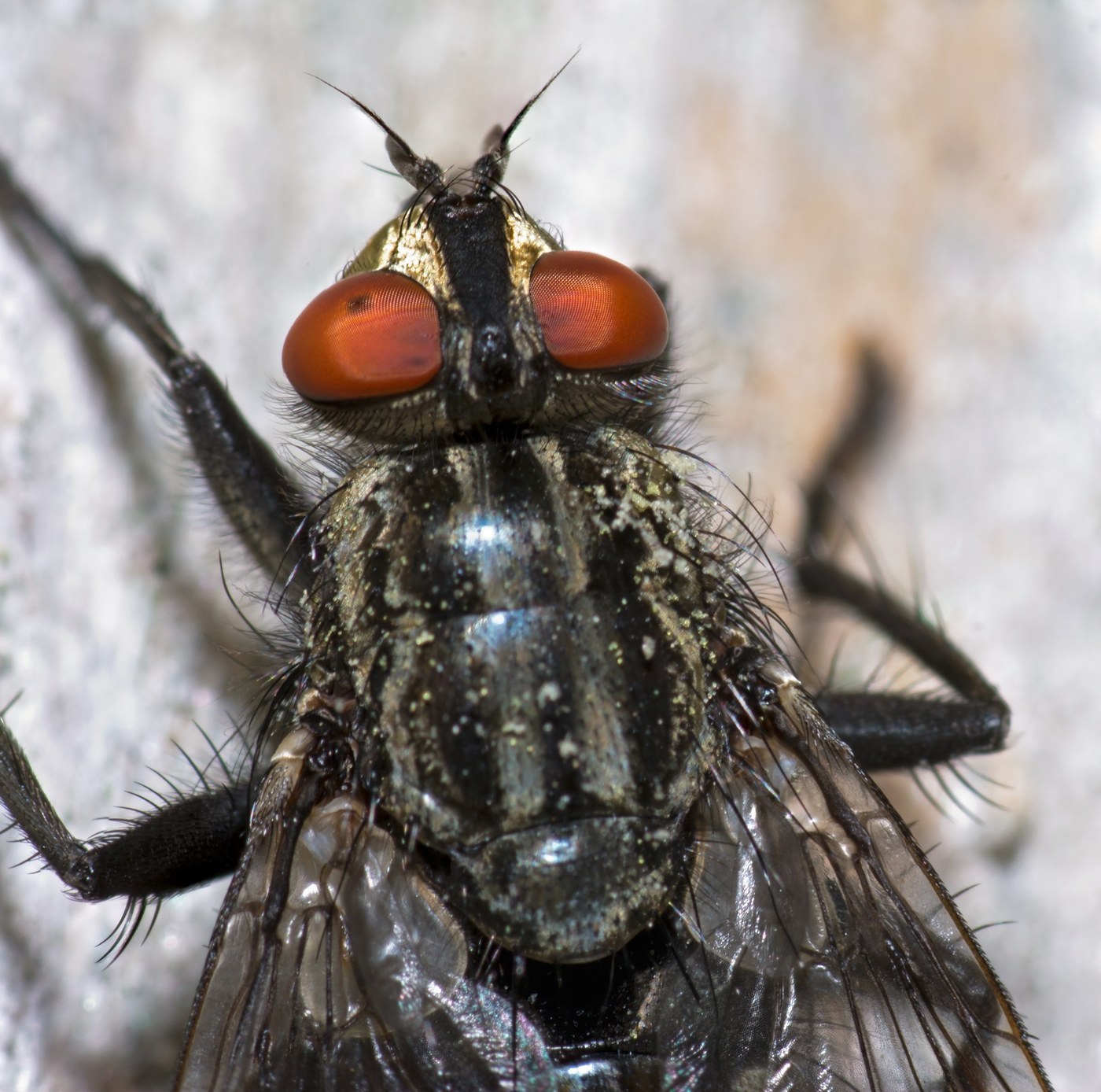
Key Visual Features
Flesh flies (family Sarcophagidae) are medium-to-large flies, typically 8-15 mm long, noticeably bulkier than a housefly.
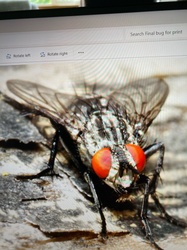
- Body color: Dull gray thorax with three dark longitudinal stripes running down the back.
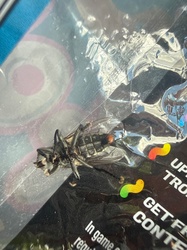
- Abdomen pattern: A distinctive gray-and-black checkerboard (tessellated) pattern on the abdomen, which shifts appearance depending on the viewing angle.
- Eyes: Large, reddish compound eyes that dominate the head.
- Tail tip: Many species show a reddish or orange tip at the end of the abdomen, a helpful field mark.
- Wings: Clear, unmarked wings held out to the sides at rest, not folded flat over the back like a housefly's.
- Legs and bristles: Long, bristly legs and a bristly body overall, giving a rugged, spiny appearance compared to smoother flies.
Where and When You'll See It
Flesh flies are common in outdoor settings worldwide, especially in warmer months. Look for them:
- Around garbage cans, compost piles, and areas with decaying organic matter.
- Basking on sunlit walls, fences, or leaves during the day.
- Near flowers, where adults feed on nectar and other sweet liquids.
- Most active from late spring through early fall, during daylight hours.
Similar-Looking Bugs
- House fly: Smaller, with a duller striped thorax and no checkerboard abdomen pattern; wings fold flat over the back at rest.
- Blow fly: Often has a shiny metallic blue, green, or bronze body, lacking the gray checkerboard pattern of a flesh fly.
- Stable fly: Similar gray coloring but smaller, with a distinct dark checkerboard-free abdomen and a forward-pointing proboscis visible from the side.
Behavior Notes
Flesh flies are strong, direct fliers and tend to land, pause briefly, then take off again rather than lingering in one spot for long. Unlike many flies that lay eggs, most flesh fly species give birth to live larvae directly on a food source, which is reflected in the family's scientific name. Adults are most easily observed resting on warm surfaces or feeding at flowers, where their bristly legs and checkerboard pattern are easiest to confirm at close range.
Quick ID Checklist
- Gray-and-black checkerboard pattern on the abdomen
- Three dark stripes on a gray thorax
- Large reddish eyes
- Reddish or orange abdomen tip in many species
- Bristly, robust body about 8-15 mm long
Frequently asked questions
How can I tell a flesh fly from a house fly at a glance?
Check the abdomen: flesh flies show a gray-and-black checkerboard pattern, while house flies have a plain grayish abdomen with four dark thorax stripes and no checkering.
Why do flesh flies seem to hover near sunny surfaces?
Adults commonly bask on warm, sunlit walls, fences, and foliage, using the heat to regulate their body temperature between flights.
Are flesh flies attracted to flowers as well as decaying matter?
Yes, adult flesh flies visit flowers to feed on nectar, so seeing one on a bloom doesn't necessarily mean decaying material is nearby.
Do all flesh flies have a red abdomen tip?
Many common species do, but it varies across the family, so use the checkerboard pattern and bristly gray body as the more reliable identifying features.
Flesh Fly identified by the community
Recent Flesh Fly finds identified with Bug Identifier.