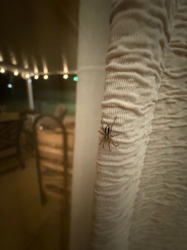
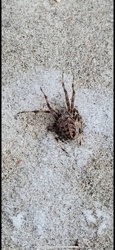
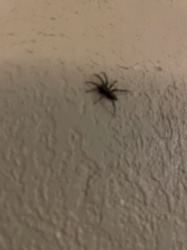
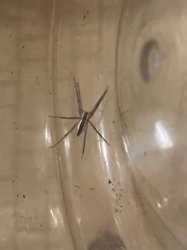
Grass Spider Identification Guide
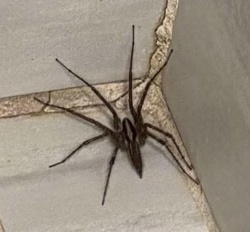
Spot a grass spider by its striped brown body, long spinnerets, and funnel-shaped web woven low in grass or shrubs.
Read the full Grass Spider encyclopedia entry →Key Visual Features
Grass spiders are common funnel-weavers recognizable by a few clear traits:
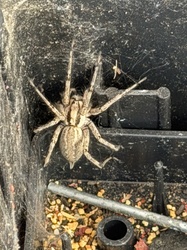
- Color: Brown to tan body with two dark longitudinal stripes running down the sides of the carapace and a pattern of lighter and darker bands on the abdomen.
- Size: Body length typically 0.5-0.75 inches, with long legs that can make the spider appear larger.
- Spinnerets: Notably long, finger-like spinnerets extending clearly beyond the rear of the abdomen — one of the most reliable features for telling this species apart from similar funnel-web builders.
- Legs: Long, brown, and fast-moving, well-suited for the spider's quick dash back into its silk tunnel.
- Body shape: A slightly flattened, elongated abdomen that tapers toward the rear.
Where and When You'll See One
True to their name, grass spiders build sheet-and-funnel webs low in grass, shrubs, ground cover, and along the base of walls or fences. The flat sheet becomes especially visible on dewy mornings when moisture collects on the silk, revealing the funnel entrance where the spider waits. They are most conspicuous from summer through early fall, when webs are largest and adult spiders are most active.
Similar-Looking Spiders
- Hobo spiders: Very similar funnel-web builders, but hobo spiders have shorter spinnerets and a somewhat different chevron pattern on the abdomen.
- Wolf spiders: Also found in grass and ground cover, but wolf spiders are active hunters that don't build funnel webs and instead roam or wait in burrows.
- Funnel-web spiders in other families: Some tropical species share the funnel shape but differ in overall coloring, size, and habitat range.
Quick ID Checklist
- Brown-tan body with dark stripes along the carapace
- Long spinnerets clearly extending past the rear of the abdomen
- Flat, sheet-like web funneling into a narrow silk tube
- Web built low in grass, shrubs, or along foundations
- Extremely fast retreat into the funnel when the web is disturbed
Frequently asked questions
How do grass spider webs become so visible in the morning?
Dew collects on the fine, flat sheet of silk, making the web's outline and funnel entrance stand out clearly against the grass.
What is the clearest way to tell a grass spider from a hobo spider?
Check the spinnerets at the rear of the abdomen — grass spiders have noticeably longer, more visible spinnerets than hobo spiders.
Do grass spiders sit out in the open on their webs?
No, they typically wait inside the narrow funnel retreat and dash out onto the sheet web only when they detect vibrations from trapped prey.
Where are grass spider webs most commonly built?
Low to the ground in lawns, shrubs, ground cover, and along the base of walls, fences, or foundations where the flat sheet can be anchored.
Grass Spider identified by the community
Recent Grass Spider finds identified with Bug Identifier.