House Fly Identification Guide
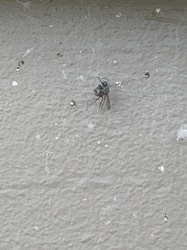
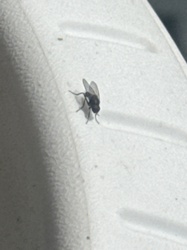
Spot a house fly by its dull gray thorax with four dark stripes, sponging mouthparts, and short, fast, erratic flight.
Read the full House Fly encyclopedia entry →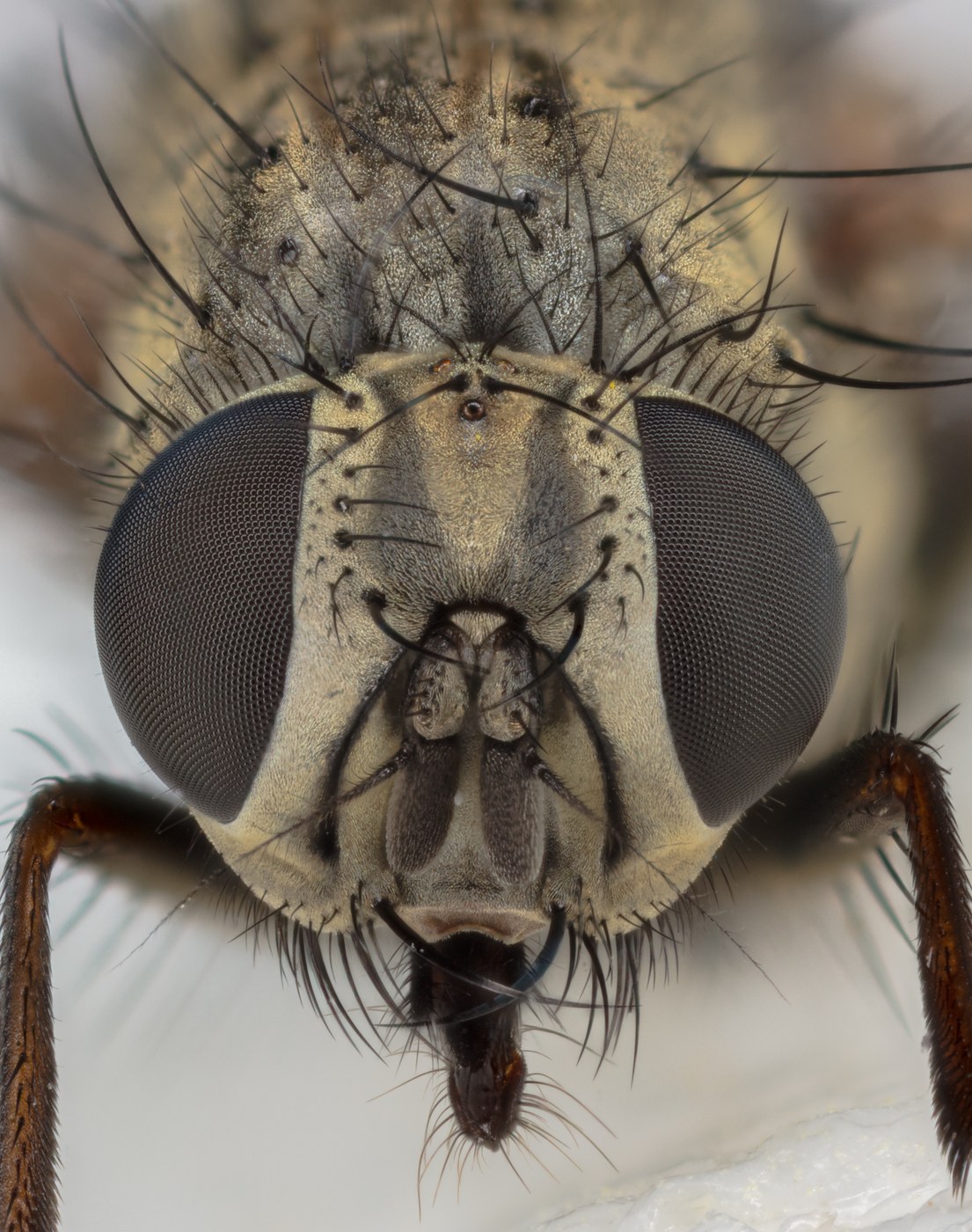
Key Visual Features
The house fly is a common, medium-sized fly recognized by its dusty gray coloring and distinctive stripes.
- Size: Roughly 1/4 to 3/8 inch (6–9 mm) long.
- Color: Dull gray to grayish-black body.
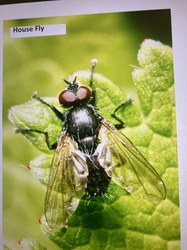
- Thorax markings: Four narrow dark stripes running lengthwise down the top of the thorax — a key identifying feature.
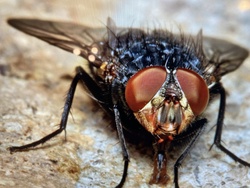
- Eyes: Large, reddish compound eyes that take up much of the head; in males the eyes nearly touch at the top, while in females they are more widely spaced.
- Wings: A single pair of clear wings held slightly angled outward from the body at rest, with a noticeable bend in one wing vein near the tip.
- Mouthparts: Sponge-like proboscis used for lapping up liquids rather than piercing skin.
- Body shape: Robust, slightly hairy body with a rounded abdomen that is often lighter, dull yellowish-gray underneath.
Where and When You'll See Them
House flies are found worldwide in close association with human activity, favoring areas with decaying organic matter, garbage, compost, and animal waste where they lay eggs. They are most active during warm daylight hours and become sluggish or seek shelter indoors as temperatures drop. Populations peak in summer and are typically absent or dormant in winter in temperate climates, though they can persist year-round indoors in heated buildings.
Similar-Looking Insects
- Blow flies: Larger and have a metallic blue, green, or bronze sheen, unlike the dull gray house fly.
- Flesh flies: Similar gray coloring but usually larger, with a checkered pattern on the abdomen rather than a plain one, and three thoracic stripes instead of four.
- Fruit flies: Much smaller (about 1/8 inch), with tan bodies and bright red eyes, and are drawn to ripening produce rather than garbage.
- Stable flies: Nearly identical in size and gray coloring but have a rigid, forward-pointing piercing mouthpart instead of a soft sponging one.
Quick ID Checklist
- Dull gray body about 1/4–3/8 inch long
- Four dark longitudinal stripes on the thorax
- Large reddish compound eyes
- Sponge-like mouthparts, no piercing stylet
- Quick, erratic, buzzing flight pattern indoors
Frequently asked questions
How do I tell a house fly from a fruit fly?
House flies are noticeably larger, around 1/4 to 3/8 inch, with dull gray bodies and dark eyes, while fruit flies are tiny, about 1/8 inch, with tan bodies and bright red eyes.
What are the stripes on a house fly's back?
House flies have four narrow dark stripes running down the length of the thorax, which is one of the clearest features distinguishing them from similar gray flies.
Do house flies bite?
House flies have soft, sponge-like mouthparts built for lapping liquids, not piercing, so they cannot bite the way some other flies, like stable flies, can.
Why do house flies rub their legs together?
This grooming behavior helps them clean debris and sensory hairs from their legs and is a normal, frequently observed behavior rather than a distinguishing feature between species.
House Fly identified by the community
Recent House Fly finds identified with Bug Identifier.