Leaf Miner Identification Guide
Learn how to spot leaf miner larvae by the winding tunnels and pale blotches they leave inside leaf tissue rather than the tiny larva itself.
Read the full Leaf Miner encyclopedia entry →Key Visual Features
"Leaf miner" describes a feeding habit shared by the larvae of several unrelated insect groups — including certain small flies, moths, beetles, and sawflies — rather than a single species. What they share is a larval stage that lives and feeds inside the tissue of a leaf, between the upper and lower surfaces.
- Larva appearance: Very small (often just a few millimeters), pale yellow, greenish, or translucent, with a soft body that is rarely seen without opening or holding the leaf up to light.
- Legs: Fly leaf miner larvae are legless (maggot-like), while moth or sawfly leaf miners may have small, reduced legs or prolegs, depending on the species involved.
- Head: Typically small and only faintly darker than the rest of the body.
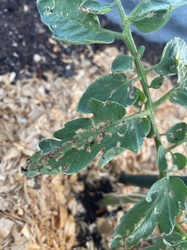
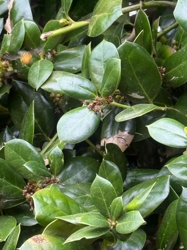
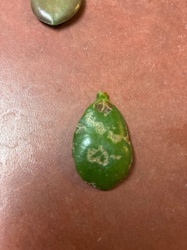
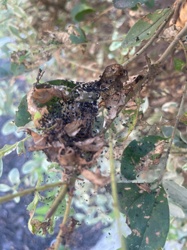
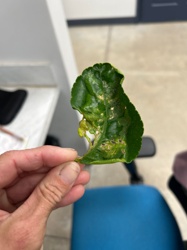
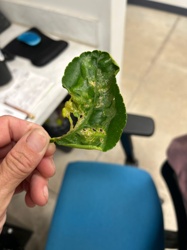
- Signature sign: Because the larva feeds hidden inside the leaf, identification usually relies on the "mine" it leaves behind — a pale, winding tunnel or an expanding blotch visible on the leaf surface where the internal tissue has been consumed.
Where and When You'll See It
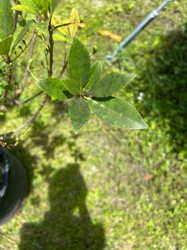
Leaf miners occur on an enormous range of host plants, including ornamental trees, vegetables such as spinach and beet, and citrus. Mines can appear from spring through fall depending on the species and region, with the distinctive trail or blotch pattern becoming more visible as the larva grows and consumes more leaf tissue.
Similar-Looking Signs and Larvae
- Leaf-skeletonizing caterpillars or sawfly larvae: Feed on the leaf surface from outside, leaving lacy, see-through patches, rather than tunneling within the tissue itself.
- Leaf gall makers: Cause raised, swollen bumps or pouches on leaves rather than flat winding trails or blotches, reflecting a different feeding and development strategy.
- Different mine shapes by species: A narrow, winding, serpentine trail usually points to a fly or moth leaf miner, while a broader, blotch-shaped mine often indicates a different species or a later feeding stage, so mine shape can help narrow down which type of leaf miner is present.
Quick ID Checklist
- Tiny, pale larva living inside leaf tissue rather than on its surface
- Best identified by its "mine" — a winding trail or blotch visible on the leaf
- Legless or reduced-leg body plan depending on the insect group
- Found on a very wide range of host plants across most growing seasons
- Distinguished from skeletonizers (external feeding) and gall makers (raised swellings)
Frequently asked questions
Why is it hard to see an actual leaf miner larva?
The larva lives and feeds entirely within the leaf tissue, so it is usually hidden from view unless the leaf is peeled apart or held up to bright light.
How do I know a leaf shows leaf miner activity?
Look for a pale, winding tunnel or an expanding blotch on the leaf surface where the internal tissue has been eaten away, leaving a thin, papery layer behind.
Is leaf miner one specific species?
No, the term describes a feeding behavior shared by the larvae of various unrelated flies, moths, beetles, and sawflies, so appearance can vary depending on which insect is involved.
How is leaf miner damage different from skeletonized leaves?
Leaf miner trails run within the leaf tissue and appear as enclosed lines or blotches, while skeletonized leaves are eaten from the outside, leaving a lacy, see-through network of veins.
Leaf Miner identified by the community
Recent Leaf Miner finds identified with Bug Identifier.