Little Black Ant Identification Guide
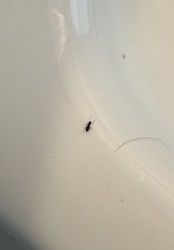
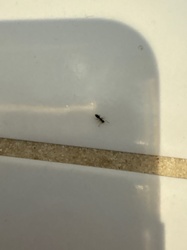
Identify the tiny, uniformly jet-black little black ant by its size, shine, and slow, deliberate foraging trails.
Read the full Little Black Ant encyclopedia entry →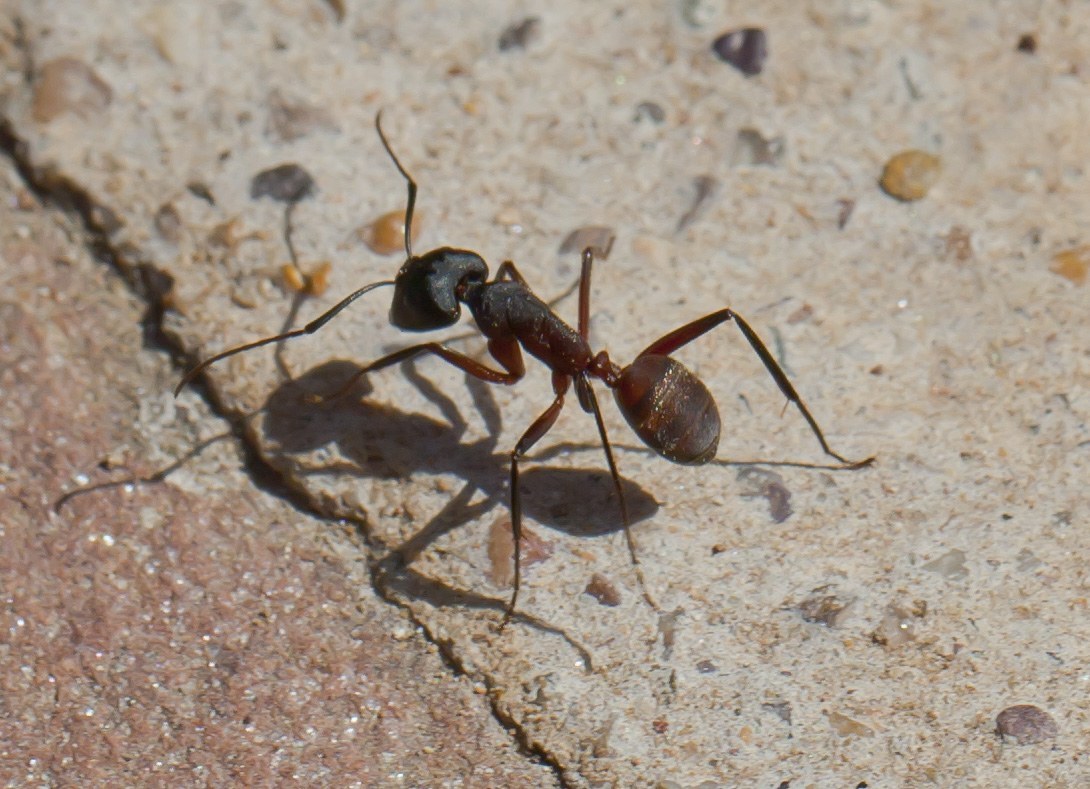
Key Visual Features
As the name suggests, little black ants (Monomorium minimum) are small and dark, but a few details help confirm the ID:
- Workers measure just 1.5-2mm, among the tiniest common ants
- Body is uniformly shiny black to dark brownish-black, with no bicolor pattern
- Two nodes in the waist (a petiole and postpetiole), visible with magnification
- Antennae are 12-segmented, ending in a distinct 3-segmented club
- Workers are monomorphic — all roughly the same size and shape
- Body surface appears smooth and glossy rather than hairy
Where and When You'll See Them
Little black ants nest in a wide range of sites: exposed soil, under rocks and logs, in rotting wood, and within cracks in pavement or masonry. They also readily set up satellite nests inside wall voids, insulation, and other indoor cavities, and a single colony can grow to include many thousands of workers spread across several connected nest sites. Foraging workers travel along slow, meandering but persistent trails, often over open ground, along baseboards, or across countertops indoors, and a mature colony may send out several trails at once toward different food sources. They're active from spring through fall outdoors, with indoor sightings possible any time conditions are favorable, particularly during dry or hot stretches when ants move indoors seeking moisture.
Similar-Looking Bugs
- Odorous house ant is similarly small and dark but has only a single waist node (hidden by the abdomen) and releases a distinct rotten-coconut smell when crushed.
- Pavement ant is slightly larger (about 3mm), has two waist nodes like the little black ant, but shows fine parallel grooves on the head and thorax and possesses a functional stinger.
- Thief ant is comparably tiny but yellowish to light brown rather than black, and often nests near other ant colonies.
- Carpenter ant workers, while much larger overall, can occasionally be confused with little black ants from a distance until their size difference and single smooth-humped thorax become apparent up close.
Quick ID Checklist
- Very small, 1.5-2mm
- Uniform shiny black body, no color pattern
- Two waist nodes, 12-segmented antennae with a 3-segment club
- Slow, steady foraging trails rather than erratic movement
- No odor when crushed
Frequently asked questions
How small is a little black ant compared to other ants?
At 1.5-2mm, it's one of the smallest commonly encountered ants, roughly the size of a printed period or smaller.
How is it different from an odorous house ant?
The little black ant has two visible waist nodes and no smell when crushed, while the odorous house ant has a single hidden node and gives off a rotten-coconut odor.
Where do little black ants build nests?
They nest in soil, under rocks or logs, in decaying wood, and in cracks in pavement, and can also form satellite colonies inside walls or other indoor voids.
Do little black ants move in trails?
Yes, foragers follow persistent but relatively slow-moving trails rather than the fast, erratic wandering seen in some other small ant species.
Little Black Ant identified by the community
Recent Little Black Ant finds identified with Bug Identifier.