Mole Cricket Identification Guide
Identify this burrowing insect by its shovel-like front legs, velvety brown body, and low churring song heard from underground.
Read the full Mole Cricket encyclopedia entry →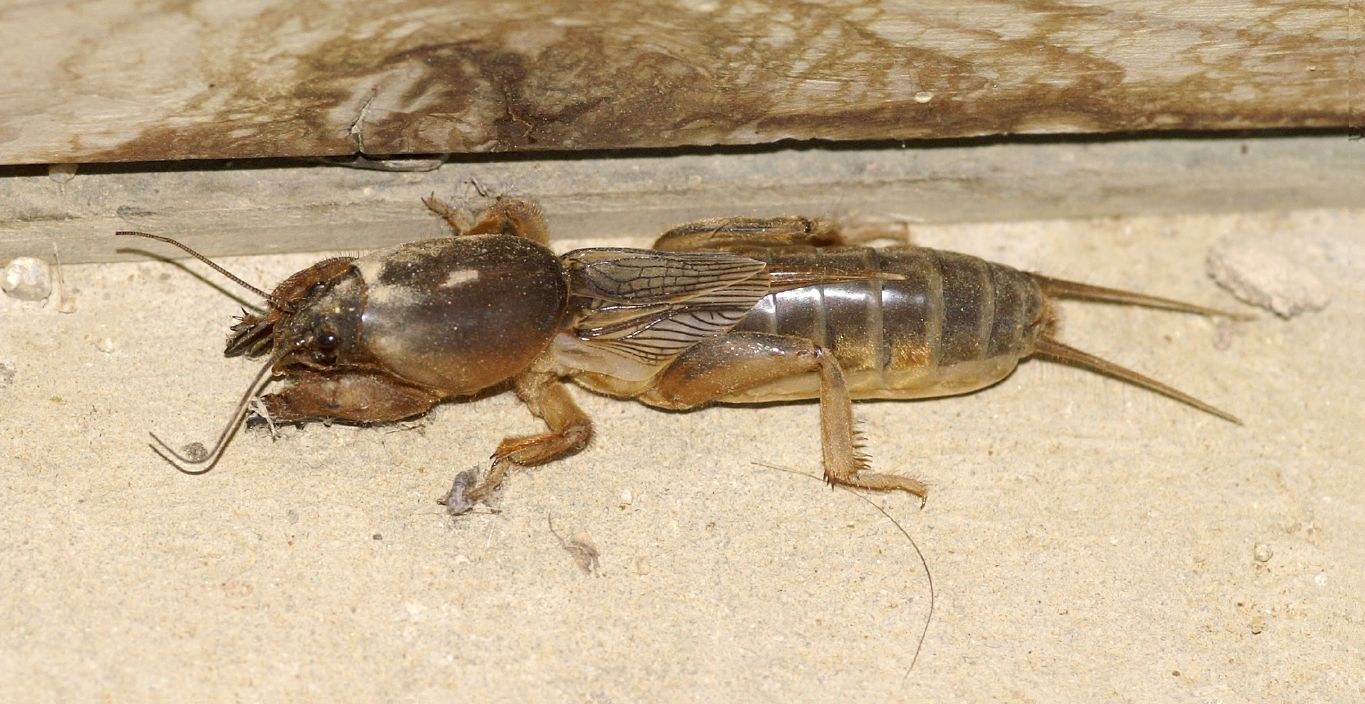
Key Visual Features
Mole crickets are highly specialized burrowing insects, instantly recognizable by their uniquely modified front legs built for tunneling.
- Size: Typically 1.25 to 2 inches long.
- Color: Velvety brown to grayish-brown, covered in fine, dense hair-like setae that give the body a soft, almost fuzzy texture.
- Body shape: Cylindrical, compact, and streamlined for moving through soil, with a rounded head and a broad, shield-like pronotum covering much of the thorax.
- Wings: Adults typically have short forewings and longer folded hindwings that may extend past the abdomen; wing length varies by species, and some individuals are capable of short flights, especially at night.
- Legs: The defining feature — greatly enlarged, flattened, shovel-like front legs with stout, tooth-like projections used for digging through soil, resembling a small set of claws or a mole's paws.
- Antennae: Short and thread-like relative to body size, unlike the long antennae of true crickets.
- Eyes: Small, and eyesight is reduced compared to surface-dwelling crickets, an adaptation to its underground lifestyle.
Where and When You'd See One
Mole crickets live in extensive tunnel systems in moist, loose soil, favoring lawns, pastures, golf courses, and riverbanks. They are almost entirely nocturnal and rarely seen above ground during the day, though they may surface after heavy rain when burrows flood. Males produce a loud, low-pitched churring or humming call from a specially shaped burrow entrance that amplifies the sound, most commonly heard on warm evenings in spring and early summer. Adults are also occasionally attracted to lights at night.
Similar-Looking Bugs
- Jerusalem cricket / potato bug: Also a heavy-bodied soil dweller, but lacks the mole cricket's flattened, shovel-shaped front legs, instead having standard spiny legs and a smooth amber head.
- True crickets: Have long hind legs built for jumping and long thread-like antennae; mole crickets have short antennae and are built for digging rather than jumping.
- Camel crickets: Humpbacked and wingless with very long antennae and legs, lacking any digging modification on the front legs.
- Cicada nymphs: Also have digging front legs and live underground, but nymphs have a different overall body plan with large eyes and piercing mouthparts, and are only found underground until their single emergence, unlike the mole cricket's ongoing burrowing lifestyle.
Quick ID Checklist
- Broad, flattened, shovel-like front legs with tooth-like digging projections
- Velvety brown, cylindrical, streamlined body
- Short antennae, unlike long-antennaed true crickets
- Loud, low churring call heard from a burrow entrance at night
- Found in moist soil/lawns, rarely seen above ground by day
Frequently asked questions
What is the clearest way to identify a mole cricket?
Look at the front legs — mole crickets have broad, flattened, shovel-like front legs with tooth-like projections specifically adapted for digging, unlike any other common cricket or cricket-like insect.
Why do I hear a low humming sound from the lawn at night but never see anything?
That is likely a male mole cricket calling from a specially shaped burrow entrance that amplifies the sound, a behavior typical on warm spring and early-summer evenings while the insect itself stays underground.
Can mole crickets fly?
Many adults have wings and are capable of short flights, particularly at night, though they spend the vast majority of their time underground rather than in the air.
How do mole crickets differ from Jerusalem crickets, which also live in soil?
Mole crickets have distinctly modified, shovel-shaped front legs and short antennae, while Jerusalem crickets have ordinary spiny legs, long antennae, and a smooth, glossy amber head.
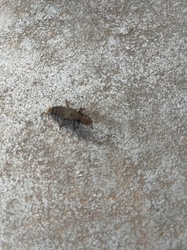
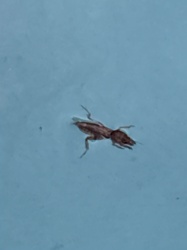
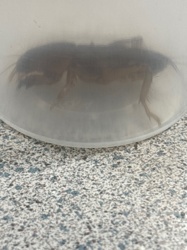
Mole Cricket identified by the community
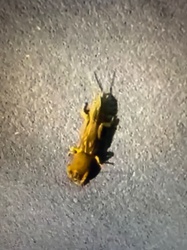
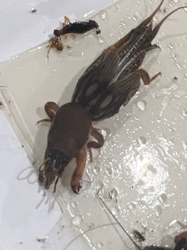
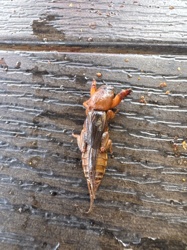
Recent Mole Cricket finds identified with Bug Identifier.