Monarch Butterfly Identification Guide
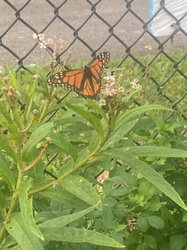
Spot a monarch by its bold orange-and-black veined wings and compare it to look-alike mimics.
Read the full Monarch Butterfly encyclopedia entry →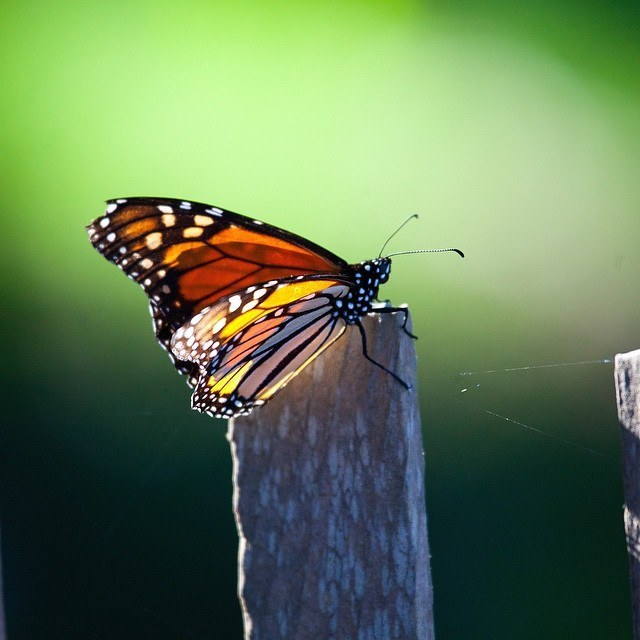
Key Visual Features
- Wingspan of about 3.5 to 4 inches, among the largest common butterflies in its range
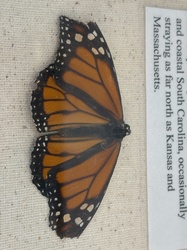
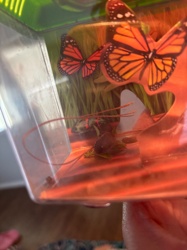
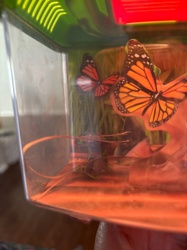
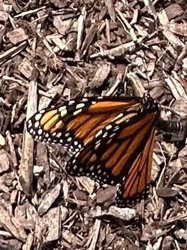
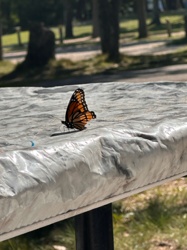
- Bright orange wings marked with bold black veining that stands out clearly against the orange background
- Black wing borders dotted with two rows of small white spots
- Males have a small black spot (a scent patch) on a vein of each hindwing that females lack
- Black body dotted with small white spots, visible when the wings are folded
- Black, clubbed antennae typical of butterflies rather than the feathery antennae of moths
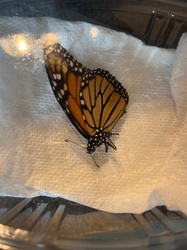
- Paler orange undersides on the wings, useful for camouflage while resting with wings closed on foliage
Where and When You'll See Them
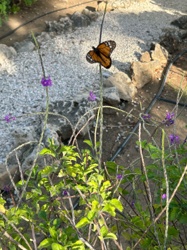
- Open areas with milkweed and nectar flowers - meadows, gardens, roadsides, and prairies across North America
- Famous for long-distance migration, with large numbers seen moving south in fall (often roosting together in dense clusters in trees) and north again in spring
- Active during the day, frequently gliding on rising air currents to conserve energy over long flights
- Most visible during the breeding season in gardens and during migratory movements in spring and fall
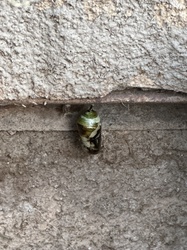
- Eggs and caterpillars are found exclusively on milkweed plants, a useful clue for confirming a breeding population nearby
Similar-Looking Bugs
- Viceroy butterfly: nearly identical orange-and-black pattern but noticeably smaller, with an extra black line curving across the veins of the hindwing that monarchs lack
- Queen butterfly: similar orange coloring but a darker, mahogany-brown shade with less contrasting black veining and more scattered white spots across both wing surfaces
- Both mimics can be confirmed by a close look at hindwing vein patterns and overall wing shape
Quick ID Checklist
- Bright orange wings with bold black vein lines
- Black borders with two rows of white spots
- Wingspan around 4 inches
- Check for the extra black hindwing line (present in viceroy, absent in monarch)
Frequently asked questions
How do I tell a monarch from a viceroy?
Look for an extra black line crossing the veins of the hindwing - viceroys have it and monarchs don't - and note that viceroys are noticeably smaller overall.
How can I tell a male monarch from a female?
Males have a small dark scent spot on a vein of each hindwing, while females lack this spot and often show slightly thicker black veining.
When are monarchs most visible?
During the spring and summer breeding season in gardens and meadows, and again during their striking fall migratory movements.
What plants are monarchs typically seen around?
Milkweed plants for egg-laying, along with a wide range of nectar flowers for feeding.
Monarch Butterfly identified by the community
Recent Monarch Butterfly finds identified with Bug Identifier.