Non-Biting Midge Larva (Bloodworm) Identification Guide
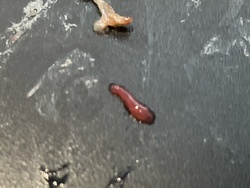
A thin, bright red worm-like larva that wriggles through pond mud, its color coming from a blood pigment that helps it survive low-oxygen sediment.
Read the full Non-Biting Midge Larva (Bloodworm) encyclopedia entry →Key Visual Features
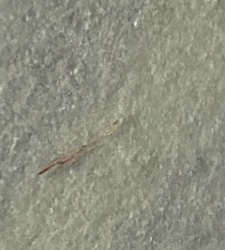
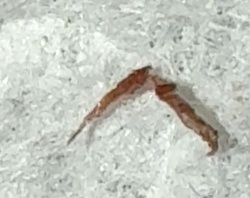
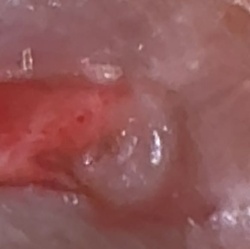
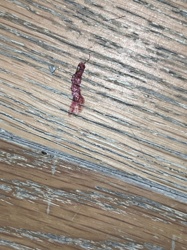
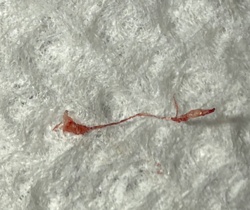
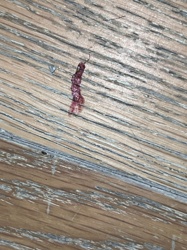
- Thin, elongated, worm-like body typically 0.2-1 inch (5-25 mm) long depending on species and age
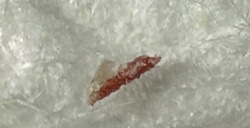
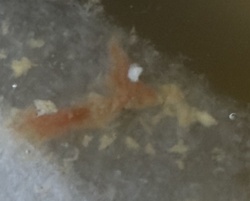
- Bright red to reddish-pink coloring, caused by a hemoglobin-like pigment in the body fluid
- Smooth, segmented body without visible legs, though small fleshy prolegs are present at both the front and rear ends
- Head capsule slightly darker and firmer than the rest of the soft, flexible body
- Body moves in a distinctive whip-like, S-shaped wriggling motion when swimming
- No external gill filaments or tail structures visible to the naked eye
- Often found curled or looped within a thin, self-made silk-like tube in the sediment
Where and When You'll See It
Bloodworms live in the soft mud, silt, and organic sediment at the bottom of ponds, lakes, slow streams, and even nutrient-rich or low-oxygen water where many other larvae cannot survive. They construct small protective tubes in the sediment and emerge to feed on organic debris and algae. Because of their tolerance for low-oxygen conditions, they are especially common in enriched or slightly polluted water bodies. They can be found year-round in many climates, with peak abundance in warmer months when midge populations are actively breeding.
Similar-Looking Bugs
- Phantom midge larva: nearly transparent and glassy rather than red, and floats in open water instead of living in bottom sediment.
- Black fly larva: has a distinct club or bowling-pin shape and attaches to rocks in fast-flowing water rather than living freely in soft mud.
- Segmented worms (aquatic oligochaetes): lack a hardened head capsule and prolegs, and have a more uniformly cylindrical body without the whip-like swimming motion.
- Horse fly larva: much thicker and cream-colored with rings of small bumps, rather than thin and uniformly red.
Quick ID Checklist
- Thin, bright red, worm-like body
- Small fleshy prolegs at both the front and rear ends
- Whip-like, S-shaped swimming motion
- Lives in soft mud or silt at the bottom of ponds and slow water
- Often found in self-made tubes within the sediment
Frequently asked questions
Why are bloodworms red?
Their red color comes from a hemoglobin-like respiratory pigment in their body fluid, which helps them take up oxygen efficiently in low-oxygen mud and sediment.
Are bloodworms actual worms?
No, despite the common name, they are the larvae of non-biting midge flies (Chironomidae), not true segmented worms, though their soft, elongated shape resembles one.
Where do bloodworms live?
They live in the soft mud and organic sediment at the bottom of ponds, lakes, and slow streams, often within small self-constructed tubes.
How do bloodworms move?
They swim with a distinctive whip-like, S-shaped wriggling motion, and use small fleshy prolegs at each end of the body to anchor themselves within their sediment tubes.
Non-Biting Midge Larva (Bloodworm) identified by the community
Recent Non-Biting Midge Larva (Bloodworm) finds identified with Bug Identifier.