Soft Tick Identification Guide
Understand how to recognize soft ticks by their leathery, rounded bodies that lack a hard shield.
Read the full Soft Tick encyclopedia entry →Key Visual Features
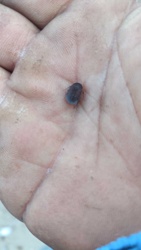
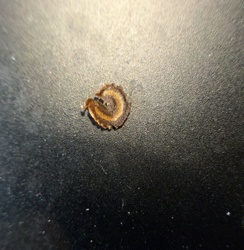
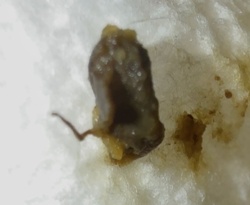
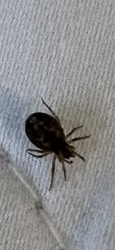
Soft ticks (family Argasidae) look quite different from the familiar hard ticks and can be identified by several distinctive traits.
- Size: Typically 1/8 to 1/2 inch (3-12 mm) depending on species and feeding state.
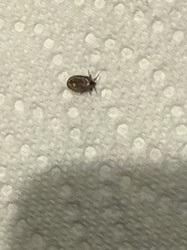
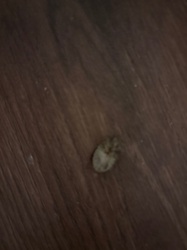
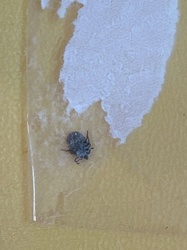
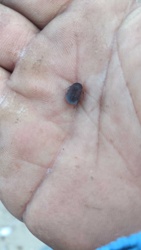
- Color: Usually a dull gray, tan, or brown, sometimes with a mottled or pebbled texture rather than bold markings.
- Body shape: Rounded to oval and distinctly leathery or wrinkled in texture, without the flattened, plate-like shield (scutum) that hard ticks display. The body often looks somewhat pillow-like or bag-shaped.
- Legs: Eight legs in adults, positioned so the mouthparts are tucked underneath the body and not easily visible from above — a key difference from hard ticks, whose mouthparts project forward and are visible from a top-down view.
- Markings: Generally lack the ornate silvery or cream patterning seen in hard ticks like the American dog tick; the surface instead often shows a granular or wrinkled texture.
Where and When You'd See It
Soft ticks are strongly associated with sheltered nesting or roosting sites rather than open vegetation. They are typically found in cracks and crevices of rustic structures, animal burrows, caves, or nests, where they can retreat between brief feeding periods. Unlike hard ticks that quest openly on grass, soft ticks tend to stay hidden and emerge briefly, often at night, before retreating again. They can be encountered across a range of seasons since much of their activity depends on host presence at a nesting or den site rather than outdoor temperature alone.
Similar-Looking Bugs
- American dog tick / Rocky Mountain wood tick: Both are flattened with a visible hard shield and ornate markings — soft ticks lack this hard plate and the bold pattern entirely.
- Blacklegged tick: Has a smooth but still hard, plated body and forward-visible mouthparts, unlike the leathery, mouthparts-hidden-underneath body of a soft tick.
- Mites: Some mites can resemble small soft ticks, but soft ticks are generally larger and have the characteristic wrinkled, sac-like body.
Quick ID Checklist
- Rounded, leathery, wrinkled body without a hard shield
- Mouthparts tucked underneath the body, not visible from above
- Dull gray, tan, or brown coloring without bold ornate markings
- Found in sheltered crevices, burrows, or nests rather than open vegetation
- Emerges briefly to feed, then retreats to hiding spots
Frequently asked questions
How do soft ticks differ visually from hard ticks?
Soft ticks lack the flattened, plate-like shield (scutum) found on hard ticks and instead have a rounded, leathery, wrinkled body, with mouthparts tucked underneath rather than visible from above.
Do soft ticks have the ornate patterns seen on ticks like the American dog tick?
No, soft ticks are generally plain gray, tan, or brown with a granular or wrinkled surface rather than the bold silvery mottled markings of some hard tick species.
Where would you typically encounter a soft tick?
They are usually found in sheltered spots such as cracks in rustic structures, animal burrows, caves, or nests, rather than out on open grass or brush.
Are soft ticks active during the day like hard ticks questing on vegetation?
Soft ticks tend to stay hidden in crevices and emerge briefly to feed, often during quieter hours, rather than openly questing on vegetation the way many hard ticks do.
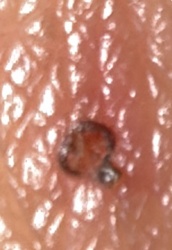
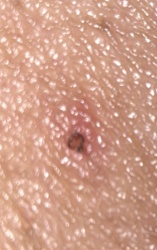
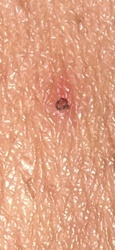
Soft Tick identified by the community
Recent Soft Tick finds identified with Bug Identifier.