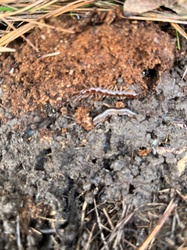
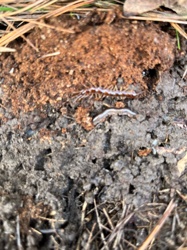
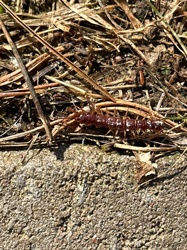
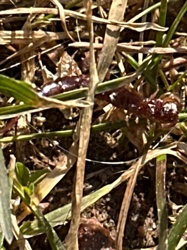
Stone Centipede Identification Guide
Learn to identify stone centipedes by their flattened, fast-moving bodies with one pair of legs per segment.
Read the full Stone Centipede encyclopedia entry →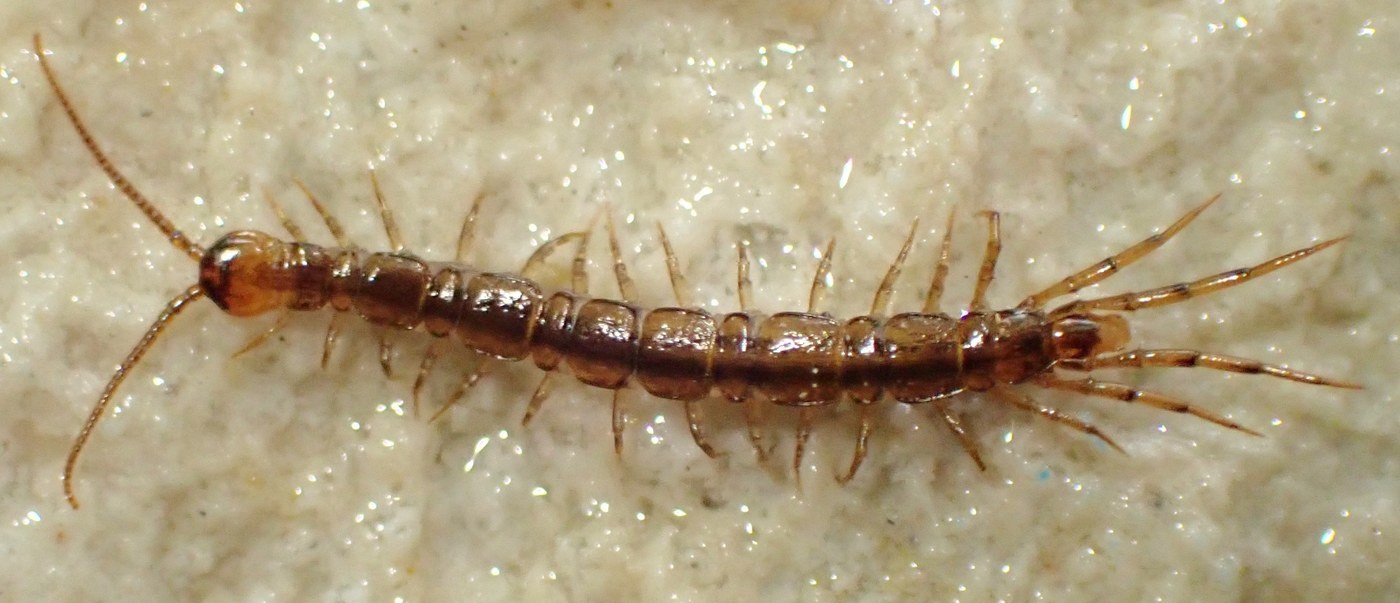
Key Visual Features
Stone centipedes (order Lithobiomorpha) are common ground-dwelling centipedes recognized by a compact, flattened build and quick movement.
- Size: Generally small to moderate, about 1 to 1.5 inches (2.5-4 cm) in length.
- Color: Yellowish-brown to reddish-brown, often with a somewhat glossy sheen to the body.
- Body shape: A flattened, elongated body composed of a moderate number of segments (typically 15 leg-bearing segments in adults), noticeably shorter and stockier overall than many other centipede groups.
- Legs: One pair of legs per body segment (the defining trait of all centipedes), with the rearmost pair often noticeably longer and trailing behind the body, sometimes mistaken for a second set of antennae.
- Antennae: Long, segmented antennae at the front of the head, used constantly to sense the surroundings as it moves.
- Movement: Fast and darting, typical of ground-active centipedes, in clear contrast to the slower, coiling movement of millipedes.
Where and When You'd See It
Stone centipedes live in moist, sheltered ground habitats — under stones (hence the name), logs, bark, and leaf litter — where they hunt among the debris. They are most active at night, retreating to cover during the day, and are especially likely to be seen when a stone or log is lifted, revealing them mid-scurry. Activity is highest in mild, humid weather, and they tend to avoid dry, exposed, sun-baked ground.
Similar-Looking Bugs
- Snake millipede: Moves slowly, has two pairs of legs per segment, and a smooth cylindrical body, in contrast to the fast, flattened, one-leg-per-segment stone centipede.
- Flat-backed millipede: Also slow-moving with two pairs of legs per segment and a plated, flattened top, but the stone centipede is much faster and has only one pair of legs per segment.
- Yellow-spotted millipede: Distinguished by bold color spotting and slow, coiling movement, unlike the plain, quick-darting stone centipede.
Quick ID Checklist
- Flattened, yellowish-brown to reddish-brown segmented body
- One pair of legs per body segment, with long trailing rear legs
- Long, constantly moving antennae at the front
- Fast, darting movement when uncovered
- Found under stones, logs, and leaf litter in damp, sheltered ground
Frequently asked questions
How many legs does a stone centipede have per body segment?
It has one pair of legs per segment, which is the defining trait separating all centipedes from millipedes, which have two pairs per segment.
Why do the rear legs of a stone centipede sometimes look like a second pair of antennae?
The rearmost pair of legs is noticeably longer than the others and trails behind the body, which can make it resemble antennae at a quick glance.
Where would you typically find a stone centipede?
Look under stones, logs, bark, and leaf litter in moist, sheltered ground, which is reflected in its common name.
How does a stone centipede's movement help distinguish it from a millipede?
Stone centipedes move quickly and dart when uncovered, while millipedes move much more slowly and often coil up rather than fleeing rapidly.
Stone Centipede identified by the community
Recent Stone Centipede finds identified with Bug Identifier.